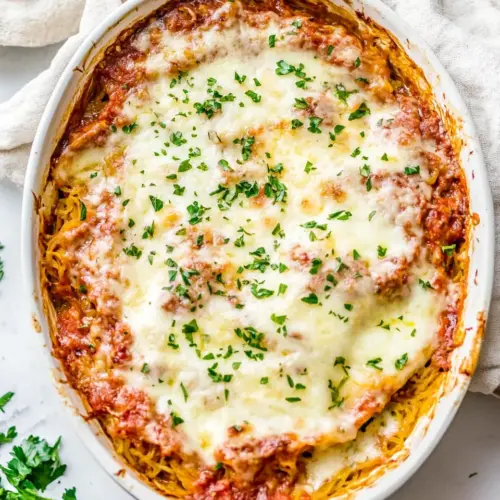
Spaghetti Squash Casserole
Spaghetti Squash Casserole offers a creamy, comforting bake that feels like pasta without the heaviness. Tender spaghetti squash strands mingle with a savory hot Italian sausage and rich crushed tomatoes, finished with gooey mozzarella cheese. It is an easy weeknight dinner that reheats beautifully, perfect when you want something cozy and satisfying.
Equipment
- Microwave safe dish
- Large saut茅 pan
- Casserole pan
Ingredients
- 1 Spaghetti Squash Roast and scoop out the flesh to yield spaghetti-like strands used as the low-carb base of the casserole; provides a mild, slightly sweet flavor and tender texture when baked. Pair with sauce and cheese to mimic pasta layers while adding extra vegetable nutrition and fiber.
- 2 tbsp olive oil Sauté and coat ingredients to develop flavor and prevent sticking while adding a fruity, peppery richness; helps carry aromatics and melds the sauce components together. Use warmed oil to brown sausage and soften aromatics for deeper overall taste.
- 1 yellow onion diced Sauté until translucent to add a sweet, savory backbone and gentle crunch reduction that complements the squash and sausage. Dice finely to distribute onion flavor evenly through the casserole and caramelize slightly for added complexity.
- 1 lb hot Italian sausage Brown and crumble to supply savory, spicy umami and hearty texture that anchors the dish; fat from the sausage also enriches the sauce. Choose hot Italian sausage to introduce traditional herb and chili notes that lift the casserole.
- 4 garlic cloves minced Mince and reveal pungent, aromatic heat that brightens and layers flavor throughout the sauce; cook briefly to mellow sharpness and release essential oils. Add during sautéing to avoid burning while maximizing fragrant contribution.
- 28 ounces crushed tomatoes Simmer and thicken to contribute bright tomato acidity, body, and saucy moisture that binds the casserole layers; crushed texture creates a rustic, cohesive filling. Season and reduce as needed to concentrate flavor and prevent a watery bake.
- salt Season sparingly to enhance and balance flavors, strengthening the taste of tomato, sausage, and squash without overpowering them; adjust to personal preference and dietary needs. Add in stages, tasting as the sauce reduces to avoid over-salting.
- pepper Season to provide subtle heat modulation and flavor definition; freshly cracked pepper brightens richness and complements savory sausage and sweet onion. Grind just before serving to preserve volatile aromatics and sharper flavor.
- 1 tsp oregano Season and infuse the sauce with warm, aromatic herbal notes that complement tomatoes and sausage; oregano adds classic Italian flavor and a slightly bitter, minty undertone. Stir in during simmering to allow the herb to permeate the casserole evenly.
- 8 ounces whole milk mozzarella cheese shredded Melt and brown to create a gooey, cohesive topping that binds and gratinates the casserole, adding creamy richness and stretchy texture. Choose a whole milk mozzarella for balanced creaminess and good melting properties without excess oil.
Instructions
- Preheat oven to 350 degrees F.: When you start, you should hear the hum of the oven and feel a warm wave as you open the door, setting the stage for even baking. Preheating ensures the casserole cooks uniformly, so the cheese melts properly and the top becomes tender. A common mistake is skipping preheat, which can lengthen bake time and yield uneven texture. If your oven runs hot, consider using an oven thermometer to confirm temperature.
- Cut spaghetti squash in half lengthwise, scoop out seeds. Place cut side down on a microwave safe dish. Microwave for 12-15 minutes, or until flesh is easy pierced with a knife.: The squash emits a faint vegetal aroma as it softens, and the knife should slide in with little resistance when done. Microwaving speeds the process while keeping the exterior intact. Avoid undercooking, which makes shredding difficult, and overcooking, which can turn the flesh mushy. If you prefer, roast the halves in the oven for a more caramelized flavor, but the microwave is a reliable shortcut.
- When cool enough to handle, use a fork to shred the spaghetti squash into noodle shapes.: You will see the flesh separate into long, pale strands that glisten slightly; they should resemble al dente pasta. Fork shredding produces variable strand lengths, adding a pleasing rustic texture. Be gentle to preserve structure, and stop shredding when most of the flesh separates easily. If strands are still clumped, the squash needs a touch more cooking time.
- Wrap spaghetti squash flesh in a towel, squeeze out as much excess moisture as possible. Set aside.: Pressing out liquid is key to avoiding a watery casserole, and the towel will come away damp as you squeeze. Squeezing concentrates flavor and helps the strands better absorb the sauce. A mistake here is not squeezing enough, which can lead to a soupy bake. Work in batches if needed to firmly but carefully press the squash.
- Meanwhile, heat olive oil in a large sauté pan over medium heat.: The oil should shimmer and spread across the pan surface, signaling it is ready. Heating the oil properly allows the onion and sausage to brown rather than steam, building flavor through the Maillard reaction. If the oil smokes, lower the temperature to prevent burning. Using too low heat risks soggy aromatics.
- When hot, add onions. Saute until starting to soften, about 5 minutes.: The onion will turn translucent and give off a sweet aroma as its edges take on light color. This step mellows sharpness and lays the flavor foundation for the sauce. Stir occasionally to avoid sticking and uneven browning. Overcooking to deep brown can shift the flavor too far toward caramelized sweetness, so watch closely.
- Add sausage and cook until browned. Drain excess fat.: As the hot Italian sausage browns, the pan fills with savory scent and small brown bits form, which enrich the sauce. Browning creates complexity and renders flavorful fat, but leaving too much fat in the pan can make the casserole oily, so carefully drain excess. A common error is underbrowning, which leaves the meat less developed in flavor.
- Stir in garlic and cook for about 30 seconds, until fragrant. Add tomato sauce, salt, pepper and oregano. Stir to combine. Turn heat to low and simmer for about 10 minutes.: The garlic will release a bright, fragrant note that quickly mellows into the sauce, and the bubbling tomato base will deepen in color as it reduces. Simmering lets flavors marry and the sauce thicken slightly. Avoid high heat that splatters and can create a bitter taste from scorched solids. If the sauce seems acidic, a short simmer softens the edge.
- Remove about 1 cup of sauce from pan, set aside.: This reserved cup will become a finishing layer and ensures the top remains saucy and glossy. The removed sauce should be well seasoned and aromatic, and keeping it aside helps control moisture at the top of the casserole. A mistake is forgetting to reserve it, which can lead to insufficient sauce coverage on top.
- Add spaghetti squash and stir to mix into the sauce.: The strands will absorb color and seasoning, becoming glossy and showing flecks of herb and tomato. Mixing lets the squash pick up savory notes from the sausage and aromatics, ensuring each bite is flavored. If the mixture looks too loose, let it sit on low heat briefly to allow excess moisture to evaporate. Overmixing can break the strands, so fold gently.
- Transfer spaghetti squash mixture to a large casserole pan.: As you transfer, you should notice the aroma intensify and a uniform texture in the pan. Spreading it evenly helps the casserole bake consistently. Avoid packing it too tightly, which can trap steam and prevent the top from browning nicely. Loosely distributing the mixture lets heat circulate and cheese melt evenly.
- Top with the reserved sauce, then top with the shredded cheese.: The reserved sauce adds a glossy layer that contrasts with the baked interior, and the shredded mozzarella cheese forms a melty cap that browns attractively under heat. Distribute the cheese evenly so it melts uniformly and creates that desirable pull. Using too much cheese can overwhelm the delicate squash, while too little results in a lackluster finish.
- Bake in the oven for 10-15 minutes, or until cheese is melted and bubbly. Finish under broiler for 1-2 minutes to get cheese a little browned if desired.: The oven will fill the kitchen with the combined scents of tomato and melted mozzarella cheese , and the top should bubble and show golden spots. Broiling briefly adds color and a slight crispness, elevating the sensory experience. Watch it closely under the broiler to avoid burning, and remove at the first sign of attractive browning.
Notes
- Microwave shortcut Use the microwave to soften the spaghetti squash quickly, then finish in the oven if you want more caramelization.
- Fat control After browning the hot Italian sausage, drain the pan well to avoid an oily casserole.
- Sauce consistency Simmer the crushed tomatoes until slightly reduced to concentrate flavor and prevent a runny bake.
- Cheese finish Add the shredded mozzarella cheese evenly and broil briefly for a golden, bubbly top, watching carefully to prevent burning.
- Onion technique Sauté the diced yellow onion until just translucent to unlock sweetness without overpowering the sauce.