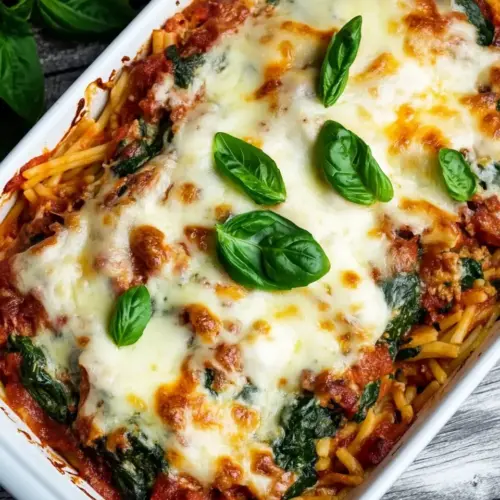
Spaghetti Bolognese
Spaghetti Bolognese is a creamy, cheesy baked pasta with savory browned turkey, tangy basil marinara, and bright baby spinach, perfect for an easy weeknight dinner or a crowd pleasing potluck. The whole grain spaghetti adds nutty texture while three cheeses create a luscious filling that melts and browns beautifully, making it a comforting yet balanced meal to make any night of the week.
Equipment
- Large Pot
- Large Skillet
- 9 x 13 inch casserole dish
- Mixing Bowl
Ingredients
- 10 ounces whole-grain spaghetti broken in half Break into smaller strands to shorten cooking time and make portions easier to eat; cooks to al dente for a hearty whole-grain base. Provides fiber and a nutty flavor that complements the savory sauce in the dish.
- 1 pound lean ground turkey optional beef Brown as the primary protein, cooking thoroughly to develop savory flavor and texture; can be substituted with beef for a richer taste. Adds lean protein and helps create the meaty foundation of the Bolognese sauce.
- 25 ounces basil marinara sauce jar, no sugar added Pour into the pan as the tomato base, simmering to meld with browned meat and seasonings; choose a no-sugar-added variety to control sweetness. Supplies acidity, depth, and a concentrated tomato flavor that forms the body of the sauce.
- 2 cups baby spinach chopped and loosely packed Chop and stir in near the end of cooking to wilt gently and preserve color and nutrients; packs lightly so it incorporates evenly. Contributes bright color, mild earthy flavor, and extra vitamins for a balanced pasta.
- 1 teaspoon kosher or sea salt divided Season gradually, using part during cooking and part to finish the dish; kosher or sea salt enhances other flavors without overpowering. Regulates overall seasoning and brings out sweetness and umami in the sauce and pasta.
- 1/2 teaspoon black pepper Grind over the dish to provide subtle heat and complexity; add during cooking to distribute flavor evenly. Balances saltiness and enhances the savory profile with a warm, aromatic bite.
- 1 teaspoon dried oregano Sprinkle into the sauce while simmering to impart an aromatic Mediterranean note; dried oregano holds up well to long cooking. Reinforces herbal complexity and complements tomato and basil flavors in the Bolognese.
- 1 tablespoon basil leaves fresh, chopped Chop fresh and stir in near the end or use as a garnish to maintain bright herbal aroma; fresh basil adds lively fragrance. Elevates freshness and adds a sweet, peppery herbal lift to the finished pasta.
- 1 cup cottage cheese low-fat Blend into the sauce or use as a lighter creamy layer to add tang and body; low-fat cottage cheese gives creaminess with less fat. Provides a mild, tangy creaminess that helps create a silky texture in the sauce or layered pasta.
- 1 cup mozzarella cheese part-skim Shred and sprinkle over or mix into the pasta for melt and stretch; part-skim mozzarella offers gooey texture with reduced fat. Adds a melty, mild dairy richness that helps bind components and enhances mouthfeel.
- 1/2 cup parmesan cheese low-fat, grated Grate and dust over the finished dish for nutty, salty finish; low-fat parmesan contributes umami without excess calories. Delivers sharp, savory depth and a pleasant granular texture to top the Bolognese.
Instructions
- Bring a large pot of water to a rolling boil. Add 1/2 teaspoon salt, then pasta. Cook until "al dente," according to package directions. Drain and set aside.: The scent of the kitchen changes as water reaches a rolling boil, a steady roar announcing readiness. You will see large bubbles break the surface continuously, and steam will rise in a steady sheet. This vigorous boil ensures the spaghetti cooks evenly and does not clump together. If the water is only simmering, pasta will cook unevenly and become gummy. A common mistake is adding pasta to water that is not truly boiling, which extends cooking time and alters texture. I always add a generous pinch of the divided salt once the water is boiling to season the pasta from the inside out.
- In a large skillet over medium-high heat, add ground turkey, breaking up with a fork as it cooks. Continue cooking until it loses its pink color, drain off excess fat. Add marinara and spaghetti, toss to combine.: As you drop the spaghetti in, it will soften quickly at the edges and sink, and you should stir immediately so strands do not stick. Listen for a brief hiss as the pasta hits hot water, then a softer bubbling as it cooks. Stirring once or twice during the first minute prevents clumping. The reason for salting now is to uniformly season the strands; if you salt only later, the seasoning will remain superficial. Avoid crowding the pot with too little water, which can lead to clumped, unevenly cooked pasta.
- Preheat the oven to 375°F.: You want the spaghetti to have a slight resistance when bitten, not floppy. Taste a strand a minute or two before the lower bound of the package time to check. The texture should be slightly firm in the center, with a pleasing chew. Overcooking makes the final casserole soft and pasty. If the pasta seems underdone after draining, a brief return to the sauce in a hot pan will finish it without losing form.
- Combine in a mixing bowl baby spinach, 1/2 teaspoon salt, pepper, oregano, basil, and all cheese.: When you drain the spaghetti , give it a quick shake to remove excess water, but do not rinse unless you plan to use it in a cold preparation. The surface starches help sauce adhere, so preserving them improves cohesion in the casserole. If the pasta sits too long without oil or sauce, it can stick together; tossing briefly with a small splash of reserved pasta water prevents that. A frequent error is rinsing hot pasta, which strips flavorful starches.
- In a 9 x 13-inch casserole dish, layer 1/2 spaghetti and meat sauce mixture, then 1/2 of spinach cheese mixture. Repeat the layering.: As the ground turkey hits the hot skillet, you will hear a lively sizzle and smell savory meat aromas. Breaking it up with a fork creates small crumbles that brown more evenly, contributing texture in the finished dish. Browning develops flavor through the Maillard reaction, so give the meat contact with the pan and resist constant stirring. If the pan is too crowded, the meat will steam and remain pale, losing that deeper flavor. Keep the heat medium high so the exterior caramelizes without burning.
- Cover with foil and bake 25 minutes.: Once the meat changes from pink to a uniform cooked color, you can spoon off any excess fat to keep the casserole from becoming greasy. The smell should shift from rawness to roasted, slightly sweet notes. Draining preserves a cleaner sauce texture. Be cautious when draining hot fat, use a heatproof container and tilt the pan away from you. Leaving too much fat can make the bake oil separated, while removing every trace may reduce flavor slightly, so aim for balance.
- Remove foil and bake an additional 5 minutes, or until the cheese is hot and bubbly. Garnish with fresh basil leaves if desired.: When you stir in the marinara and return the spaghetti to the skillet, you will see the sauce coat each strand and the aromas will broaden to include tomato and herbs. Tossing distributes flavors and lets the pasta absorb some sauce before assembly, which prevents a dry casserole. If the mixture seems dry, add a little reserved pasta water to loosen it. A common problem is adding too much liquid up front, which makes the final layers runny rather than cohesive.
- Enjoy!: While assembling, preheating the oven prepares it to melt cheeses and set the filling evenly. At 375°F you get even baking and gentle browning without overbrowning the top. You will notice the oven light and a steady hum as it reaches temperature. Skipping preheat can result in uneven cooking and extended bake times, so allow the oven to fully heat before the casserole goes in.
- Combine in a mixing bowl baby spinach 1/2 teaspoon salt pepper oregano basil and all cheese: As you mix the spinach , herbs, and three cheeses , textures change from leafy and airy to creamy and cohesive. The salt helps draw a little moisture from the spinach , softening it and marrying it to the cottage cheese . The aroma of fresh basil lifts the mixture. Combine until evenly distributed, but avoid overworking which can bruise the leaves and make the mixture watery. If the filling feels too loose, a short rest in the refrigerator firms it up for easier layering.
- In a 9 x 13 inch casserole dish layer 1/2 spaghetti and meat sauce mixture then 1/2 of spinach cheese mixture Repeat the layering: Building layers creates a mosaic of flavors so each serving has sauce, pasta, and cheesy greens. As you spread the first half of the pasta, press gently so there are no large air pockets. Then add half of the filling and smooth it to an even layer. Repeat for the second tier. Visual cues to look for include evenly distributed cheese and visible flecks of herb. Avoid piling ingredients in clumps, which leads to uneven baking and a lopsided casserole.
- Cover with foil and bake 25 minutes: Covered baking steams the interior, melting the cheeses and melding flavors without drying the top. You will notice the kitchen fill with warm, herby tomato aromas while steam escapes from under the foil. This gentle phase allows the center to come to temperature. A common mistake is skipping the foil, which can overbrown the top before the center heats through. Keep the cover tented slightly to prevent cheese from sticking to the foil.
- Remove foil and bake an additional 5 minutes or until the cheese is hot and bubbly: Taking the foil off for the final bake creates a pleasing golden surface and small browned spots where cheese meets heat. You will hear gentle bubbling and see steam as you open the oven, and the top should shimmer with melted cheese. This short uncovered time is for texture and finish. Watch closely, as cheese can go from golden to burned quickly. If you see rapid browning, lower the oven slightly and keep an eye on it.
- Garnish with fresh basil leaves if desired: A few torn fresh basil leaves scattered on top add a final layer of perfume and color. The contrast of bright green on bubbling cheese is visually appealing and lifts the first bite. Add the leaves just before serving so their aroma stays vibrant. If added too early in the oven, their fragrance fades and the leaves wilt excessively.
- Enjoy: The first forkful should combine warm sauce, elastic cheese, tender spaghetti , and a hint of green from the spinach . Listen for soft strings of melted mozzarella , and savor the interplay of herbs. If the bake cools and firms, a quick five minute reheat in a low oven revives the textures. Resist the urge to overheat in bursts in a microwave which can toughen the pasta and make cheeses rubbery.
Notes
- Swap protein: If you prefer, use lean beef instead of ground turkey for a richer flavor, but drain excess fat to avoid greasiness.
- Cheese texture: Use whole milk mozzarella for silkier melt, or part skim for a lighter finish without losing stretch.
- Spinach handling: Chop baby spinach finely so it blends smoothly into the cheese layer and does not create watery pockets.
- Pasta choice: Whole grain spaghetti gives nutty flavor and firmer bite, but you can use regular spaghetti if preferred, watching cook time closely.
- Marinara quality: Choose a basil forward marinara for immediate herb depth, avoid overly sweet jars which mask tomato brightness.
- Make ahead: Assemble ahead and refrigerate covered for up to 24 hours, then add a few extra minutes to the bake time so the center reaches temperature.