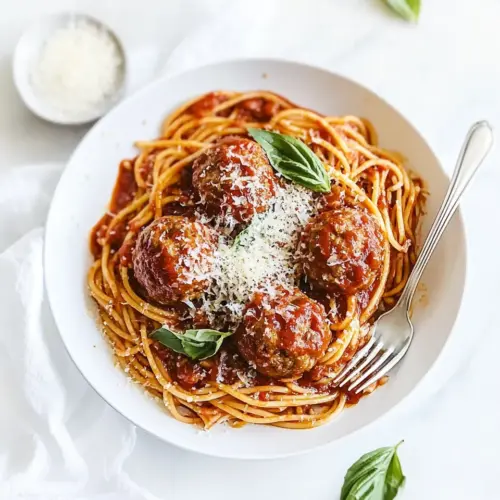
Spaghetti and Meatballs
Spaghetti and Meatballs brings together juicy baked meatballs and saucy spaghetti for a comforting, easy weeknight dinner. Creamy notes from milk and umami from Parmesan create tender meatballs that pair perfectly with warm marinara. This classic Italian American dish is family friendly, crowd ready, and simple to prepare, making it a go to recipe when you want satisfying comfort food that everyone will love.
Equipment
- Oven
- Baking Sheet
- Large Bowl
- Instant read thermometer
- Saucepan
Ingredients
- 2 pounds ground beef Provide rich, savory bulk and primary protein for the meatballs, supplying fat and structure that keeps them moist during cooking. Combine thoroughly with binders and seasonings to distribute flavor evenly. Brown gently to develop a caramelized crust before finishing in sauce.
- 1 cup panko breadcrumbs Add light, airy texture to the meatball mixture by absorbing moisture and helping bind ingredients without making them dense. Soak in milk or eggs to soften before mixing so they incorporate smoothly. Contribute subtle crunch reduction and tenderness when properly hydrated.
- 1/2 medium yellow onion, peeled and grated Impart sweet, aromatic moisture and fine texture when grated directly into the meat mixture, dispersing onion flavor evenly without large pieces. Help keep meatballs tender by adding both flavor and moisture without overwhelming the mixture. Caramelize slightly if sautéed first to deepen savory notes.
- 1/2 cup whole milk Provide creamy richness and hydration that helps the breadcrumbs swell and bind the meatballs, contributing to a tender interior. Add mild dairy flavor that complements herbs and cheese, and prevent dryness during baking or simmering. Use whole milk for optimal fat content and mouthfeel.
- 2 large eggs Supply binding power and additional richness to hold the meatball mixture together while adding silkiness to the texture. Beat lightly before adding so they incorporate evenly and support structure during cooking. Contribute to color and tenderness in the finished meatballs.
- 1/4 cup minced fresh parsley Bring fresh, herbaceous brightness and a subtle peppery note that lifts the savory meat and cheese flavors. Chop finely so flavor distributes evenly throughout the meatballs without creating pockets. Pair with other seasonings to balance richness and add freshness to the dish.
- 1/4 cup grated Parmesan cheese Deliver umami depth and salty, nutty richness that enhances overall savory profile when mixed into the meatball mixture. Grate finely to melt into the meat during cooking and contribute to cohesive texture. Use as part of the seasoning balance alongside herbs and salt.
- 1 teaspoon Italian seasoning Add a balanced blend of dried Mediterranean herbs to provide background flavor and aromatic complexity to the meatballs. Sprinkle in measured amounts so herb flavors complement rather than overpower fresh ingredients. Rehydrate slightly in the wet mixture for best integration.
- 1 teaspoon garlic powder Introduce concentrated mellow garlic flavor without adding fresh garlic texture, distributing evenly throughout the meat mixture. Use sparingly to avoid bitterness while contributing a familiar savory punch that pairs well with Italian seasonings and cheese. Combine with other spices for a rounded profile.
- 1 teaspoon salt Enhance overall savory seasoning and help bring out other flavors while controlling balance in the meatball mixture. Dissolve into the wet ingredients to ensure even distribution and avoid salty pockets. Adjust carefully to taste, considering salty components like Parmesan and marinara.
- 1/2 teaspoon freshly ground black pepper Contribute gentle heat and depth that amplifies savory notes without overwhelming the palate, rounding out the seasoning profile in the meatballs. Grind fresh for brighter, more complex flavor and mix thoroughly with other spices. Use moderation to maintain balance with salt and herbs.
- 24 ounces marinara sauce, warmed Provide a savory, tomato-based braising liquid that finishes cooking and flavors meatballs, adding acidity and richness while keeping them moist. Warm before adding to prevent cooling the meatballs and to help meld flavors more quickly. Simmer meatballs gently in sauce to infuse them with depth.
- 24 ounces marinara sauce, warmed (divided) Serve as additional warmed tomato sauce for tossing with pasta or finishing the dish, offering continuity in flavor between meatballs and spaghetti. Reserve some for coating noodles and reheating if needed, ensuring consistent temperature and texture. Use divided portions to control saucing during plating.
- 16 ounces spaghetti noodles, cooked to al dente (according to package instructions) Offer a starchy, textured foundation to carry sauce and meatballs, absorbing flavors while providing satisfying bite when cooked to al dente. Rinse or toss promptly after cooking to prevent sticking and maintain proper firmness. Combine with sauce while hot so flavors adhere to the strands of pasta.
- fresh basil, for garnish (optional) Provide bright, aromatic finishing notes and visual contrast when torn or chiffonaded over the plated dish, enhancing perceived freshness. Use sparingly as an optional garnish to complement herbs already in the meatballs and sauce. Add at the end to preserve vibrant color and fragrance.
- fresh Parmesan cheese, for garnish (optional) Add a salty, nutty finishing touch when grated over the plated dish to heighten umami and enrich mouthfeel. Use freshly grated for best melting and flavor release, sprinkling just before serving to avoid clumping. Offer as optional for diners to customize cheesiness.
Instructions
- Preheat the oven to 400 degrees F. Line a large baking sheet with foil and lightly spray the foil with olive oil cooking spray.: You will notice the oven warming the kitchen as the heat builds, which helps the meatballs cook evenly. A foil lined baking sheet makes cleanup simple and reflects heat for even browning. Lightly spraying prevents sticking and encourages a crisp exterior. If your oven runs hot, place the rack in the center to avoid overly rapid browning. A common mishap here is skipping the spray, which can make meatballs adhere to the pan and break apart when flipped or removed.
- Add all meatball ingredients (except marinara sauce) to a large bowl and use your hands to combine. Scoop the meat mixture into 3-tablespoon-sized balls and arrange them on the prepared baking sheet. You should get about 24 meatballs.: As you mix, feel for an even distribution of ingredients, with the grated onion and parsley folded in gently. The mixture should be cohesive but not overworked, because over mixing compresses the proteins and yields dense meatballs. When rolling, use slightly damp hands to prevent sticking, and aim for uniform size so they bake consistently. A frequent mistake is squeezing the mixture too tightly; let the meatball hold its shape without compacting it.
- Bake the meatballs until they are cooked through (ground beef should be cooked to an internal temperature of 160 degrees F, which you can check with an instant-read thermometer), about 15 to 20 minutes. If you want to brown the tops, broil the meatballs briefly after baking. Add the meatballs to a large bowl and toss with 1 jar of warmed marinara sauce.: During baking you will hear faint sizzling as the exterior sets and the aroma of cooking beef and onion fills the air. Look for an even golden brown color on the outside and juices running clear near the bottom. The internal temperature is the best indicator of doneness, ensuring safety without overcooking. Broiling briefly adds attractive caramelized spots, but watch closely because sugars in the sauce or cheese can burn quickly. A pitfall here is removing meatballs too early because of color alone; always verify temperature for safety.
- Toss the cooked spaghetti with 1/2 jar of warmed marinara sauce. Place the meatballs on top of the spaghetti, and serve along with the remaining 1/2 jar of marinara sauce to spoon on top, if desired.: The sound of sauce slipping around noodles is comforting, and the sauce should cling, not pool, when the pasta is properly sauced. Toss gently so the spaghetti is evenly coated and the strands remain distinct. Placing meatballs on top showcases them visually, and reserving sauce allows guests to add more for a saucier plate. Avoid drowning the pasta in sauce early, which can make the noodles soggy if held before serving.
- Serve with fresh basil leaves and freshly grated parmesan cheese for topping.: The final garnishes add aroma and a bright finish, with basil contributing a fresh herbal scent and Parmesan melting slightly into warm sauce. Scatter leaves just before serving so they retain their color and fragrance. Grating cheese fresh creates delicate, airy shreds that melt beautifully; pre grated cheese can feel chalky. A common oversight is adding garnishes too early, which diminishes their visual and aromatic impact.
Notes
- Handle the mix gently, overworking develops gluten in the meat and breadcrumbs, which leads to dense meatballs; fold ingredients just until combined to keep them tender.
- Toast the panko lightly, if you want extra texture inside, gently toasting the panko brings a nutty note, but do this sparingly so it does not dry out the crumbs.
- Keep sauce warm, maintain sauce at low heat so meatballs finish in a cozy environment; cold sauce will halt flavor melding and cool the dish down.
- Use an instant read thermometer, it removes guesswork and guarantees safe doneness without overcooking, a small investment that pays off every time.
- Reserve sauce for serving, holding back some sauce lets guests add more, and keeps the pasta from becoming overly saturated if plated early.