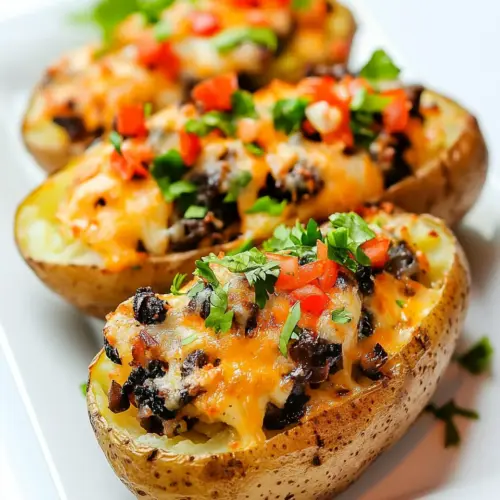
Southwestern Stuffed Potatoes
Southwestern Stuffed Potatoes are creamy, smoky, and easy to make, featuring fluffy russet shells filled with a zesty mix of fire roasted tomatoes and black beans. This easy weeknight dinner delivers melty cheddar and bright scallions for contrast, making it a crowd pleasing, cozy meal. Try it for simple entertaining or a satisfying solo supper.
Equipment
- Oven
- Baking Sheet
- Medium Bowl
- Fork
- Spoon
Ingredients
- 3 russet potatoes medium, scrubbed Scrubbed and roasted to tender perfection, provides a sturdy, fluffy base for holding the flavorful southwestern filling and adds comforting, earthy starchiness to each serving.
- 1 tablespoon extra virgin olive oil Coats the potato skins before baking to promote crispness and adds a subtle fruity richness while helping spices adhere to the filling during cooking.
- 1/2 teaspoons ea salt divided Seasoned and split between steps to enhance both the potato skin and the filling, offering balanced savory flavor and helping draw out moisture for better texture.
- 15 ounces fire-roasted tomatoes can, with juice Drained and spooned into the filling for bright, slightly smoky tomato flavor; contributes juicy acidity and helps bind the bean mixture together when warmed.
- 15 ounces black beans can, rinsed and drained Rinsed and drained to supply hearty protein and creamy texture; adds fiber, a mild bean flavor, and bulk to make the stuffed potatoes satisfying and nutritious.
- 1 teaspoon ground cumin Ground and stirred into the filling to impart warm, earthy notes and a subtle peppery undertone that complements the tomato and bean components.
- 1 teaspoon chili powder Sprinkled into the mixture to introduce a mild heat and rounded chili flavor, enhancing the overall southwestern profile without overpowering the other seasonings.
- 1/2 teaspoon garlic powder Dusted into the filling to add a mellow, savory garlic background that boosts aroma and rounds out the spice blend without introducing fresh garlic's sharpness.
- 1/2 cup cheddar cheese reduced-fat Shredded and melted over the finished filling to provide gooey, creamy richness and a tangy, mellow cheesiness that ties the components together and offers a satisfying finish.
- 1/4 cups scallions sliced Sliced and scattered atop the finished potatoes to deliver a crisp, bright onion flavor and fresh green color, contributing mild sharpness and a pleasant textural contrast.
Instructions
- Preheat oven to 400 degrees F.: As the oven warms to 400 degrees F , you should notice a dry, warming scent from the heating elements, a cue that the air will crisp the skins. This preheat matters because even heat ensures the potatoes cook evenly, giving you a tender interior and a textured exterior. A common slip is skipping a full preheat, which can lead to uneven cooking and longer bake times. Allow the oven to reach temperature for best results, and if your oven runs cool, consider an oven thermometer so you know it's accurate.
- Pierce the potatoes with a fork, rub with oil, and sprinkle with salt. Bake for 45-50 minutes, until tender.: When you pierce the potatoes , steam escapes and keeps them from bursting. Rubbing them with extra virgin olive oil creates a matte sheen that browns in the oven, while a light sprinkle of salt draws moisture from the skin to heighten crispness. As they bake for about 45 to 50 minutes, listen for a quiet shift from dense to slightly hollow when tapped, and look for skins that give to gentle pressure. If the potatoes are still firm in the center, they need more time. An error to watch for is using foil wrapped too tight, which can steam the skins instead of crisping them.
- Meanwhile, mix the tomatoes, black beans, and seasonings in a medium bowl.: While the potatoes roast, open the cans of fire roasted tomatoes and black beans . The tomatoes should smell faintly smoky and bright, and the beans should be firm but tender. Combine the tomatoes with their juices, the rinsed beans, ground cumin , chili powder , garlic powder , and a portion of the salt . Stir until the mixture glistens and the spices are evenly distributed. Tasting at this stage is critical because it’s easier to adjust seasoning before stuffing. A common mistake is under-seasoning; be bold but measured, and remember you can always add more salt later.
- When the potatoes are done, slice in half lengthwise. Scoop out most of the potato and add to the bowl with the bean mixture. Mix and divide between the potato shells. Top with cheese and return to the oven. Bake for 10-15 minutes, or until cheese is melted. Top with the scallions and serve.: After the potatoes cool enough to handle, slice them carefully lengthwise so the halves sit flat. Scoop out most of the flesh, leaving a thin wall so the skins remain sturdy. The scooped potato should be warm, fluffy, and slightly starchy, which helps the filling bind. Add the potato to the bean and tomato bowl; the potato will mellow the acidity and make the filling creamier. Avoid scraping the skins too thin, which can cause them to collapse when baked again.
- Mix and divide between the potato shells.: Once the scooped potato is incorporated, the filling should feel cohesive and slightly saucy. Use a spoon to divide the mixture into the shells, packing gently to create a generous mound. The filling should steam softly as it nestles into the skins, releasing aromas of cumin and roasted tomato. If the mixture seems watery, spoon more filling into a bowl and let it settle, spooning off excess liquid. A common error here is underfilling, which results in dry shells, or overfilling, which can spill and burn on the baking sheet.
- Top with cheese and return to the oven. Bake for 10 to 15 minutes, or until cheese is melted.: Scatter the cheddar cheese over each stuffed shell so it blankets the filling. As they return to the oven, the cheese will soften, bubble, and form a slightly bronzed surface. The scent becomes richer, with dairy notes melding into the smoky tomato. Ten to 15 minutes is usually enough to melt the cheese through without drying the filling. Watch closely near the end to avoid overbrowning. A common pitfall is leaving them in too long, which can dry out the filling or harden the cheese crust.
- Top with the scallions and serve.: Fresh scallions sliced and scattered over the hot potatoes add a sharp, green contrast and a bright aroma. Their crispness cuts through the warm, melty filling, giving each bite lift. Serve immediately so you preserve the contrast between hot filling and cool, crunchy scallion. If you wait too long, the scallions wilt and lose their vibrant snap, so add them right before serving.
Notes
- Add extra spice You can increase the amount of chili powder and ground cumin for a smokier, more assertive profile. Taste the filling after mixing and adjust gradually. Over-spicing can overshadow the tomato and bean balance, so add in small increments and test as you go.
- Simpler dairy Use a milder melting cheese if you prefer a less sharp finish instead of the reduced-fat cheddar cheese. A milder cheese will still bind the filling but deliver a softer dairy note that some prefer.
- Make it milder If heat is a concern, reduce the chili powder by half and emphasize the ground cumin for warmth without sharp capsaicin bite. Always taste the filling before baking so you can rebalance as needed.
- Extra tomato depth Drain a portion of the fire roasted tomatoes if you want a denser filling, or simmer the mixture briefly to thicken. Either method helps avoid a soggy shell while concentrating flavor.
- Garnish creativity Swap or add to the sliced scallions with fresh herbs if available for an herbal lift. Add just before serving to keep texture bright and flavors distinct.