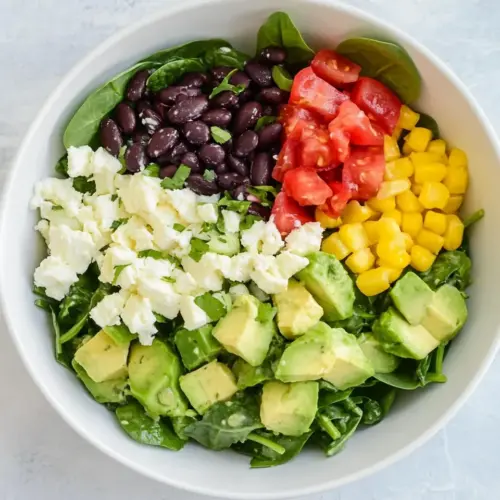
Southwest Spinach Salad
Southwest Spinach Salad is a creamy, bright, and easy to assemble bowl that combines tender baby spinach, hearty black beans, sweet corn, and a tangy cilantro lime dressing. Perfect for an easy weeknight dinner or a fresh lunch, this salad delivers vibrant textures and bold flavors in minutes, making it a must make for busy days when you want something wholesome and satisfying.
Equipment
- Blender
- Large Bowl
- Salad Tongs
Ingredients
- 1/2 cup plain nonfat Greek yogurt Blend to create a creamy, tangy base for the dressing that adds protein and a smooth texture while keeping the dressing low-fat; whiskes easily with lime juice and cilantro to form a cohesive sauce.
- 1/2 medium avocado, peeled and pitted Mash gently to provide a rich, buttery texture and healthy monounsaturated fats that enhance creaminess in the dressing and contribute a subtle, fresh flavor; incorporate gradually to control consistency.
- 2 1/2 tablespoons freshly squeezed lime juice Squeeze freshly to introduce bright acidity and citrusy brightness that balances the richness of yogurt and avocado while enhancing overall flavor and preserving vibrant color in the salad.
- 1/2 cup fresh cilantro Chop finely to add fresh, herbaceous notes and vibrant green color while contributing aromatic depth and a hint of citrusy undertone that complements the lime and avocado.
- 1/4 teaspoon Kosher salt Season lightly to heighten and balance flavors throughout the dressing and salad; dissolves into the yogurt mixture to enhance both savory and fresh components without overpowering them.
- 1 tablespoon water, plus more as needed Add sparingly to adjust dressing consistency; thins the yogurt mixture to desired pourable texture while helping emulsify ingredients and maintain a smooth mouthfeel.
- 8 cups baby spinach Toss as the leafy base to provide a tender, nutrient-dense foundation with mild flavor that pairs well with bold toppings and absorbs dressing, delivering bulk and vibrant color to the salad.
- One 15-ounce can black beans, drained and rinsed Rinse and drain to supply plant-based protein, fiber, and a creamy, earthy bite; adds hearty texture and visual contrast while complementing southwestern flavors.
- 1 cup canned corn, drained Drain to contribute sweet, juicy kernels and a pleasant pop of texture that contrasts with the beans and greens while reinforcing the southwestern profile of the salad.
- 1 cup halved cherry tomatoes Halve to deliver bursts of juicy, sweet-tart flavor and bright color; balances creaminess and starch with fresh acidity and a pleasant bite in every forkful.
- 1/4 cup chopped red onion Chop finely to introduce sharp, pungent notes and slight crunch that cut through creamier elements and elevate overall savory complexity of the salad.
- 1/2 medium avocado, sliced Slice to provide additional creamy avocado texture and visual appeal; places atop the salad for richness, smooth mouthfeel, and cohesive flavor continuity with the dressing.
Instructions
- Place all of the dressing ingredients in a blender and blend until smooth, adding more water as needed to reach desired consistency.: Start by smelling the fresh cilantro and lime juice as you add them to the blender, the bright citrus perfume should be immediate, and it signals freshness. As the blades whirl you will hear a steady whir rather than heavy resistance, showing the avocado and Greek yogurt are emulsifying properly, creating a silky, green dressing. Visually, the dressing should turn a consistent pale green, free of large streaks of avocado or clumps of yogurt . This texture matters because a smooth dressing coats the spinach evenly, ensuring each leaf gets flavor. If you go too long blending you may warm the dressing slightly, so pulse to control temperature. A common mistake is adding all the water at once; instead add water gradually, it is easier to thin than to thicken back up.
- In a large bowl, combine the spinach, black beans, corn, tomatoes, red onion and avocado. Drizzle with dressing, toss lightly, and serve.: When you toss these ingredients together you will notice the contrast between the velvety avocado , the plump black beans , and the juicy cherry tomatoes . Run your fingers through the baby spinach to remove any stems, and listen for the faint rustle as the leaves move, a sign they are fresh and delicate. The visual palette should be vibrant, with dark greens, bright reds, and golden corn standing out. This step matters because gentle mixing preserves the texture of the components; over handling can bruise the leaves and mash the avocado . A typical error is crowding the bowl too small, which makes even tossing messy. Use a roomy bowl so ingredients move freely and combine evenly.
- Drizzle with dressing: Watch the dressing form thin ribbons as it leaves the blender, a glossy stream that clings slightly before sinking into the mix. The sound here is quiet, just the soft splash as it hits the salad. The dressing should be applied sparingly at first, because you can always add more, and this ensures the salad does not become soggy. The reason we drizzle rather than dump is to control distribution, letting you toss and check for flavor as you go. Avoid pouring all of it prematurely; adding too much is the most common misstep at this stage, so proceed in stages.
- Toss lightly: Use salad tongs or clean hands to gently fold the ingredients, feeling the mechanical resistance as the leaves move and the beans settle. The sound is subtle, a soft shuffling, and you should stop when the dressing looks evenly distributed and the leaves are slightly glossy. The goal is to coat each leaf without crushing the spinach or turning the avocado into mush. This technique helps every bite have balance, which is why a few light tosses are better than vigorous mixing. Over tossing is a common mistake, it leads to limp greens and mashed toppings.
- Serve: Present the salad immediately so the spinach retains a gentle crispness and the avocado slices hold their shape. Visually arrange a few avocado slices on top for appeal, and if any dressing has pooled at the bottom give the salad a light additional toss. The temperature should be cool and refreshing, and the aroma of lime juice and cilantro will be prominent. Serving right away prevents the salad from becoming watery, which is the main issue to avoid if you plan to make it ahead. If you must wait, keep the dressing separate and toss just before eating.
Notes
- Make the dressing smoother, blend the Greek yogurt and avocado first, then add the cilantro and lime juice. This creates a silkier emulsion that clings beautifully to the leaves.
- Control the texture, if you prefer a thinner dressing add water a teaspoon at a time until you reach the desired consistency. Too much water will dilute the flavor, so add cautiously.
- Keep avocado fresh, toss sliced avocado with a little extra lime juice to slow browning when serving is delayed. This simple step preserves color and taste.
- Balance salt carefully, add the Kosher salt in small increments and taste as you go to avoid oversalting, especially because canned black beans can carry sodium.
- Prep ahead strategy, chop the vegetables and store them separately from the dressing for up to a day. Combine just before serving to preserve the crispness of the spinach and the integrity of the avocado.