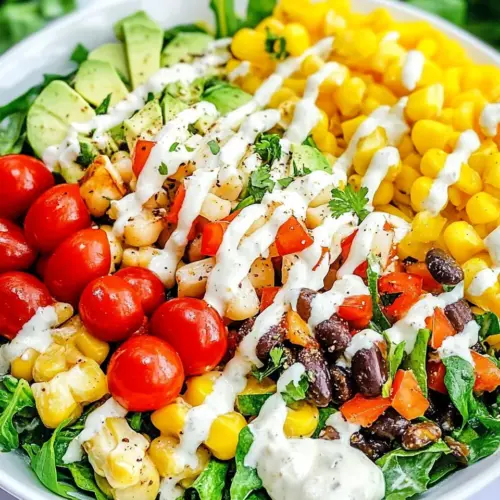
Southwest Salad
Southwest Salad is a vibrant, smoky and creamy bowl with tender chicken, bright lime, and a cilantro yogurt dressing. This easy weeknight dinner delivers crispy romaine, creamy avocado, and bursts of cherry tomato, making it a quick, satisfying meal with bold flavors and great texture. Perfect for busy evenings or casual entertaining, it’s a reason to make a fresh, flavorful salad tonight.
Equipment
- Cast iron grill skillet
- Food Processor
- Ziplock bag
Ingredients
- 2 medium chicken breasts Cook through and slice for protein in the salad; season before cooking to infuse flavor and ensure juicy, tender bites. Use medium breasts for even cooking and easy portioning. Can be grilled or pan-seared to add a slight char that complements the southwest flavors.
- 1 tablespoon taco seasoning Season the chicken and other components with a robust spice blend; sprinkle evenly to add southwest savory heat. Mix into chicken before cooking to create a consistent flavor profile. Works well combined with oil and lime for a marinade.
- 1 teaspoon smoked paprika Add smoky depth and warmth when combined with other spices; use alongside taco seasoning to enhance the overall flavor. Sprinkle modestly to avoid overpowering the dish. Complements grilled chicken and roasted corn.
- 1/4 teaspoon salt Enhance and balance flavors by bringing out natural tastes; use sparingly to avoid over-salting. Dissolve into marinades or sprinkle on vegetables for even seasoning. Helps tie together savory and acidic components.
- 1 lime zested and juiced Brighten the salad with fragrant zest and tangy juice; use both to season chicken and dressing for cohesive citrus notes. Zest adds aromatic oils while juice provides acidity to balance richness. Lime pairs well with cilantro and honey.
- 1 tablespoon olive oil Bind spices and help the chicken brown; use in marinades to carry flavors and promote even cooking. Olive oil also adds healthy fats and a silky mouthfeel to the dressing. Choose extra virgin for more pronounced olive flavor.
- 2 cups romaine lettuce chopped Provide a crisp, leafy base for the salad; chop to bite-sized pieces for easy eating and even distribution. Romaine adds a refreshing crunch that contrasts creamy avocado and tender chicken. Use chilled lettuce for best texture.
- 1 ripe avocado sliced Contribute creamy texture and rich, buttery flavor to each bite; slice for easy placement and even coverage. Avocado adds healthy fats that mellow spicy elements and enhance satiety. Add just before serving to prevent browning.
- 8 small cherry tomatoes cut in half Introduce sweet, juicy pops of acidity and color; halve for visually appealing bite-sized pieces. Cherry tomatoes brighten the salad and complement the lime and cilantro flavors. Toss gently to avoid crushing.
- 1/2 cup black beans rinsed and drained Add hearty plant-based protein and a creamy, earthy element when rinsed and drained; black beans contribute fiber and southwestern authenticity. Mix into the salad for balanced texture and extra substance. They hold up well against dressing.
- 1/2 cup corn rinsed and drained Provide sweet crunch and visual contrast when rinsed and drained; corn adds pleasant chew and summer flavor to the salad. Use fresh or thawed frozen kernels for best sweetness. Pair with paprika and lime for classic southwest notes.
- 1 cup cheddar cheese grated Deliver sharp, salty richness when grated over the salad; cheddar melts slightly against warm chicken for extra indulgence. Use a flavorful sharp cheddar for more pronounced tang. Sprinkle last to maintain texture.
- 1/4 cup cilantro for topping Add a bright, herbal finish as a topping; chop cilantro for fresh, citrusy notes that lift the entire dish. Sprinkle generously to accent lime and spice flavors. Use tender leaves for best mouthfeel.
- 1/2 cup Greek yogurt Provide a creamy, tangy base for the dressing; Greek yogurt lightens the mayo while contributing protein and smooth texture. Blend with lime and cilantro for a balanced southwest-style dressing. Use plain yogurt to avoid added sugars.
- 1/4 cup mayo Add richness and emulsification to the dressing; mayo creates a smooth, creamy mouthfeel that rounds out tangy yogurt and lime. Use light or full-fat depending on desired creaminess. Combine thoroughly to create a stable dressing.
- 1/4 cup cilantro packed Contribute concentrated herbal flavor and freshness in the dressing; pack finely chopped cilantro for intense aroma. Cilantro pairs with lime and cumin flavors to define the southwest profile. Adjust amount to taste, as it can be bold.
- 1 tablespoon lime juice Provide acidity to balance creaminess and sweetness; freshly squeezed lime juice brightens the dressing and salad components. Use alongside lime zest for cohesive citrus notes throughout the dish. Adds necessary tang to cut through fat.
- 1 tablespoon honey or maple syrup Introduce a subtle floral sweetness to mellow spice and acidity; honey or maple syrup balances the dressing without overwhelming. Whisk into yogurt-mayo mixture to create a harmonious sweet-tangy profile. Adjust amount to personal preference.
- 1/4 teaspoon salt Season the dressing or salad lightly to enhance flavor; a small pinch prevents blunting of other ingredients. Use measured salt to maintain balance with lime and herbs. Consider tasting before adding more.
- Chopped green onions Garnish with mild, oniony crunch and bright green color; chop green onions for delicate sharpness that complements cilantro. Scatter over the salad to add texture and a fresh finish. Use both white and green parts for varied flavor.
- Cilantro Finish with extra herbal brightness and garnish; add cilantro leaves for aromatic lift and visual appeal. Place atop salad right before serving to maintain freshness. Adjust quantity based on cilantro preference.
Instructions
- Add chicken breasts, taco seasoning, smoked paprika, salt, lime juice, zest, and olive oil in a medium ziplock bag. Close and shake well to fully coat the chicken into the mixture.: The aroma of lime and spice will lift immediately, with the zesty citrus oils hitting your nose as you seal the bag. Massage the bag gently so the coat feels even, and you should see the spices adhere to the chicken 's surface. This direct contact helps build flavor quickly, which is why I prefer the ziplock method for small batches. A common misstep is under massaging, which can leave pockets of unseasoned meat, so take a few extra seconds to rub the mixture over every part of the breast.
- Allow marinating for 10 minutes or up to 1-2 days in advance.: As the meat rests, the lime juice starts to tenderize the exterior and the spices soak in, a gentle chemical exchange that deepens flavor. Within 10 minutes you'll notice the chicken surface darker with seasoning, and if you extend the time the flavor becomes more integrated. However, too long an acidic marinade can change texture, so avoid leaving it much longer than 48 hours. If you plan ahead, store it covered in the refrigerator to keep aromas fresh.
- Place a cast-iron grill skillet over medium-high heat and once it is hot brush it with about 1 teaspoon of oil.: You want the skillet to be smoking faintly before contact, that initial sizzle is the sign of a proper sear. Brushing with oil prevents sticking and promotes nice grill marks. The heat will deliver a satisfying sizzling sound when the chicken hits the pan, and a well seasoned cast iron provides an even brown crust. Avoid adding chicken to a cool pan, which leads to steaming rather than searing and a pale exterior.
- Add the chicken and cook for 4-5 minutes on each side, depends how thick the chicken is.: As the chicken cooks you should hear an energetic sizzle and see the edges take on golden brown color. Resist the urge to move it around; a steady sear gives you the caramelized surface that seals juices in. Thicker breasts may need a little more time, and using a thermometer to reach 165 F at the thickest part is reliable. Cutting too early invites juices to run out and the meat to dry, so let it form that crust first.
- You can also cook the chicken on a gas grill. Turn on the grill to medium-high, clean the grates, and grill the chicken on both sides for about 10 minutes, or until cooked through.: On the grill you will get pronounced smoky notes and attractive char lines that build a rustic flavor profile. Clean grates and a properly preheated surface prevent sticking, and flipping once preserves juiciness. Expect to hear occasional flare ups and smell a toasty aroma as fat or marinade hits the heat. A common mistake is moving the meat too often, which prevents a good sear and lengthens cooking time.
- Allow chicken to rest for at least 5-10 minutes before slicing it.: Resting is crucial because it lets the juices redistribute, so when you slice the chicken they remain inside the fibers and the meat stays moist. The surface will cool slightly and the carryover heat will finish the cooking, which is why timing the rest matters. If you slice immediately, the juices escape and the slices can be dry. Use this waiting period to finish the dressing and prep the salad bed.
- Add all the dressing ingredients to a food processor and pulse to combine until smooth.: When you pulse the dressing you will smell the cilantro freshen and the lime brighten the mix. The texture should be creamy and slightly thick so it clings to the salad components. If it seems too thick, add a teaspoon of water or more lime juice to reach your desired consistency. Over processing can warm the dressing slightly, so pulse and stop to check texture rather than running it continuously.
- Place the chopped romaine lettuce on the bottom of a salad plate or bowl.: The first sensory cue is the crisp rustle of fresh leaves, and a well chilled plate helps keep the lettuce lively. Arrange the lettuce evenly to create a base that will hold toppings without collapsing. If the lettuce is wet, pat it dry so the dressing will cling instead of sliding off. Wet leaves also dilute the dressing, making the bowl less vibrant.
- Top with avocado, chopped tomatoes, black beans, corn, cilantro, cheddar cheese, and sliced chicken.: Layering matters because contrasting textures and temperatures create interest. The creamy avocado and cool tomatoes juxtapose the warm, spiced chicken , and scattered cheddar adds a salty counterpoint. Aim for even distribution so each forkful hits a mix of elements. Avoid piling everything on one side which makes the salad unbalanced and harder to toss.
- Drizzle the dressing on top just before serving.: The moment you drizzle, the aroma of lime and cilantro will perfume the bowl and the dressing will bind the ingredients together visually and flavor wise. A light touch prevents the salad from becoming soggy while still adding enough coating for each bite. If you add the dressing too early, the lettuce will wilt and lose its satisfying crunch.
- Garnish with chopped cilantro and chopped green onions.: The final garnish provides fresh aroma and a bright herbal lift. The green onions add a gentle sharpness and the cilantro reinforces the herbal theme. Scatter them sparingly for visual appeal, and serve immediately so the garnishes remain crisp. Leaving garnishes on for long periods can lead to wilting and color loss.
Notes
- Rest the chicken: Always allow your chicken to rest for at least 5 minutes after cooking to let the juices redistribute, which prevents dry slices and preserves tenderness.
- Dry the greens: Use a salad spinner or pat dry the romaine lettuce to keep the dressing from diluting and to maintain crispness throughout serving.
- Fresh lime matters: Use fresh lime zest and juice for both the marinade and dressing, it brightens the bowl and adds aromatics you cannot replicate with bottled citrus.
- Pulse don’t puree: When making the dressing, pulse in short bursts to keep it cool and to preserve some herbal texture rather than turning it into a warmed puree.
- Grate cheese fresh: Freshly grated cheddar melts and melds better; pre shredded options often include anti caking agents that affect mouthfeel.
- Prep strategically: Make the dressing and rinse the beans ahead, but assemble just before eating to maintain structure and the best contrasts of temperature and texture.