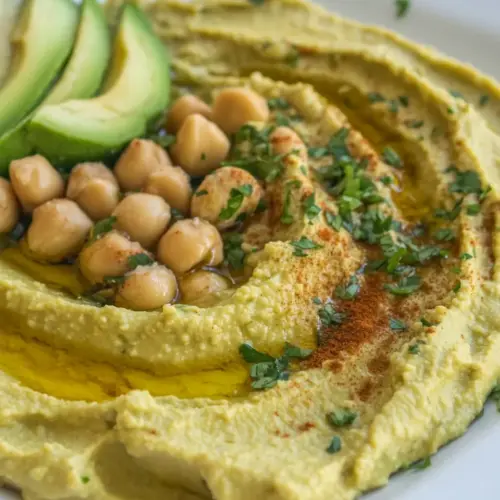
Southwest Avocado Hummus
Southwest Avocado Hummus is a creamy, flavorful dip that blends ripe avocado with smooth garbanzo beans, bright lemon, and warm cumin for an easy party favorite. The topping of whole garbanzo beans, corn, cilantro, and optional jalapeno adds crunch and color, making it perfect for chips, pita, or vegetables. Make it for a quick summer appetizer or an easy weeknight snack that pleases a crowd.
Equipment
- Food Processor
- Blender
- Mixing Bowl
Ingredients
- 2 cups cooked or canned Garbanzo beans Provide a creamy base and protein for the hummus while offering a smooth, slightly nutty texture that blends well with spices; rinse canned beans if used to reduce sodium and improve flavor balance.
- 2 Avocado peeled in half, pit removed Add a rich, buttery texture and healthy fats that help create a silky, creamy hummus; mash or blend thoroughly to integrate with the chickpeas for a cohesive dip.
- Salt & Pepper to taste Season to enhance and balance flavors, contributing necessary salinity and subtle heat contrast; adjust gradually to taste to avoid overpowering the avocado and spices.
- 1/4 cup Olive Oil Contribute a fruity, peppery richness and help emulsify the dip for a glossy, cohesive texture; drizzle in while blending to control consistency and mouthfeel.
- 2 cloves Garlic peeled and roughly chopped Introduce pungent, aromatic depth and bright sharpness that cuts through the richness; mince or crush before blending to distribute flavor evenly throughout the hummus.
- 1 teaspoon Cumin Impart warm, earthy notes and a subtle smoky character that complement the southwest profile; measure carefully to avoid overpowering the other spices.
- 1/4 cup lemon juice Provide acidity and brightness that lifts the overall flavor and prevents heaviness; freshly squeezed juice is preferred for the best citrus aroma and tang.
- 1/4 cup cold water Help achieve a smoother, lighter consistency without diluting flavor when added cold; use incrementally to reach the desired creaminess for dipping.
- 1 ripe Avocado sliced Add fresh, creamy slices as a garnish or mix-in that reinforce avocado flavor and offer a contrasting texture to the blended hummus when layered on top.
- 1 cup cooked or canned garbanzo beans Reinforce the hummus base and adjust portioning for serving or layering; can be used for additional blending or as a topping, matching the creamy texture of the main batch.
- 2 tablespoons Cilantro chopped Deliver fresh, herbal brightness and a slightly citrusy finish that complements cumin and lime; chop finely and stir in or sprinkle on top as a vibrant garnish.
- 1 tablespoon lemon juice divided Provide concentrated acidity and flavor control for layered or finished elements; reserve the divided portion to brighten toppings or adjust final taste after blending.
- 1 ear corn kernels removed Offer sweet, crisp kernels that add texture and a subtle corn sweetness to contrast the creamy hummus; cook or char slightly for added depth before incorporating.
- 1/2 jalapeno finely chopped, optional Contribute mild heat and vegetal brightness when included, offering a subtle spicy kick that enhances southwestern flavors; remove seeds for less heat and chop finely if using.
Instructions
- Place garbanzo beans, avocado, salt, pepper, olive oil, garlic, cumin, and lemon juice into the bowl of a food processor or blender. Blitz until smooth, adding in water (or more olive oil) until smooth and at the consistency you desire. Spoon into bowl.: The bowl fills with a mosaic of colors before blending, the pale beige of Garbanzo beans next to the green of Avocado and the flecks of cumin . You will notice a faint citrus scent from the lemon juice and a peppery aroma from the sliced Garlic . This stage is critical because it determines the base flavor balance; blending these together lets the oils and acids emulsify for a cohesive texture. If your mixture seems too thick, you may have added underripe Avocado or too little liquid. A common mistake here is under seasoning before blending, which results in a bland hummus; always start with a modest amount of Salt and Pepper , taste, and then adjust. Make sure your Olive Oil is at room temperature for smoother emulsification.
- For the topping, slice avocado and place onto hummus for garnish.: As the blades whirl, the mixture transforms from chunky to velvety, releasing a gentle whirring sound and a rich aroma. The texture to aim for is luscious and spreadable, without being soupy. I prefer to add several tablespoons of cold water first because it keeps the flavor bright, then drizzle in Olive Oil if I want extra silk. The why here is about fat and liquid balance they create mouthfeel; too much oil will mute freshness, while too much water will thin the dip. A frequent error is adding too much oil too quickly, which makes the hummus feel greasy rather than creamy. Pulse and scrape the bowl often to ensure even blending.
- In a small bowl, stir garbanzo beans together with cilantro, lemon juice, corn and jalapeno. Pour over avocado and hummus. Serve with chips, vegetables or pita.: When you transfer the hummus to a serving bowl, the surface should be smooth and glossy, with a subtle sheen from the Olive Oil . Take a spoon and create a slight well in the center so the toppings can nestle in; this also makes the dish visually inviting. The reason for this simple plating step is aesthetic and functional it keeps the garnish contained and makes every scoop balanced. A common oversight is serving directly from the processor, which can look rushed and uninviting. Use a clean spoon and wipe the rim for a tidy presentation.
- For the topping, slice avocado and place onto hummus for garnish: The sliced Avocado adds a creamy, cool counterpoint to the hummus beneath, and its rich, buttery scent is unmistakable. Lay slices artfully across the surface so they slightly overlap, creating a ribbon of green. This garnish is important because it reinforces the avocado flavor and adds an elegant texture contrast. Watch for browning; a light squeeze of lemon juice on the slices will help preserve color. A common mistake is slicing the fruit too early which leads to oxidation and a dull appearance.
- In a small bowl, stir garbanzo beans together with cilantro, lemon juice, corn and jalapeno: The toppings come alive as you fold together the whole garbanzo beans , chopped cilantro , fresh corn , divided lemon juice , and the optional finely chopped jalapeno . You will notice a sweet perfume from the corn, a citrus lift from the lemon juice , and a green, herbal snap from the cilantro . This mixture offers a textural contrast to the pureed base and creates flavor pockets. The purpose is to introduce brightness and chew to each bite. A typical error is overdressing the topping which makes it soggy; use the lemon juice sparingly and mix gently. Taste and adjust seasoning so the topping complements rather than overwhelms.
- Pour over avocado and hummus: Nestle the bean and corn mixture over the sliced Avocado and spread it lightly across the hummus surface so that each scoop will pick up both layers. The layered presentation reveals the contrast between the creamy spread and the hearty kernels, and the aroma should be fresh and lively. This final assembly step is about balancing textures and making the dish inviting. Avoid piling the topping too high, which can make scooping awkward and disconnect flavors. Present with a drizzle of extra Olive Oil or a final pinch of Salt if desired for a finishing touch.
- Serve with chips, vegetables or pita: Arrange crisp chips, sliced vegetables, or warmed pita around the bowl; the crisp sound of a test chip breaking should signal the correct texture pairing. Serving choices affect the eating experience: chips offer crunch, vegetables bring fresh snap, and pita provides a tender scoop. Choose vessels that contrast the hummus smoothness so each bite is dynamic. A common serving mistake is using soggy or stale dippers which diminish the overall enjoyment, so always use fresh, room temperature accompaniments.
Notes
- Choose perfectly ripe avocados, they should yield to gentle pressure without being mushy; underripe fruit makes the hummus grainy while overripe avocado can taste flat.
- Rinse and drain canned garbanzo beans, this removes excess sodium and any canning flavor, ensuring a cleaner, fresher hummus base.
- Adjust acidity carefully, add lemon juice in small increments and taste frequently to keep the balance bright but not sour.
- Use cold water to thin rather than adding too much oil; this preserves the fresh flavors while achieving a spreadable texture.
- Keep toppings separate until serving, assemble just before guests arrive to maintain color and crunch in the garnish.