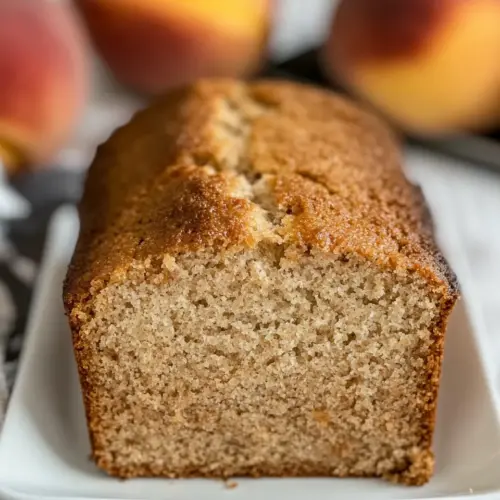
Southern Peach Bread
Southern Peach Bread is a tender, aromatic loaf bursting with juicy diced peaches, warm spices, and rich brown sugar. This easy quick bread uses simple pantry ingredients for a soft crumb and caramelized crust, perfect for an easy weeknight baking session or a relaxed brunch. Make it when peaches are in season for a memorable reason to gather.
Equipment
- 9 x 5 inch bread pan
- Mixing Bowls
- Whisk
- Offset Spatula
- Wire Rack
Ingredients
- 2 -3 teaspoons softened butter Softened and spreadable for greasing the pan to prevent sticking; adds a light richness to crust edges. Rub into loaf pan or use to coat parchment before pouring batter for even release after baking.
- 1 tablespoon sugar Sweet and fine-grained to boost overall sweetness and help tenderize the crumb; dissolves quickly into wet ingredients. Sprinkle over buttered pan edges or cream briefly with other sugars for uniform sweetness.
- 2 cups flour All-purpose base providing structure and bulk to the bread; contains gluten that traps gases for rise. Sift or whisk before measuring to avoid lumps and ensure even distribution with leavening agents.
- 1/2 teaspoon salt Pinching-level seasoning that balances and enhances other flavors; prevents the bread from tasting flat. Measure accurately to maintain proper chemical reactions and flavor equilibrium in the batter.
- 2 teaspoons baking powder Leavening agent delivering lift and light texture by producing carbon dioxide when activated; helps create an airy crumb. Combine thoroughly with flour to avoid uneven pockets and ensure consistent rising during baking.
- 1 cup dark brown sugar Moisture-binding sweetener offering deep, molasses-like flavor and extra moistness to the loaf; helps keep the bread soft over time. Pack lightly when measuring and fold gently into wet mixture to preserve texture.
- 1/4 teaspoon allspice Sweet-spicy powder used sparingly to add warm, slightly peppery undertones; complements peach flavor with a hint of complexity. Blend evenly with dry ingredients to distribute its concentrated aroma throughout the bread.
- 1/8 teaspoon ground nutmeg Warm, nutty spice employed in small quantity to impart subtle aromatic complexity; supports the overall spice profile without overpowering. Grate or measure carefully and disperse throughout dry mix to avoid clumping.
- 1 teaspoon ground cinnamon Earthy and aromatic spice that lends classic warmth and familiarity; enhances the fruitiness of peaches and ties the spice blend together. Mix with other spices and dry ingredients so its scent infuses the batter uniformly.
- 2 eggs Binder and leavening contributor providing structure, moisture, and richness; helps emulsify fats and distribute air for tenderness. Beat briefly before combining with other wet ingredients to ensure even incorporation.
- 3/4 cup vegetable oil Neutral-flavored fat adding tenderness, moisture, and a soft mouthfeel; keeps the bread supple and extends freshness. Pour into wet mix gradually while whisking to form a cohesive batter and prevent separation.
- 1/4 cup milk Liquid dairy that adjusts batter consistency and contributes subtle richness and tenderness; aids gluten development and flavor. Stir into wet ingredients until just combined to reach proper pourable batter texture.
- 1 1/2 cups diced peaches (peel first) Chunky, ripe fruit component supplying natural sweetness, juiciness, and texture contrast; creates pockets of fresh peach flavor throughout the loaf. Peel, dice, and fold into batter gently to avoid releasing excess moisture and uneven sinking.
Instructions
- Grease a 9 x 5-inch bread pan with butter, then dust with sugar (or flour). Set aside.: You will notice the soft shine of the butter spread over the pan surface and the hint of sweetness from the dusted sugar . This small ritual helps the loaf release and creates a slightly crisped edge where the batter meets the pan. Press the butter into corners so the batter does not cling. A common mistake is skimping on greasing, which can lead to tearing when unmolding, so take an extra minute to coat evenly.
- Preheat the oven to 350 degrees.: As the oven warms to 350 degrees , the kitchen will take on a neutral warmth that will soon carry the smell of baked fruit. Preheating ensures the leavening activates properly the moment the loaf goes in, giving the best rise. If you skip preheating the oven may produce uneven texture and longer bake times, so always wait until it reaches temperature.
- Whisk together flour, salt, baking powder, brown sugar, allspice, nutmeg, and cinnamon in a large bowl. Set aside.: The dry mix should look uniform, the brown sugar evenly distributed among the pale flour , and flecks of warm spices visible. Whisking aerates the dry ingredients, which helps with loaf lift and ensures even flavor. If your baking powder is old the rise will be weak, so test if needed. Avoid skipping this step because uneven seasoning pockets are a common issue.
- Whisk together the eggs, oil, and milk. Stir into dry ingredients. Do not over-mix. Fold in the peaches.: When you beat the eggs with vegetable oil and milk , the mixture will gloss and loosen, creating an emulsion that hydrates the dry mix. After combining, the batter should appear slightly lumpy but cohesive; those lumps mean you have not over mixed. Folding in the peaches gently keeps the fruit intact and prevents crushing. Over mixing here will tighten the crumb and make the loaf tough, while under mixing will leave streaks of dry flour.
- Scrape the batter into the prepared pan. Level batter with an offset spatula.: As you scrape, the batter will fall with a soft thud into the pan, the surface looking glossy with pockets of fruit. Leveling ensures even thickness for consistent baking, and the offset spatula allows you to smooth without compressing the crumb. If you see large peach chunks sitting high, gently press them below the surface to avoid burning. A common error is leaving the batter uneven, which causes the loaf to bake irregularly.
- Bake for 60-70 minutes or until a toothpick inserted into the middle of the loaf comes out clean.: During baking you will watch the top turn a warm golden brown and the kitchen will fill with the scent of caramelizing sugars and fruit. The internal temperature climbs steadily and the smell intensifies as the crust forms. Start checking at 60 minutes to prevent over baking; if the toothpick comes out with moist crumbs rather than raw batter, it is done. The biggest mistake is over baking, which dries the loaf; remove as soon as the center tests clean.
- Let cool on a wire rack for 10 minutes, then remove from pan and let finish cooling before slicing.: After pulling the loaf from the oven you will feel the residual warmth and see a subtle steam rising from the top. Cooling on a wire rack allows air to circulate and prevents a soggy bottom. Waiting the recommended time stabilizes the crumb, making slicing neater. Cutting too soon will crush the loaf and produce gummy slices, so be patient and let it finish cooling properly.
Notes
- Swap the sugar balance: Use a lighter brown sugar for a subtler molasses note, keeping the same weight to maintain moisture.
- Control peach moisture: If peaches are very juicy, gently toss diced fruit in a tablespoon of flour to help them stay suspended in the batter rather than sinking.
- Toast the spices: Briefly warm the ground spices in a dry skillet to bloom their aroma before adding to the dry mix, giving a warmer, more intense scent.
- Adjust sweetness: Reduce the tablespoon of pan sugar if you prefer a less sweet crust, or dust the top with powdered sugar after cooling for a sweeter finish.
- Make ahead option: Bake the loaf, cool completely, wrap tightly, and freeze for up to one month, thawing at room temperature when ready to serve.