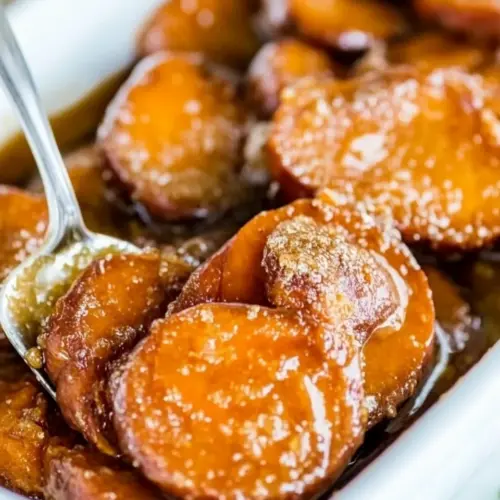
Southern Candied Sweet Potatoes
Southern Candied Sweet Potatoes are glossy, warmly spiced, and utterly comforting, marrying creamy salted butter with brown and white sugars to glaze tender sweet potatoes. This easy, classic side is perfect for holiday tables or an easy weeknight dinner, offering sticky sweetness and aromatic spices that everyone will reach for. Make it for its simplicity, and because it always disappears fast.
Equipment
- 9x13-inch Baking Dish
Ingredients
- 1/2 cups salted butter Melted and creamy, provides a rich, silky base that helps form the glossy syrup coating the potatoes; adds savory balance to the sugars and enhances mouthfeel. Use melted or softened to fully incorporate into the pan sauce for even caramelization.
- 3/4 cup white sugar Granulated sweetener that supplies bulk sweetness and contributes to caramelization, creating a slightly crisped surface when baked under the syrup; helps balance spices. Dissolve into the butter mixture to ensure even sweetness throughout the dish.
- 1/2 cup packed brown sugar Moist and deeply flavored sweetener that adds molasses notes and moisture to the glaze, preventing it from becoming grainy while deepening color and flavor. Pack firmly into the measuring cup to accurately impart its rich, toffee-like character.
- 1 teaspoon cinnamon Warm aromatic spice that adds fragrant sweetness and depth, complementing both the sugars and sweet potatoes while enhancing the overall holiday flavor profile. Sprinkle evenly into the glaze to distribute its comforting, familiar scent.
- 1/2 teaspoon ground ginger Slightly sharp and warming spice that contributes a peppery, bright undertone to cut through sweetness and add complexity to the glaze. Use measured sparingly to avoid overpowering the other warm spices.
- 1/2 teaspoon nutmeg Earthy and aromatic spice that imparts nutty, slightly sweet depth, rounding out the spice blend and adding complexity to the syrupy coating. Grate or use ground carefully to maintain a balanced spice profile.
- 2 teaspoons vanilla extract Fragrant liquid that brightens and rounds the sweet flavors, enhancing the overall aroma and providing a subtle floral-vanilla note to the candied potatoes. Stir into the warm sugar-butter mixture at the end to preserve its delicate aroma.
- 5 large sweet potatoes, peeled and cut into 1/3 to 1/2-inch slices Starchy root sliced into even pieces so they cook uniformly, becoming tender and able to absorb the sweet glaze; provides the main body and texture of the dish. Peel and slice into consistent 1/3 to 1/2-inch rounds for even roasting and caramelization.
- 1/2 teaspoon salt Fine seasoning that enhances all other flavors, balances sweetness, and prevents the dish from tasting flat by boosting overall taste perception. Add with the spices to ensure the glaze and potatoes are properly seasoned.
Instructions
- Preheat oven to 375 degrees.: When the oven reaches 375 degrees , it establishes a consistent environment for the syrup to bubble and the sweet potatoes to soften evenly. You should sense a mild warmth from the oven when you open it; the interior racks will be hot to the touch. Preheating ensures the first bake period starts counting from the right temperature so slices cook through without overbrowning. Common mistake to avoid, do not start baking in an oven that is still heating because edges will overcook while centers remain firm.
- Melt butter in a saucepan. Add white sugar, brown sugar, cinnamon, ginger, and nutmeg. Stir and heat until sugar is dissolved. Remove from heat. Add the vanilla extract.: As the salted butter melts, it should sizzle very gently and take on a glossy sheen. When you add the white sugar and brown sugar , stir so the granules contact warm butter and begin to dissolve, transforming into a viscous syrup. Watch for steam and a faint caramel aroma, that tells you the sugars are melding. Remove from heat before it starts to brown to keep the sauce sweet and balanced. Adding the vanilla extract off the heat preserves its perfume. A common pitfall is overheating the mixture until it boils aggressively, which can make it grainy or burn, so keep heat moderate and stir patiently.
- Place sweet potato slices in a 9×13-inch baking dish. Sprinkle with salt.: Arrange the peeled and sliced sweet potatoes in the 9×13-inch baking dish in a single layer or slightly overlapped so each slice has surface area exposed to the syrup. When you sprinkle the salt , do so evenly to ensure every slice receives some balancing savory. Visually, you want neat rows or a slightly fanned pattern for even baking. Avoid piling slices too high, because that traps steam and can lead to uneven tenderness.
- Stir vanilla into the butter mixture and pour over sweet potatoes.: Once the vanilla is stirred in and the sauce looks glossy, pour it slowly over the arranged sweet potatoes . You will hear a soft hissing as warm syrup contacts cooler potato flesh, and the sauce will cascade and pool between slices, coating edges in shine. Use a spoon to coax extra syrup into gaps so all surfaces soak. The reason for pouring slowly is to distribute the glaze without displacing the slices. A frequent error is pouring in one spot which leaves some potatoes under-sauced.
- Cover with aluminum foil and bake for 30 minutes.: Covering the dish traps steam, which starts the cooking process and helps the centers of the sweet potatoes become tender. You will notice a gentle steam escape when you lift the foil, and the syrup will have thinned slightly as it soaks in. This covered phase is crucial to avoid drying out surfaces while allowing the insides to soften. Do not skip covering, because without it you risk the tops drying before the insides cook through.
- Remove pan from oven. Spoon the butter mixture over the potatoes.: After the initial bake, the potatoes should feel tender when pierced and the syrup will be more fluid. Spoon the sauce that has collected into and around the slices, making sure each piece gets a glossy top coat. The tactile cue is a warm, syrupy surface and a sweet caramel aroma. This step deepens flavor by reintroducing syrup to any drier pockets. A common misstep is not spooning enough sauce back, resulting in uneven glaze coverage.
- Place back in the oven UNCOVERED for 30 minutes.: Baking uncovered allows the syrup to reduce and concentrate, coaxing edges of the sweet potatoes to caramelize and develop a sticky sheen. You will hear faint bubbling and see the sauce thicken and darken slightly, and the tops may take on a golden hue. This finishing phase creates the contrast between tender interior and glossy, slightly sticky exterior. Watch closely near the end to prevent the sugars from burning, which can happen quickly if left unattended.
Notes
- Measure sugars accurately — Use a dry measuring cup and level the white sugar and brown sugar precisely so the glaze balances properly. Too much white sugar can make the sauce overly sweet, while the brown sugar adds moisture and depth, so keeping the ratio consistent yields the best glossy texture.
- Use salted butter intentionally — The recipe calls for salted butter to provide subtle savory notes that cut through the sweetness. If your butter is very salty, you can reduce the added salt slightly, but generally the salted butter gives a fuller mouthfeel and enhanced flavor.
- Add vanilla off the heat — Stirring the vanilla extract in after removing the pan from the heat preserves its fragrance. Adding it while the mixture is boiling will dissipate aromatic compounds, so wait until the saucepan is off the flame for the best perfume in the final dish.
- Arrange slices for even cooking — Lay the sweet potatoes in an orderly pattern so each slice gets exposure to sauce and heat. Overlapping is fine, but avoid tight stacking which can trap steam and prevent caramelization on exposed edges.
- Monitor the final bake — During the uncovered finishing stage, keep an eye on the oven so the syrup reduces to a sticky sheen without burning. The sugars can go from perfectly caramelized to bitter fairly quickly, so a few checks in the last ten minutes will help you catch the ideal moment.