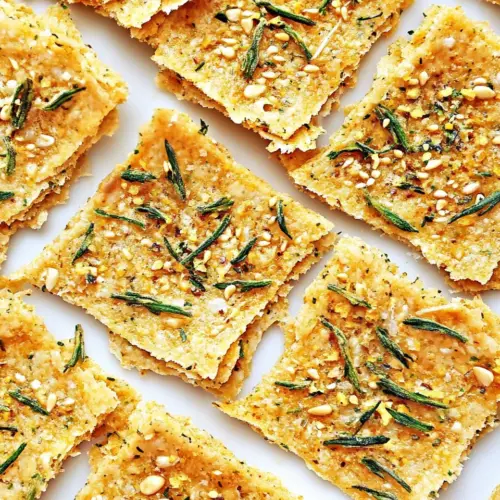
Sourdough Crackers with Field Garlic
Sourdough Crackers with Field Garlic are crisp, buttery, and tangy, turning leftover sourdough discard into a pantry star. These easy crackers offer a delicate snap and a fresh garlic aroma making them ideal for snacks, cheese boards, or casual gatherings, and they are perfect for an easy weeknight nibble or party platter.
Equipment
- Oven
- Baking Sheet
- Parchment Paper
- Rolling Pin
- Wire Rack
- Mixing Bowl
- Pizza Cutter
Ingredients
- 1 cup all-purpose flour Provides structure and body to the dough, forming the base matrix that holds other ingredients together. Adds lightness and a tender crumb when combined with fat and liquid, and contributes to browning during baking.
- 1/2 teaspoon of sea salt Enhances overall flavor by bringing a briny, mineral backbone that balances richness. Helps to season the dough evenly and can accentuate the savory notes of garlic and butter.
- 2 tablespoons chopped fresh field garlic (you can substitute any kind of garlic, but you won't get the same flavor) Imparts a pronounced garlicky, wild-allium aroma and a subtle vegetal bite that distinguishes the crackers. Contributes small bits of texture and fresh herbal complexity, elevating the savory profile.
- 1 cup sourdough discard Adds acidity and fermented flavor, contributing tangy depth and complexity to the crackers. Helps hydrate the flour while offering leavening potential and a characteristic sourdough aroma.
- 3/4 cup of butter Contributes rich fat for flakiness and tenderness, producing a crisp, buttery texture when baked. Aids in mouthfeel, promotes browning, and carries flavor throughout the cracker.
Instructions
- In a small bowl, combine flour, discard, and melted butter. Stir until well-combined. Preheat your oven to 350 degrees F. Line a baking sheet with parchment paper and set it aside.: The moment you mix the all purpose flour , sourdough discard , and melted butter , you will notice a change in texture from powder to a silky mass, with a faint tang and buttery scent rising. This blend forms the gluten network and distributes fat for flakiness. Work gently until just combined, because overmixing activates too much gluten and makes crackers chewy instead of crisp. If the dough feels dry, it may need a touch more sourdough discard , but add sparingly; if too sticky, rest it 5 minutes so the flour hydrates. A common mistake is heating the butter too hot then adding it, which can cook the discard slightly and alter fermentation notes, so ensure butter is warm but not scalding.
- Roll out your cracker dough until it is about 1/8-inch thick—you want this to be as thin as possible so that when they bake up, they will be crunchy like crackers! If desired, use a pizza cutter or a crinkle rotary cutter to cut them into squares (instead of using cookie cutters).: As you stir, pay attention to how the mixture comes together, becoming cohesive and slightly glossy from the butter . The sound will shift from a dry scrape to a smooth, almost slippery swoosh against the bowl, and the aroma will be a soft blend of butter and mild tang. This stage matters because uneven mixing creates pockets of flour or butter, leading to inconsistent baking. If you see dry streaks, fold them in with a spatula rather than beating, and avoid adding extra flour which will toughen the crackers. One pitfall is adding cold ingredients that arrest cohesion, so ensure components are at similar temperatures.
- Lightly brush tops with more butter or oil if desired and top with coarse sea salt.: As the oven warms to 350 degrees F , notice how the kitchen gradually becomes cozy and the air takes on a faint toasted scent. Preheating ensures immediate oven spring and predictable browning, which is crucial for thin crackers that bake quickly. If you skip this, crackers can absorb oil and become limp rather than crisp. A frequent error is placing dough in an oven that is not fully up to temperature, causing uneven texture, so use your oven thermometer if you have one.
- Bake crackers for 20-25 minutes until golden brown - remove from oven when done and cool on a wire rack before serving.: Lining with parchment prevents sticking and promotes even heat transfer, letting the bottom of each cracker crisp without burning. The parchment also helps you move large sheets in and out with ease, keeping edges intact. Press the dough gently into a sheet on top to transfer later, and avoid using greased pans which can cause spreading and irregular browning. A mistake people make is skipping parchment and then trying to pry crackers off a hot pan, which leads to breakage and lost pieces.
- Roll out your cracker dough until it is about 1/8 inch thick you want this to be as thin as possible so that when they bake up they will be crunchy like crackers: Rolling to about 1/8 inch creates the ideal balance between fragility and structure, and as you roll you'll feel the dough become almost translucent in places, an encouraging sign. Use even pressure and rotate the dough regularly to maintain uniform thickness, and dust lightly with flour to prevent sticking. You should hear a soft whisper as the rolling pin glides; if it tears, patch it gently rather than reworking the whole sheet which can over-develop gluten. A common issue is rolling unevenly which leads to some pieces burning while others remain pale, so aim for consistency across the sheet.
- If desired use a pizza cutter or a crinkle rotary cutter to cut them into squares instead of using cookie cutters: When you cut the dough with a sharp tool like a pizza cutter or crinkle rotary cutter, the edges seal cleanly and the shapes are uniform, which helps them bake uniformly. Cutting before baking also means you will have neat, easy to separate crackers when they come out, reducing breakage. Press straight down without dragging to avoid compressing the dough edges too much which can hinder lift. One trap is cutting too close together, creating tiny pieces that can overbrown, so leave small gaps between shapes.
- Lightly brush tops with more butter or oil if desired and top with coarse sea salt: Brushing with melted butter or a neutral oil adds gloss and a toasty surface flavor, while a sprinkle of coarse sea salt provides crunchy bursts of seasoning. As you brush, the crackers will gleam and you may smell the butter bloom, which amplifies the savory notes. Apply sparingly to avoid soggy spots, and press the salt lightly so it adheres. A typical mistake is overbrushing, which can make the center soft rather than crisp, so keep it light and even.
- Bake crackers for 20 to 25 minutes until golden brown: During baking you will see edges take on a warm, golden hue and the kitchen will fill with a toasty, garlic kissed aroma from the field garlic . Listen for a faint sizzle as moisture leaves the dough, and watch carefully in the final minutes because thin crackers can go from perfect to overdone quickly. The goal is an even, dry crispness without dark spots. If some pieces brown faster, rotate the pan midbake for even color. A common error is leaving them too long which yields a bitter taste, so remove them once they look uniformly golden.
- Remove from oven when done and cool on a wire rack before serving: Cooling on a wire rack lets air circulate beneath, preventing trapped steam that would make crackers limp. As they cool, you'll hear that satisfying snap when you test one, and the flavors settle into a clean, balanced finish. Let them rest fully before stacking to avoid sogginess, and store in an airtight container once cool. A common mistake is packing them away warm, which creates condensation and ruins the crisp texture.
Notes
- Use chilled or room temperature discard - If your sourdough discard is very cold, let it sit for 10 minutes so it combines smoothly without clumping, which helps the dough roll out evenly.
- Adjust thickness for crunch - Roll to about 1/8 inch for a crisp snap; thicker dough yields a biscuit like bite, which is a different but pleasant outcome.
- Brush sparingly - A light glaze of melted butter enhances browning and flavor, but too much will make centers soft, so apply a thin, even coat.
- Mince field garlic finely - Small, even pieces of field garlic distribute flavor without burning, preserving the fresh aromatic quality that defines the crackers.
- Store airtight after cooling - Once completely cool, place crackers in an airtight container to keep them crisp for several days, and avoid stacking warm crackers which traps steam.