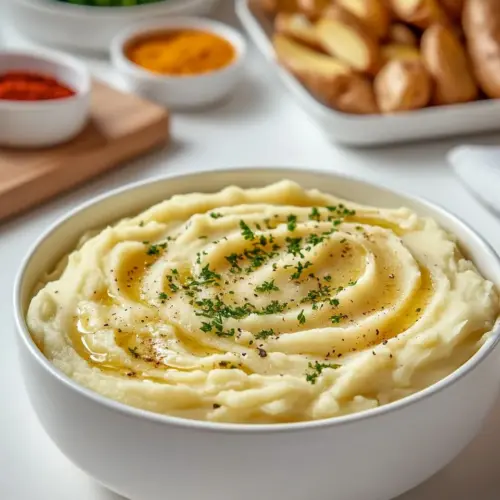
Sour Cream Mashed Potatoes
Sour Cream Mashed Potatoes bring creamy, tangy comfort to the table with a silky texture and golden Yukon Gold backbone. This easy weeknight side is perfect for cozy dinners, holiday spreads, or potlucks, offering rich buttered warmth and a bright finish from sour cream and chives. Make it for gatherings when you want a reliable, crowd pleasing mash.
Equipment
- Large Pot
- Small Saucepan
- Potato Masher
- Colander
Ingredients
- 2 pounds Yukon Gold potatoes Provide a creamy, buttery base and tender texture when boiled and mashed; Yukon Gold potatoes hold their shape well and yield a naturally rich, slightly sweet flavor. Peel or leave skins on depending on preference, then cube evenly for uniform cooking. Use hot, drained potatoes to absorb dairy for smoother mashed potatoes.
- 1/2 cup whole milk Warm gently and thin the mashed potatoes for a silky consistency while adding subtle dairy richness; whole milk contributes mouthfeel and helps achieve desired creaminess. Heat before adding to avoid cooling the potatoes and to allow fats to emulsify with starches. Adjust amount to reach preferred texture without making the mash runny.
- 4 tablespoons unsalted butter plus extra for serving Melt into the potatoes to impart rich flavor, a velvety mouthfeel, and sheen; unsalted butter allows precise control over overall salt level. Add a portion while mashing and reserve extra for a glossy finish served on top. Use high-quality butter for best flavor effect.
- 1/4 cups sour cream Add tangy creaminess and a slight acidity that brightens the mashed potatoes while contributing to a smooth texture; sour cream balances richness and adds depth. Fold in gently to preserve some fluffiness, and adjust quantity for desired tang intensity. Use full-fat sour cream for maximum creaminess.
- 3/4 teaspoon fine sea salt plus extra, to taste Season and enhance flavor while helping balance richness; fine sea salt dissolves easily for even seasoning throughout the mash. Start with the listed amount and taste, adding a pinch more if needed to suit preference. Distribute salt while mashing to ensure consistent seasoning.
- 1 tablespoon chives finely chopped, optional Garnish with a mild onion-like freshness and subtle herbal note when finely chopped; chives add color and a delicate flavor contrast to the rich potatoes. Sprinkle on top just before serving to preserve their bright flavor and texture. Use them optionally to customize presentation and taste.
- Freshly ground black pepper optional Add a warm, pungent finishing touch with freshly ground black pepper to complement the creaminess and bring subtle heat; grinding just before serving preserves aroma. Season lightly and taste, increasing for more pronounced pepperiness. Use optionally to suit heat preference.
Instructions
- Peel the potatoes and cut them into 1-inch pieces. Submerge in cold water until you’re ready to cook (to prevent browning).: Start by peeling the potatoes and cutting them into even, 1 inch pieces to ensure uniform cooking. As you chop, you ll notice the starchy scent and the pale yellow flesh. Even pieces cook at the same rate, preventing some becoming mushy while others remain firm. Don t leave the pieces exposed for long, or they will begin to discolor; submerge them in cold water immediately to keep them fresh. A common mistake is cutting unevenly, which leads to inconsistent doneness, so take a little extra time to match sizes.
- Place the potatoes in a large pot, cover with 1 inch of cold water, and bring to a boil. Reduce to a simmer and cook for 10-15 minutes until fork-tender.: Placing the cut potatoes in a bowl of cold water removes surface starch and prevents browning. You ll see the water cloud slightly, that s normal. Keeping them submerged also helps them go into the pot at the same temperature, which improves even cooking. Avoid using warm water here, as that can start the breakdown process and make the pieces waterlogged and mealy when cooked.
- While the potatoes are boiling, heat the milk and butter in a small saucepan until the butter melts and the milk steams. Do not let it boil. Cover to keep warm.: Transfer the drained pieces to a large pot and add cold water to sit about 1 inch above them. As the pot heats, listen for the change from silence to the gentle hum of boiling, and watch the surface for rolling bubbles. Starting in cold water allows the centers to cook through at the same pace as the exterior. Don t rush by using hot water, because that causes the outside to overcook before the center is tender.
- Drain the cooked potatoes, return them to the pot and set over low heat for 1 minute to evaporate excess moisture. Mash the potatoes coarsely to break them up.: Lower the heat so the pot maintains a steady simmer, with small, steady bubbles. You want the potatoes tender enough that a fork slides in easily without the pieces collapsing. The aroma will be softly starchy and warm. Overcooking will make the flesh waterlogged and gluey, while undercooking leaves lumps, so check for tenderness after about 10 minutes.
- Turn off the heat. Gradually add the warm milk and butter mixture while mashing until you achieve your desired consistency.: As the potatoes near readiness, warm the milk and butter together until the butter fully melts and the milk begins to steam, but do not let it boil. You ll notice a gentle steam and a richer scent when the dairy is hot. Warm dairy absorbs into the potatoes seamlessly, creating a glossy texture. If the milk boils it can alter the mouthfeel and risk scalding; keep the heat low.
- Stir the sour cream and sea salt into the mashed potatoes. Adjust the seasoning to taste.: After draining, return the potatoes to the empty pot and place it over low heat for about 1 minute to let residual moisture evaporate. You ll hear a faint sizzle and see small steam wisps as excess water lifts away. This step helps avoid watery mash and allows the starch to concentrate. Skipping this can leave the final potatoes thin, requiring more dairy to correct the texture.
- Transfer the mashed potatoes to a serving bowl, top with a pat of butter, and garnish with chives and black pepper (optional).: Use a masher or ricer to break the hot potatoes into coarse pieces. The sound is soft and the texture appears fluffy but still a bit chunky. Coarse mashing prevents overworking the starch, which can produce a gluey result. Resist the urge to overprocess; aim for a balance between smoothness and a little structure.
- Turn off the heat Gradually add the warm milk and butter mixture while mashing until you achieve your desired consistency: With the pot off the heat, stream in the warm dairy while continuing to mash. You ll instantly notice the mixture loosening and becoming glossy, and the aroma will shift to a rich, creamy note. Adding the liquid slowly lets you control texture, so you stop when the mash is just right. Adding too much at once can make the potatoes too loose, requiring more time on heat to thicken.
- Stir the sour cream and sea salt into the mashed potatoes Adjust the seasoning to taste: Fold in the sour cream and the starting amount of fine sea salt, then taste and tweak. The sour cream adds a subtle tang that brightens the palate and the salt elevates flavors. If you add the salt too early without tasting, you may overshoot, so always adjust at the end. The texture will feel silkier after the sour cream blends in, and the scent should become fresher and creamier.
- Transfer the mashed potatoes to a serving bowl top with a pat of butter and garnish with chives and black pepper: Spoon the mash into a warm serving bowl and nestle a pat of butter on top so it melts into a glossy pool. Scatter the chopped chives and a grind of black pepper for color and bite. The final presentation should look inviting, with steam rising and a subtle shine on the surface. A common misstep is serving in a cold bowl, which cools the potatoes too quickly, so warm your serving vessel first if possible.
Notes
- Herbed Finish Add finely chopped chives at the end for a bright herbal note that contrasts the creamy base, scatter them on top so they retain their color and fresh flavor.
- Richer Texture Use the full 4 tablespoons of butter and warm it with the milk to create an extra glossy, decadent mouthfeel that melts on the tongue.
- Tang Boost Stir in the listed amount of sour cream off heat for a steady, pleasant tang that keeps the mash from tasting flat, and avoid overheating to prevent separation.
- Salt Control Start with the suggested 3 quarter teaspoon of fine sea salt and adjust after mixing, so you don t overpower the dairy notes with excess salt.
- Simple Garnish Finish with a pat of butter and a grind of black pepper for an elegant, classic presentation that enhances aroma and richness.