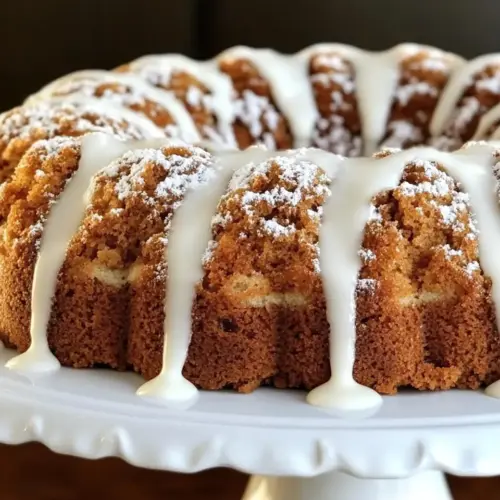
Sour Cream Coffeecake
Sour Cream Coffeecake is a creamy, tender cake with a crunchy cinnamon streusel and a silky glaze. This easy, crowd pleasing coffeecake pairs well with morning coffee or an afternoon tea, offering a comforting balance of sweet and tangy notes. Make it for brunch or gatherings when you want a reliable, flavorful bake that travels and stores beautifully.
Equipment
- Mixing Bowls
- Hand Mixer
- 9-inch Bundt pan or 9-inch square pan or 9-inch springform pan
Ingredients
- 1 cup granulated sugar or packed light brown sugar, or 1/2 cup each (7 ounces/200 grams) Provide sweetness and optional molasses notes while balancing the cake's tang; can be used all granulated, all light brown, or half-and-half to adjust moisture and flavor depth. Measure accurately because sugar affects both texture and browning during baking. When substituting, press packed brown sugar firmly into the cup for consistent results.
- 1 cup all-purpose flour (4.25 ounces/120 grams) Create structure and absorb moisture in the streusel or crumb topping; contributes to tender crumb and binds with fats for proper texture. Spoon and level the flour when measuring to avoid dense results. Can be sifted if a lighter topping texture is desired.
- 2 teaspoons ground cinnamon Impart warm, aromatic spice to the streusel or cake layers, enhancing sweetness with depth and fragrance. Sprinkle evenly to avoid concentrated pockets of flavor. Adjust amount to taste to complement other spices like nutmeg or cloves.
- 1/8 teaspoons salt Enhance overall flavor balance by reducing sweetness and rounding spices in the topping or batter; a pinch supports leavening reactions. Dissolve thoroughly into dry mixes to ensure even distribution. Use a level measure for accuracy.
- 1/2 - 1 teaspoon ground nutmeg or cloves (optional) Add warm, aromatic complexity as an optional spice, offering a slightly different profile depending on choice of nutmeg or cloves; use sparingly to avoid overpowering. Freshly grated options yield brighter flavor. Combine thoughtfully with cinnamon for layered spice.
- 1/2 cup unsalted butter, melted (65 to 67°F) (1 stick/4 ounces/120 grams) Provide moisture and richness to the streusel when melted; contributes to tender, slightly crisp topping once baked. Allow melted butter to cool slightly so it doesn't cook other ingredients on contact. Stir until fully incorporated for uniform texture.
- 1/2 - 1 cup coarsely chopped pecans, walnuts, grated coconut, or chocolate chips, or any combination (optional) Introduce crunch, texture, or bursts of flavor when sprinkled into filling or topping; can be mixed combinations for varied mouthfeel and taste. Toast nuts lightly to amplify nuttiness before chopping. For coconut or chocolate, adjust quantity to maintain balance with other mix-ins.
- 2 cups all-purpose flour, or 1 2/3 cups sifted cake flour and 1/2 cup all-purpose flour, sifted (8.5 ounces/245 grams) Form the main structure and bulk of the cake; combination of all-purpose and cake flour options affects tenderness and crumb. Use sifted cake flour for a finer, lighter cake or all-purpose for sturdier crumb. Weighing ensures consistent results across recipes.
- 1 teaspoon double-acting baking powder Provide chemical leavening power to help the cake rise and develop a tender crumb; double-acting baking powder reacts during mixing and baking. Mix evenly with dry ingredients to prevent uneven pockets of lift. Check freshness for reliable performance.
- 1 teaspoon baking soda Contribute additional leavening and react with acidic sour cream to produce lift and tender texture; works in tandem with baking powder for balanced rise. Dissolve into the dry mix to ensure even distribution. Measure precisely as excess can cause soapy flavors.
- 1/2 teaspoons salt Balance sweetness and enhance flavor while supporting gluten development in the batter; salt also moderates the perception of sugar and spices. Combine thoroughly with dry ingredients to avoid salty streaks. Use the specified small measure for harmony.
- 1/2 cup unsalted butter, softened (65 to 67°F) (1 stick/4 ounces/115 grams) Add richness and tenderness to the cake when creamed with sugar; softened butter traps air for lift and contributes flavor. Ensure butter is at the specified temperature for proper creaming. Cream until light and fluffy for optimal texture.
- 1 cup granulated sugar, or 1/2 cup granulated sugar and 1/2 cup packed light brown sugar (7 ounces/200 grams) Sweeten and provide moisture and structure when creamed with butter; choice between granulated and brown sugar influences flavor and density. Brown sugar adds molasses notes and slightly more moisture. Cream until dissolved for a smooth batter.
- 3 large eggs (scant 2/3 cup/5.25 ounces/150 grams) Bind ingredients, add moisture, richness, and structure; eggs support emulsification and contribute to volume and tenderness. Use large eggs at specified weight for recipe balance. Beat gently to incorporate without overmixing.
- 1 cup sour cream (8.5 ounces/245 grams) Provide moisture, tang, and acid for flavor and leavening reactions; sour cream yields a tender crumb and pleasant richness. Use full-fat sour cream for best texture and flavor. Fold carefully to avoid deflating batters.
- 1 1/2 teaspoons vanilla extract, 1 teaspoon lemon extract, or 1 teaspoon orange extract (or 1 teaspoon vanilla and 1/2 teaspoon almond extract) Contribute aromatic complexity and lift other flavors; choose extracts to complement the cake, with vanilla as a classic choice or citrus/almond for brighter notes. Add at the end of mixing to preserve volatile aromas. Measure accurately to avoid overpowering.
- 1 teaspoon finely grated lemon or orange zest (optional) Add fresh citrus aroma and brightness as an optional accent; finely grated zest disperses evenly and intensifies flavor without adding liquid. Use only the colored outer peel, avoiding bitter pith. Add to batter or glaze for a lively finish.
- 1 cup confectioners' sugar (4 ounces/115 grams) Provide sweetness and body for glazes or drizzle finishes; confectioners' sugar dissolves easily to create a smooth topping. Sift before mixing to prevent lumps and achieve glossy consistency. Adjust quantity for desired thickness.
- 1/2 teaspoon vanilla or almond extract Contribute vanilla or almond aroma to the glaze, enhancing overall sweetness with a complementary flavor note. Add after confectioners' sugar is dissolved to preserve delicate notes. Use true extracts for clean flavor.
- 2 tablespoons milk, water, maple syrup, or strong brewed coffee Thin and adjust glaze consistency while adding subtle complementary notes when using maple or coffee; milk and water are neutral thinners. Add liquid gradually until desired pourable texture is reached. Warm slightly for a smoother glaze application.
Instructions
- In a medium bowl, combine the sugar, flour, cinnamon, salt, and, if using, nutmeg. Stir in the butter to resemble coarse crumbs. If using, add the nuts.: The first sensory cue you will notice is the scent of cinnamon as you sift and mix the dry streusel ingredients together. This step matters because evenly distributed spices and dry ingredients create consistent pockets of flavor in the topping. A common mistake is to skip stirring thoroughly, which can leave clumps of spice or sugar, so take a moment to whisk until everything looks homogeneous.
- Preheat the oven to 350°F (325°F for a convection oven or if using a glass pan). Grease one 9-inch (9 cups) Bundt or tube pan, 9-inch square pan, 10- by 8-inch baking pan, or 9-inch springform pan. Combine the flour, baking powder, baking soda, and salt in a mixing bowl.: As you add the melted butter , use a fork or pastry cutter to combine until the mixture looks like coarse sand with pea sized clumps. You will hear soft clinking as the butter coats the dry ingredients, and the mixture should feel slightly tacky. This texture is essential so the streusel bakes crispy but keeps some tender centers. Avoid overworking it into a paste, which will prevent the topping from developing crisp edges.
- In a separate large bowl, beat the butter on low speed until smooth, about 2 minutes.: Adding nuts or mix ins introduces a toasty crunch and aromatic oils. Give them a quick toss into the streusel so they are evenly distributed, and you will immediately catch the nuttiness on the nose. Do not chop nuts too finely, or they will disappear into the crumb instead of providing satisfying contrast.
- Increase the speed to medium, gradually add the sugar, and beat until light and fluffy, about 4 minutes.: Preheating ensures the oven is at an even, reliable temperature so the cake begins to set immediately when it goes in. You may hear the oven click as it reaches temperature, and warmth should be steady by the time you are ready to bake. A common error is placing an unheated pan into an oven that is still warming, which can cause uneven baking.
- Beat in the eggs, one at a time.: Greasing the pan and, if needed, lining the bottom creates an easy release and protects delicate edges. Use softened butter or a neutral spray and make sure corners and crevices are covered so the cake unmolds cleanly. Skipping thorough greasing can lead to tearing when you remove the cake.
- Blend in the sour cream, vanilla, and, if using, zest.: When you whisk these dry batter ingredients, watch for uniform color and texture, indicating the leaveners are evenly spread. This step is crucial for even rise and crumb. A typical oversight is leaving lumps of baking powder, which will cause uneven pockets or hollow spots in the cake.
- Stir in the flour mixture.: As the butter is beaten, it will soften and lose its glossy firmness, becoming more pliable. This sets the stage for proper aeration, so the sugar can be incorporated without melting the butter . Using too-warm butter will make it greasy instead of aerated, which reduces volume.
- Spread a little more than half of the batter in the prepared pan.: When the sugar is creamed in, you will notice the mixture lighten in color and increase in volume. This aeration traps fine air bubbles that contribute to a tender lift. If you rush this step or skip creaming, the cake can turn out dense rather than delicate.
- Sprinkle with half of the streusel.: Adding eggs slowly helps maintain an emulsion so the batter stays smooth. Each egg should fully incorporate before adding the next, and you will see the mixture become silkier with each addition. A common problem is adding eggs too quickly, which can cause the batter to break or look curdled, though continued mixing usually rescues it.
- Carefully cover streusel with the remaining batter.: At this point the batter becomes glossy and fragrant. The sour cream adds creaminess and a subtle tang that balances the sweetness, while the extract and zest lift the aroma. Mix until uniform but avoid overmixing, because excessive mixing develops gluten and makes the cake chewy.
- Top with the remaining streusel and bake until the cake is golden and a tester inserted in the center comes out clean, 50 to 60 minutes for a Bundt pan; 30 to 40 minutes for a 9-inch square pan; or 45 to 55 minutes for a springform pan; increase baking times slightly if using a fruit or cheese filling.: Fold the dry ingredients into the wet until just combined, watching for streaks of flour to disappear. The batter should be homogenous but not overworked, and you should be able to scoop it easily. Overmixing here creates a tougher crumb, while undermixing leaves pockets of flour.
- Set on a wire rack and let cool in the pan for at least 20 minutes, then remove the cake to a wire rack and let cool completely. The cake tastes even better when allowed to mellow overnight. Wrap the cooled cake in plastic and store at room temperature for up to 4 days or in the freezer for up to 2 months.: Smooth the first layer evenly, watching for air pockets or uneven thickness. This initial layer creates the cake base and supports the streusel in the middle. Pressing too hard can compress the batter and reduce lift, while leaving it too thin will cause the streusel to sink through.
- Combine all the glaze ingredients, gradually stirring in enough liquid until smooth and of pouring consistency.: Scatter the streusel evenly so each bite has a balance of crumb and cake. The streusel should cling to the batter surface and not simply fall into gaps. A misstep here is dumping streusel in one spot which leads to heavy pockets instead of even distribution.
- Drizzle over the cake and let stand until set. THK Note: we put the icing into a resealable bag, snipped off a corner with scissors, and drizzled a crosshatch pattern on the top of the cake.: Gently spoon the remaining batter over the streusel and smooth the top, taking care not to disturb the streusel layer beneath. You should still see some streusel texture beneath the surface. Rough handling can blend layers and lose the distinct ribbon of streusel.
- Top with the remaining streusel and bake until the cake is golden and a tester inserted in the center comes out clean, 50 to 60 minutes for a Bundt pan; 30 to 40 minutes for a 9-inch square pan; or 45 to 55 minutes for a springform pan; increase baking times slightly if using a fruit or cheese filling: As the cake bakes you will notice a fragrant, toffee like aroma and the edges pulling slightly away from the pan. The top should be golden and the streusel toasted. Use the tester to check doneness, as ovens vary; underbaking yields gummy centers while overbaking dries the crumb.
- Set on a wire rack and let cool in the pan for at least 20 minutes, then remove the cake to a wire rack and let cool completely: Cooling in the pan lets the cake set so it does not crack when removed. After 20 minutes, invert or unclip as appropriate and finish cooling on a rack so air circulates. Cutting too soon risks crumbling, while leaving it too long can make the glaze adhere poorly.
- The cake tastes even better when allowed to mellow overnight: Resting allows flavors to knit and the crumb to relax, often improving texture and depth. I find chilling wrapped cake for several hours enhances flavor melding. The only real drawback is patience, because waiting is the hardest part.
- Wrap the cooled cake in plastic and store at room temperature for up to 4 days or in the freezer for up to 2 months: Proper storage keeps moisture in and prevents staling. If freezing, slice first so you can thaw portions. A frequent mistake is leaving the cake uncovered, which dries the crumb quickly.
- Combine all the glaze ingredients, gradually stirring in enough liquid until smooth and of pouring consistency: The glaze should be velvety and pourable, not runny. Start with a tablespoon of liquid and add more until the desired consistency is reached, tasting for balance. Too thin a glaze runs off, while too thick will leave clumps.
- Drizzle over the cake and let stand until set: Use a spoon or a small bag with a snipped corner to control the drizzle and create an attractive pattern. The glaze should set to a satiny sheen; chilling briefly speeds this. Overdrizzling can pool at the base, so less is often more.
Notes
- Turn it into cupcakes Divide the batter and streusel among 12 lined muffin cups and bake at 400°F for 18 to 22 minutes, watching closely so the tops set but do not overbrown.
- Add a cream cheese layer Drop spoonfuls of a sweetened cream cheese mixture into the middle before adding the final streusel layer to introduce a tangy, creamy ribbon.
- Make it chocolate streusel Substitute 3 tablespoons unsweetened cocoa powder in the streusel for the flour and include the cup of nuts for a chocolate nutty twist.
- Use fruit for the center After the first streusel layer, add 1 to 1 and 1/2 cups of chopped fruit, such as apples or berries, for a bright, fruity middle layer that pairs well with the cinnamon topping.
- Swap extracts to change the aroma Try lemon or orange extract instead of vanilla, or use a small amount of almond extract to introduce a marzipan like note, adjusting quantities carefully to avoid overpowering the batter.