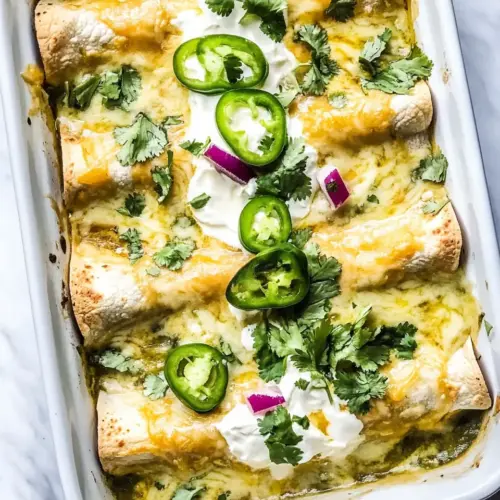
Sour Cream Chicken Enchiladas
Sour Cream Chicken Enchiladas are creamy, comforting, and perfect for an easy weeknight dinner. Tender shredded chicken meets a tangy sour cream sauce, melty Monterey Jack cheese, and a gentle touch of cumin. This dish is crowd friendly and adaptable, making it great for family meals or casual gatherings, and a persuasive reason to make it is how reliably satisfying and simple it is to prepare.
Equipment
- Oven
- 9x13-inch Baking Pan
- Small Saucepan
- Mixing Bowl
- Whisk
Ingredients
- 4 tablespoons unsalted butter Melted adds a rich, silky base for the sauce and helps sauté aromatics, providing a smooth mouthfeel and subtle buttery flavor to the enchiladas.
- 1 tablespoon minced onion Minced provides concentrated savory sweetness and texture when cooked, releasing aromatic compounds that deepen the sauce's overall flavor profile.
- 1 clove garlic Minced contributes pungent, aromatic heat and savory depth when sautéed, brightening the sauce and complementing the chicken.
- 1/4 teaspoon kosher salt Measured seasons the sauce and filling, enhancing other flavors and balancing richness without overpowering the dish.
- 1 teaspoon ground cumin Ground imparts warm, earthy notes and a slight smokiness that complements Mexican-style flavors and ties together the sauce profile.
- 5 tablespoons all-purpose flour Whisked into fat acts as a thickening agent for the sauce, creating a roux that stabilizes texture and helps the sauce cling to the tortillas.
- 2 -3 cups low-sodium chicken broth Poured gradually adjusts consistency while adding savory depth, providing body and a gentle chicken flavor to the enchilada sauce.
- 1 cup sour cream Folded in lightens and enriches the sauce with tangy creaminess, balancing spices and creating a velvety texture for the filling.
- 4 ounces green chiles Drained or chopped introduces mild, mildly spicy complexity and a hint of vegetal brightness that integrates well into the creamy sauce.
- 2 1/2 cups shredded cooked chicken Shredded supplies hearty protein and texture, soaking up sauce flavors and making the filling substantial and satisfying.
- 15 ounces black beans Rinsed and drained offers earthy, creamy bites and added fiber that bulk up the filling while complementing the chicken and sauce.
- 4 green onions Sliced provides fresh, crisp oniony notes and a pop of color as a garnish or mixed into the filling for brightness and contrast.
- 1 tablespoon lime juice Squeezed brightens and balances the richness with an acidic lift, cutting through creaminess and enhancing the overall flavor clarity.
- 2 cups Monterey Jack cheese Shredded contributes gooey meltiness and mild, creamy tang that binds the filling and tops the enchiladas with luscious, stretchy cheese.
- 8 large flour tortillas Wrapped encases the filling to form the enchiladas, offering a soft, pliable exterior that holds sauce and filling together during baking.
- chopped fresh cilantro Chopped adds a fresh, citrusy, slightly peppery herbaceous finish as a garnish, brightening each bite and enhancing aroma.
- chopped onion Diced provides crisp texture and sharp, pungent flavor when sprinkled on top, adding bite and balancing richer components.
- chopped jalapeño peppers Finely chopped brings concentrated heat and vegetal brightness for those who want extra spice, offering a lively kick when added sparingly.
- avocado slices Sliced supplies creamy, cool richness and buttery texture as a topping, mellowing heat and adding a fresh, silky element.
- cotija cheese Crumbling delivers salty, tangy, crumbly texture as a finishing cheese, offering a bright, savory contrast to the creamy sauce.
Instructions
- Preheat oven to 350°F. Grease a 9×13-inch baking pan and set aside.: Take note of the even, warm glow inside the oven as it approaches temperature, which ensures the enchiladas bake evenly and the cheese melts predictably. A well greased pan prevents sticking and helps the bottom edges become pleasantly crisp without tearing when serving. A common mistake is skipping the greasing, which can cause portions to stick; also avoid setting the pan in the oven before it reaches temperature, which can alter bake timing.
- In a small saucepan, melt the butter over medium heat. Add in the onion, garlic, salt, and cumin, cook for a minute until softened.: As the butter melts, you should smell a warm, slightly sweet aroma, and the onion will become glossy and translucent, signaling it has softened. The brief cook time releases aromatic oils from the garlic and the cumin will bloom, deepening its flavor. Avoid high heat which can brown or burn the aromatics, creating bitter notes that will carry through the sauce.
- Stir in the flour and let it cook for about 30 seconds until it forms a paste.: The moment the all purpose flour hits the fat, you will see a pasty, cohesive mixture form; this is the roux that thickens the sauce. Cook briefly to eliminate the raw flour taste but do not let it darken, as color change indicates the roux is cooking too long and will alter the sauce color and flavor. A frequent error is undercooking the roux, which leaves a floury graininess in the finished sauce.
- Gently and gradually whisk in the chicken broth, continue to whisk until the mixture reaches a smooth, sauce-like consistency. If you add too much liquid, let the mixture simmer for a minute to reduce.: As you whisk in the chicken broth , watch the sauce become glossy and viscous, free of lumps. The gentle simmer will create soft bubbling sounds and a scent of savory broth that melds with the spices. If it becomes too thin, a brief simmer will concentrate it back to the right body. Avoid dumping the broth all at once, which can cause lumps and uneven texture.
- Stir in the sour cream and green chiles, remove from heat, and set aside.: When you fold in the sour cream , the sauce should turn silkier and slightly paler, and the little flecks of green chiles will add visual interest and a gentle vegetal note. Removing it from heat prevents curdling and keeps the texture smooth. A common slip is continuing to cook after adding dairy, which can break the sauce and create a grainy texture.
- In a medium bowl, combine the shredded chicken, black beans, green onions, lime juice, 1 cup of cheese, and 1 cup of enchilada sauce.: As you toss the filling, the chicken fibers absorb the sauce and aromatics, while the black beans lend a creamy bite. The scent of lime juice will introduce a bright top note that balances richness. Mixing evenly ensures each tortilla gets a consistent flavor; avoid over stirring which can mash the beans and turn the filling pasty.
- Pour 1/2 cup of the enchilada sauce on the bottom of the prepared baking pan.: The quick sizzle as the sauce hits the warm pan signals the start of flavor layering; this base prevents the tortillas from sticking and ensures the bottom edges soak up flavorful moisture rather than turning dry. Spread it evenly so all enchiladas sit in the sauce. A common oversight is skipping this step, which increases the likelihood of dry patches and sticking.
- Fill each tortilla with about 1/2 cup of enchilada filling.: As you spoon filling into each warmed flour tortilla , feel for a balance between generous filling and ability to roll. The filling should be moist but not runny, so the edges roll cleanly. If you overfill, the tortilla will tear or the pan will become soggy; aim for consistent portions for even baking.
- Place the enchiladas, seam side down, into the baking pan and pour the remaining sauce over the enchiladas. Sprinkle the remaining cheese on top.: When arranged seam side down, the enchiladas hold their shape and present a neat top for saucing and cheese. Pouring the rest of the sauce provides an even coating that keeps them moist, and the shredded Monterey Jack cheese will melt into a golden, bubbling layer. Avoid pouring too much sauce unevenly, which can cause parts to be overly soggy and other parts dry.
- Bake uncovered in the preheated oven for 20-30 minutes, or until the cheese has melted and the edges of the tortillas are starting to become brown and crispy.: During baking you will hear gentle bubbling and smell a toasty, melded aroma of cheese and spices. Visually, the cheese should be melted and starting to brown in spots, and the tortilla edges will crisp slightly. Overbaking can dry the filling, so remove when bubbling and browned to your preference; check at the 20 minute mark to avoid brittleness.
- If desired, top with fresh cilantro, chopped onion, chopped jalapeño peppers, avocado slices, and cotija cheese.: The final garnishes add color, texture, and temperature contrast, with the cool avocado and bright cilantro offsetting the warm, cheesy interior. Sprinkle toppings just before serving to keep them fresh and vibrant. A frequent mistake is adding delicate garnishes too early, which causes them to wilt and lose their appeal.
Notes
- Choose full fat sour cream: Full fat sour cream integrates more smoothly into the sauce and gives a silkier mouthfeel than low fat varieties, which can separate or taste thin.
- Shred chicken finely: Finely shredded chicken soaks up sauce better, creating cohesive bites; use two forks to pull meat apart evenly.
- Adjust broth for thickness: Start with 2 cups of chicken broth and add more slowly while whisking, so the sauce reaches the ideal coating consistency without becoming soupy.
- Toast tortillas briefly: Warming flour tortillas on a skillet for a few seconds per side prevents cracking when rolling and improves their texture after baking.
- Reserve some cheese for the top: Using half the Monterey Jack cheese in the filling and half on top ensures a gooey interior and a nicely browned surface while keeping the bake balanced.
- Make ahead then bake: Assemble the enchiladas, cover, and refrigerate for a few hours, then bake straight from the fridge, adding a few extra minutes to reach the same bubbling finish.