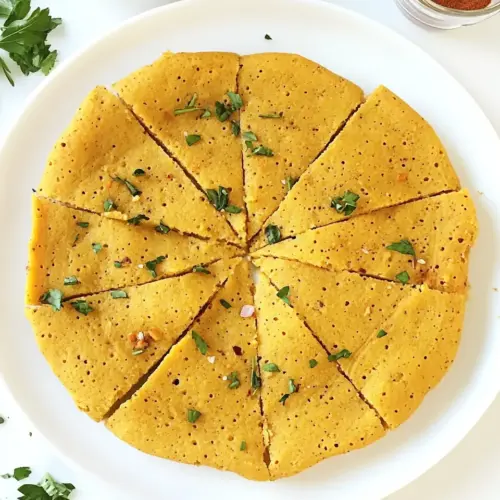
Socca
Socca is a crispy, nutty chickpea flatbread that is thin, slightly blistered, and irresistibly savory. With a simple batter of chickpea flour, water, olive oil, and salt, it bakes up with lacy edges and a tender center, making it an easy weeknight dinner or impressive appetizer. This quick and adaptable recipe is perfect when you want something fast, flavorful, and satisfying.
Equipment
- Cast-Iron Skillet
- Oven mitts
- Whisk
- Mixing Bowl
- Spatula
- Pizza Cutter
Ingredients
- 1 cup chickpea flour (109 grams) Provides a high-protein, nutty base for the socca batter and contributes structure and body when hydrated and cooked into a thin pancake. Offers a naturally gluten-free option that browns nicely, creating crisp edges while keeping the interior tender when baked or pan-fried.
- 1 cup water (8 ounces) Creates the batter’s fluid consistency so the chickpea flour can fully hydrate, allowing a smooth pourable texture and even cooking. Helps dissolve the salt and distribute the flour for a uniform batter, and room-temperature water encourages proper batter resting and hydration.
- 1.5 tablespoons olive oil (18 grams; plus more for greasing the pan) Adds richness and helps the socca develop a golden, crisp surface by frying or baking at high heat; a small amount incorporated into the batter also improves mouthfeel. Serves as the greasing agent for the pan to prevent sticking and promote even browning along the edges.
- 3/4 teaspoon fine sea salt (5 grams; I use Real Salt brand) Enhances overall flavor by seasoning the batter and elevating the savory notes of the chickpea base while helping to balance the richness of the oil. Dissolves readily in the batter to ensure consistent salting and can be adjusted to taste for desired seasoning intensity.
Instructions
- In a large bowl, combine the chickpea flour, water, olive oil, and salt. Use a whisk to stir it together, and break up any lumps. Set it aside to rest for 30 minutes or more. (You can set it in the fridge overnight, if you want to make this in advance.): As the batter comes together you will notice a satin sheen and a few tiny bubbles forming on the surface, a sign that the mixture has the right hydration. The resting period relaxes the proteins in the chickpea flour and allows the mixture to hydrate fully, which yields a tender center after baking. If you skip resting you risk a grainy texture and uneven cooking. A common error at this stage is not whisking thoroughly, leaving stubborn clumps; tackle any lumps by pressing them against the bowl with the whisk so the batter is uniformly smooth.
- Preheat the oven to 450ºF and place a 10-inch cast iron skillet inside, to heat up at the same time. When the batter is done resting, use oven mitts to remove the skillet from the oven, and pour roughly 1/2 tablespoon of olive oil into the pan. Swirl it around, to make sure the bottom and sides of the pan are coated well, then pour the batter into the skillet.: When the oven and skillet are screaming hot you will hear a faint sizzle the instant the batter hits the pan, and that sound is what creates the blistered, lacy crust. Heating the pan first ensures the bottom sets quickly and becomes golden, rather than soaking up oil and turning greasy. A pitfall here is using too cool a pan, which will lead to a soggy base, so make sure the skillet is thoroughly preheated and use sturdy oven mitts when handling the hot cast iron.
- Bake at 450ºF for 20 to 25 minutes, or until the edges of the socca look golden and crispy. Remove the pan from the oven, and use a spatula to lift the socca out of the pan. (It should be very easy to remove.): As it bakes you will see the batter rise slightly and form tiny, irregular bubbles; the aroma will shift from raw flour to a warm, nutty scent, and the edges should become deeply golden and crisp. This visual transformation is the best indicator of doneness because times can vary by oven. If you pull it too early the center will be soft and under set; too late and it will dry out. A frequent mistake is opening the oven repeatedly, so trust the visual cues and keep the door closed until the edges are crisp and the top is set.
- Use a pizza cutter to slice the socca into slices, and serve warm with your favorite toppings or dip. Leftover socca can be stored in an airtight container in the fridge for up to 5 days.: Warm slices have a slightly tender middle and fragile, crisp edges that shatter pleasantly when you bite them; the aroma remains toasty and inviting. Serving it warm accentuates the contrast between textures, while cooling makes it chewier and easier to store. When reheating, a quick turn in a hot skillet restores crispness. A common misstep is refrigerating without sealing, which causes the surface to dry and lose that fresh, baked appeal, so use an airtight container for storage.
Notes
- Resting matters: Give the batter at least 30 minutes to hydrate fully, which produces a silkier interior and more reliable crisping at the edges.
- Skillet temperature: Preheat your cast iron in the oven so that it is properly hot, the instant sizzle when the batter hits the surface forms the lacy, golden crust you want.
- Oil placement: Coat the pan well with olive oil before adding batter; the oil promotes blistering and creates a natural nonstick layer for easy release.
- Visual cues over time: Rely on seeing golden, browned edges and a set top rather than strictly timing, since ovens and pans vary in heat delivery.
- Make ahead: Batter can rest overnight in the fridge, which makes Socca convenient for entertaining and often improves texture.