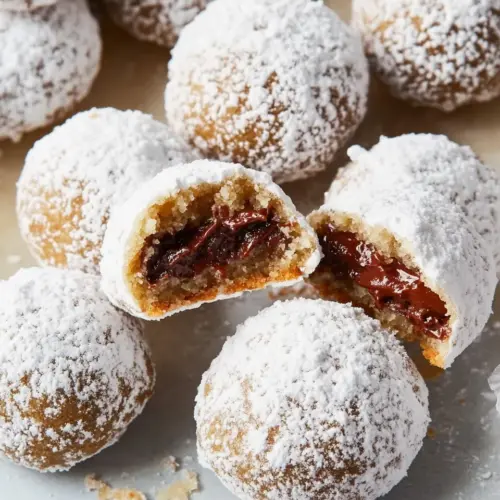
Snowball Cookies
Snowball Cookies are tender, nutty cookies with a hidden creamy center and a snowy powdered sugar coating, offering a crunchy to soft contrast in each bite. This easy to follow recipe produces melt in the mouth cookies that are perfect for holiday baking, gifting, or a cozy afternoon treat, making them a must try for your seasonal cookie rotation.
Equipment
- Kitchen Scale (optional)
- Baking Sheet
- Food Processor (optional)
- Stand mixer
Ingredients
- 1/4 -1/2 cup Nutella 68-135 grams Provides a rich, chocolate-hazelnut center and optional flavor boost; adds moisture and decadent taste when used at the lower end, or a stronger Nutella presence when the larger amount is chosen. Helps create a soft, slightly gooey interior while complementing the nutty pecan coating for classic snowball contrast.
- 3/4 cup very finely chopped or ground pecans 63 grams Adds delicate crunch and toasted, buttery flavor when finely chopped or ground; helps create the characteristic nutty exterior that defines snowball cookies. Contributes texture contrast to the tender cookie and pairs well with powdered sugar for a snowy finish.
- 8 1/2 tablespoons unsalted butter 120 grams, room temperature and cubed Provides richness and tenderness to the dough when creamed with sugar; fat coats flour proteins to limit gluten formation, resulting in a melt-in-your-mouth crumb. Room-temperature cubed butter ensures even incorporation and stable dough structure for shaping.
- 1 1/2 cups powdered sugar 170 grams, divided into 1/2 cup (57 grams) and 1 cup (113 grams) portions Sweetens and helps create a powdered sugar coating as well as tenderizing the dough; divided use reserves enough for the outer dusting while the rest is creamed into the dough for structure and sweetness. Contributes to the cookies' signature sweet, snowy appearance and delicate texture.
- 1/2 teaspoon pure vanilla extract 2 grams Adds a warm, aromatic note that enhances the cookie's overall flavor profile; small amount concentrates the sweet components and balances richness. Infuses subtle vanilla character without overpowering the delicate nutty and chocolate elements.
- 1/4 teaspoon kosher salt Balances and enhances the sweetness while brightening the flavors; small salt amount rounds out the taste and prevents the cookies from tasting flat. Helps highlight the complexity of the nuts, chocolate, and vanilla in the finished cookie.
- 1 1/4 cups all-purpose flour 150 grams Provides the structure and bulk of the cookie dough; flour forms the framework that traps fat and air to create the final crumb. Proper measurement yields a tender, delicate cookie that holds its shape while remaining soft and slightly crumbly.
Instructions
- Line 2 baking sheets with parchment paper.: The scent of fresh parchment is subtle, but the real win is in prevention of sticking, so the cookies slide off cleanly once baked. Use parchment to protect the underside from over browning. A common error is skipping this and then scraping the bottoms, which damages the cookies.
- Spray another baking sheet with nonstick spray. Divide the Nutella into 1/2-teaspoon-sized balls and place the balls on the sprayed baking sheet. Be sure they aren’t touching. Freeze for at least 30 minutes.: When the Nutella is frozen it becomes easier to encase, and the cold center helps the cookie maintain shape during baking. You will hear the faint click of a tray as you tap frozen balls into place. Avoid clustering them together, otherwise they can freeze into one mass and become difficult to work with.
- Chop the pecans in a food processor until fine. Don’t process too much or the nuts will turn oily. Set aside. (If a food processor isn’t available, place the pecans in a resealable bag and roll or pound until the nuts are finely chopped.): The smell of freshly chopped pecans is toasty and fragrant. The aim is a texture like fine crumbs, which blends smoothly into the dough. Over processing releases oils and creates a paste, which makes the dough greasy and alters the cookie structure.
- In the bowl of a stand mixer, beat the butter and 1/2 cup powdered sugar on medium-high speed until the mixture is light. Add in the vanilla extract, salt, and ground pecans.: You ll notice the color lighten and the mixture fluff slightly, a sign that air has been incorporated for tenderness. The aroma will be buttery and warm with nutty notes. If you underbeat, the cookies may be dense; overbeat and the texture could become too loose, so aim for a soft, airy cream.
- Add the flour and mix on low speed until the flour has been incorporated. Roll the dough onto a clean work surface and knead gently for 30 seconds. Form the dough into a ball, cover loosely with plastic wrap, press gently to flatten into a disc, and place in the refrigerator for 30 minutes to firm up.: The dough should feel slightly cool and cohesive after kneading. Cooling firms the butter , making the dough easier to handle and preventing spreading. A common slip is skipping the chill time, which leads to flatter cookies with less defined texture.
- Preheat oven to 375°F.: You will smell warmth as the oven comes up to temperature, and setting the right heat ensures the cookies bake through while forming a light outer set. An oven that is too cool will result in pale, underbaked centers; too hot and the exteriors will brown before the inside is properly set.
- Remove the Nutella balls and cookie dough from the fridge. (If the Nutella balls start to soften, place them in the freezer for a few minutes.) Pinch off a 2-inch piece of the dough and divide it in half. Slightly flatten one half in the palm of your hand and place a Nutella ball in the middle of the dough. Top it with the other dough half and wrap the 2 sides together around the Nutella ball. Gently roll the cookie in your hands to seal the edges and to form a ball. Place the cookie ball on a parchment-lined cookie sheet, 2 inches apart, and repeat until all cookies are made.: When you shape the cookies you should feel cool dough yielding without sticking to your hands, and the hidden Nutella should stay encapsulated. The sound of gentle rolling is quiet, but your hands will sense the seam sealing. If the dough becomes warm, pop it back in the fridge; warm dough offers poor structure and may leak during baking.
- Place the trays of cookies in the refrigerator for 30 minutes.: This chilling step firms both dough and filling. The air in the fridge will slightly dry the surface, making for a delicate outer crust once baked. Skipping this makes the cookies prone to spreading and can lead to misshapen results.
- After 30 minutes, place the cookies in the hot oven and bake 14-16 minutes or until they are light golden brown and firm to the touch. Remove from the oven and let rest 3 minutes on the baking sheet.: During baking you ll notice a subtle nutty aroma and edges turning a faint golden hue. The cookies will feel set when gently pressed. Baking too long makes them dry, while underbaking leaves centers too soft, so watch for that delicate firm feel.
- Place 1/2 cup powdered sugar in a bowl and roll the warm cookies, one-at-a-time, in the sugar. Return them to the still-hot baking sheet to cool another 5 minutes. Roll the cookies with a second coating of powdered sugar. Allow to completely dry.: The first coating adheres to the warm surface and begins to form the snowy finish. You should see a matte dusting that deepens after the second roll. If you wait too long to roll, the sugar may not stick as well and the classic look will be diminished.
- If a third coat of powdered sugar is desired, place powdered sugar in a small wire sieve and sprinkle it over the cookies.: The gentle dusting from a sieve creates a delicate, even snowfall effect. The final appearance is visually pleasing and feels soft on the tongue. Overdoing it may create a cloying sweetness, so dust sparingly if you want a balanced finish.
Notes
- Swap the filling Be brave and try peanut butter or cookie butter for a different flavor profile, remembering to freeze small portions first so they behave like the original filling.
- Try different nuts Use walnuts or hazelnuts instead of pecans to shift the aroma and texture, finely chopping them to maintain dough integrity.
- Press a pattern Gently press the top with the back of a fork before chilling for a subtle decorative finish that survives baking.
- Make miniatures Portion the dough smaller and use 1/4 teaspoon fillings for bite sized cookies that are perfect for platters and sampling.
- Extra snowy coating Sift one final light dusting of powdered sugar with a small sieve for an elegant, uniform look before serving.