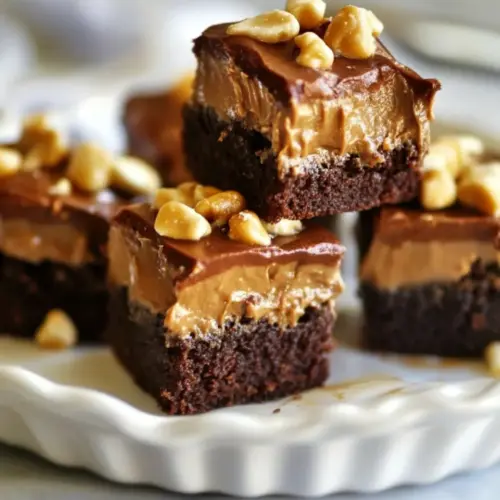
Snickers Brownie Bites
Snickers Brownie Bites are fudgy, chocolatey mini treats with a gooey Snickers center and a warm caramel drizzle, perfect for parties or easy weeknight dessert. The contrast of peanuts and rich brownie makes each bite memorable and crowd pleasing, ideal when you want a simple, indulgent pick me up. Make them for gatherings or a sweet family surprise.
Equipment
- Microwave-safe Bowl
- Miniature muffin tin
- Cooling rack
- Small Cookie Scoop
Ingredients
- 4 ounces unsweetened chocolate; coarsely chopped, 3/4 cup unsalted butter, cut into cubes, 1 1/4 cups sugar, 3 large eggs, 1 teaspoon pure vanilla extract, 1/4 teaspoon salt, 1 cup Gold Medal all-purpose flour, 48 miniature Snickers; frozen for at least 1 hour Provides deep chocolate intensity and a fudgy structure when melted and combined with butter; chopped unsweetened chocolate contributes rich cocoa flavor and controls sweetness level in the batter.
- 15 individually wrapped caramel candies (I used Kraft), 2 tablespoons heavy cream, 1/2 cup salted peanuts Adds concentrated sweet and salty finishing flavor as individually wrapped caramels are melted into a smooth sauce and salted peanuts provide crunchy texture and contrast to the chewy brownie and candy layers; heavy cream helps loosen the caramel for easier drizzling or filling.
Instructions
- Preheat oven to 350 degrees. Lightly spray the wells of a nonstick miniature muffin tin with nonstick cooking spray such as Pam with Flour, this really helps to ease out the brownie bites.: The oven warming will fill the kitchen with a dry, warm air that signals readiness. You should smell a faint neutral warmth rather than anything toasty until the batter goes in. This temperature is important to set the right rise and edge formation, producing edges that look set while the center stays fudgy. A common mistake is putting the pan in before the oven is fully up, which leads to uneven baking, so wait until the oven has reached temperature.
- Microwave chocolate and butter in a large, microwave-safe bowl at medium (50% power) for 3-4 minutes or until butter is melted.: Greasing the wells creates a slick surface so the bites release cleanly, and the little scent of the spray is subtle but reassuring. You want just a thin coating, not a puddle, otherwise the bottoms can slide when you try to unmold. If they stick, run a small offset spatula around the edges to coax them out gently, taking care not to tear the brownie.
- Stir until chocolate is melted. Whisk in sugar, eggs, vanilla and salt. Gradually add in flour; stir until just combined.: As the chocolate and unsalted butter warm together, you will notice the chocolate softening and small glossy streaks forming. Stir every 30 seconds if you like, to keep the heat distributed. This gentle melting prevents the chocolate from seizing and preserves a smooth texture. Overheating here can cause graininess, so stop once the butter is clearly melted.
- Using a small cookie scoop (about 2 teaspoons), scoop the brownie batter into the prepared miniature muffin tin wells. Place a miniature Snickers into the center of each well and press it lightly into the batter. Do not worry about covering the Snickers with batter. Bake brownies in preheated oven for 9-10 minutes, the edges will look set. Do not over bake.: When you stir, you will see the mixture become glossy and uniform, giving off a deep chocolate aroma that feels warming and rich. At this point whisk in the sugar, then the eggs , vanilla extract and salt so everything homogenizes. The reason for adding eggs now is to ensure a smooth emulsion, which leads to a fudgy crumb. A common error is adding the eggs to very hot chocolate, which can scramble them; let the mixture cool a bit if needed.
- Remove to cooling rack to cool completely. Carefully remove the brownie bites from the pan (see note below) and prepare the caramel sauce.: As you fold in the Gold Medal all purpose flour , watch the batter change from glossy to slightly more matte and thicker. You want to stop stirring as soon as you see no streaks of flour, because overmixing develops gluten and makes the bites cakier. If the batter feels heavy, that is normal for fudgy brownies, but resist the urge to add more liquid to loosen it.
- To make the caramel sauce, place the caramels and heavy cream in a microwave-safe bowl. Microwave on 50% power in 30-second increments until the caramels begin to melt; stir frequently. Continue warming and stirring the caramels until you have a smooth, creamy mixture. Place a few peanuts into the center of each brownie bite and drizzle the caramel sauce over the peanuts.: The little scoops help keep sizes uniform, which ensures even baking. As you drop batter in, pause to smooth the tops slightly with the back of the scoop if needed. The batter should have a shiny, thick texture and will mound slightly in the wells. A common pitfall is uneven scooping, which leads to some bites overbaked while others are underdone.
- Place a miniature Snickers into the center of each well and press it lightly into the batter: The frozen miniature Snickers should sit snugly in the batter, chilled to resist melting too quickly. Press just enough so the candy is anchored, not buried, because the contrast between candy and brownie is what makes these special. If the candy is not frozen, it can sink and bleed through the batter, so make sure it is solid.
- Do not worry about covering the Snickers with batter: Leaving the top exposed means the candy gets a direct hit of heat that softens it into a molten center while the surrounding brownie sets. This creates that gooey core with a slightly crisp top edge around it. People sometimes panic and add extra batter, which reduces the candy to a hidden, less impressive pocket.
- Bake brownies in preheated oven for 9 to 10 minutes, the edges will look set: During baking you will hear a soft crackle as the sugar and egg set, and the smell of warm chocolate will intensify. Look for edges that appear set and slightly pulled away from the tin, while the centers still look glossy and barely set. Overbaking leads to a drier texture, so err on the shorter side and test by touch; a gentle press should yield slight give.
- Do not over bake: Overbaking is the most common error and will change these from fudgy to dry. The centers continue to gently firm as the bites cool, so removing them while they still have a slight jiggle ensures tender results. If you overbake, consider adding a drizzle of extra caramel to reintroduce moisture.
- Remove to cooling rack to cool completely: Moving the pan to a cooling rack lets air circulate around the tin, preventing steam from making the bottoms soggy. The brownies will finish setting and the aroma will mellow into a richer, more uniform chocolate scent. Rushing the removal can cause crumbling, so be patient and let them cool fully.
- Carefully remove the brownie bites from the pan (see note below) and prepare the caramel sauce: When unmolding, invert the tin onto the rack and tap gently if needed. The bites should pop free if greased properly, leaving neat edges. If any stick, work a thin spatula beneath to free them without tearing. Take care not to press down on them as they are still delicate.
- To make the caramel sauce, place the caramels and heavy cream in a microwave safe bowl: As the caramels and heavy cream warm together, you will see the candies soften and begin to swell, releasing a sugary, buttery scent. The cream adds silkiness, turning the caramels into a pourable sauce rather than a thick paste. Stir frequently to blend completely and keep the sauce smooth.
- Microwave on 50% power in 30 second increments until the caramels begin to melt; stir frequently: The lower power and short bursts prevent scorching and help the caramels melt uniformly, producing a glossy, amber sauce. When you stir, the texture should become uniformly smooth with a shiny surface. Burning here will make the caramel bitter, so stop heating as soon as smooth.
- Continue warming and stirring the caramels until you have a smooth, creamy mixture: The finished sauce should drip slowly from a spoon and coat the back with a shiny film. If it feels too thick, stir in a splash more heavy cream . Overthinning will reduce flavor intensity, so add sparingly.
- Place a few peanuts into the center of each brownie bite and drizzle the caramel sauce over the peanuts: The final touch is the contrast between crunchy peanuts and warm caramel, which makes each bite texturally exciting. Drizzle with a spoon in a deliberate motion so each piece gets a glossy finish. If the caramel cools and firms before you finish, briefly warm it to restore pourability.
Notes
- Freeze the candy before baking: Solid miniature Snickers resist melting too quickly, ensuring a gooey center rather than a puddled candy that disappears into the batter.
- Watch the oven time carefully: Nine to ten minutes at 350 degrees produces set edges and fudgy centers. Ovens vary, so start checking at nine minutes to prevent drying out.
- Gentle melting matters for the chocolate and butter: Melt at medium power and stir intermittently to avoid seizing or burning, which causes grainy texture.
- Scoop uniformly to ensure even baking: A small cookie scoop keeps each bite the same size, so they finish at the same time and look consistent.
- Caramel finish should be warm and pourable: If it firms up too quickly, microwave in short bursts at low power and stir until smooth before drizzling.