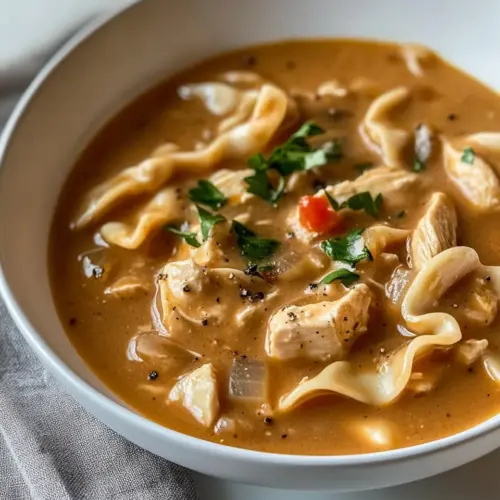
Smoked Paprika Chicken Soup
Smoked Paprika Chicken Soup is a smoky, creamy, easy weeknight dinner that balances tender egg noodles, savory shredded chicken, and earthy mushrooms. The gentle lift of smoked paprika gives every spoonful warmth, while a swirl of full fat sour cream creates a silky finish. Quick to make and deeply satisfying, it is ideal for busy evenings when you want comfort without fuss.
Equipment
- Measuring Cups and Spoons
- Knife and cutting board
- Kitchen Scale
- Dutch oven with lid
- Wooden Spoon
Ingredients
- 1 tablespoon mild olive oil Adds a gentle, fruity fat that helps sauté aromatics and mushrooms while contributing a mild olive flavor; also helps carry fat-soluble flavors throughout the soup. Use at the beginning of cooking to lightly brown and soften other ingredients without overpowering the dish.
- 1/3 cup finely diced yellow onion Provides a sweet, aromatic base when finely diced and softened; releases sugars and savory compounds that build the soup’s flavor foundation. Cook until translucent to maximize flavor extraction and integrate with the mushrooms and spices.
- 4 ounces cremini mushrooms, quartered, stems removed Contributes an earthy, meaty texture and umami depth when quartered and cooked; absorbs flavors from the oil and smoked paprika while adding body to the broth. Sauté until they release moisture and brown slightly to enhance savory notes.
- 2 cups chicken broth Supplies the liquid backbone and savory concentration that turns sautéed ingredients into a cohesive soup; adds seasoning and supports simmering of noodles and chicken. Choose a good-quality broth and adjust salt to taste as the soup reduces.
- 2 ounces uncooked egg noodles Provides tender, comforting bite that makes the soup hearty and satisfying; absorbs the smoky, savory broth while cooking quickly. Add toward the simmering stage and cook just until al dente to avoid mushy texture.
- 1 teaspoon smoked paprika Imparts warm, smoky aroma and rich red color that defines the soup’s flavor profile; enhances savory depth without heat if using mild smoked paprika. Stir in early during sautéing to bloom the spice and integrate its flavor into the fat.
- 1 cup shredded meat from a rotisserie chicken Adds ready-cooked protein that brings substance, flavor, and texture while shortening total cooking time; melds with the smoked paprika and broth for a pulled-chicken feel. Stir in near the end of cooking to warm through without drying out.
- 3 tablespoons full-fat sour cream Contributes creamy richness and a slight tang that balances the smoky paprika and broth; thickens the soup slightly and adds mouthfeel when tempered before adding. Fold in off-heat or low heat to prevent curdling and maintain a smooth texture.
Instructions
- Heat the olive oil in the Dutch oven until shimmering.: The aroma of hot olive oil will be bright and slightly fatty when the surface begins to ripple, and you may see faint wisps of heat rising from the pan. This shimmering is the cue that the oil is ready to accept aromatics without absorbing them too quickly, which helps prevent soggy onion . If the oil smokes heavily, your pan is too hot, so reduce the heat briefly to avoid burning and a bitter taste.
- Add onion and saute until starting to soften (2 to 3 minutes).: You should hear a gentle sizzle as the onion hits the oil, and within a couple of minutes the pieces will turn translucent and give off a sweet, fragrant scent. Softening rather than browning preserves delicate sweetness which supports the broth. A common mistake is overcrowding the pan, which cools it down and causes steaming instead of sauteing, so give the onions room to move.
- Add mushrooms and cook uncovered, stirring often, until soft (about 4 minutes).: As the mushrooms hit the pan they will release moisture then begin to soften and take on a deeper color, giving off a roasted, earthy aroma. Stirring often encourages even evaporation so they brown slightly rather than steam. Avoid leaving them untouched for too long, which can cause uneven cooking where some pieces overcook while others remain raw.
- Stir in the chicken broth, put on the lid and bring to a boil.: When you add the chicken broth the pan will go from hot and dry to lively and aromatic, releasing a savory steam. Put the lid on to trap heat and speed the transition to a boil, which concentrates the flavors and prepares the liquid to cook the noodles. If the broth tastes flat, a pinch of salt can brighten it, but add cautiously since store broths vary in sodium.
- Stir in the egg noodles. Put the lid back on and cook the soup, stirring occasionally, for 6 minutes.: The moment the egg noodles meet the bubbling broth they will start to hydrate and release a faint wheaty scent as they plump. Give them a quick stir so they separate and do not stick together. A helpful tip is to use a wide spoon to make sure none clump at the bottom, as clumped noodles cook unevenly and can stay gummy in the center.
- Stir in the paprika and the chicken. Continue to cook the soup until the noodles are soft (about another 2 to 3 minutes).: With the lid on the pot, the broth will maintain a steady simmer and the egg noodles will absorb liquid, swelling and softening. You will notice the surface quiet down and the noodles rising nearer the top as they cook. Stirring occasionally prevents sticking and helps you judge doneness, since undercooked noodles will be dense, while overcooked ones become mushy.
- Turn the heat off and let the soup cool for 1 minute, then stir in the sour cream and serve.: When you add the smoked paprika it should bloom in the warm broth releasing its smoky perfume, and the shredded chicken will warm through quickly, contributing savory, meaty notes. The broth should take on a faint rosy hue from the spice. A misstep here is adding dairy before cooling slightly, which can cause curdling; keep the heat moderate and stir gently.
- Continue to cook the soup until the noodles are soft (about another 2 to 3 minutes): In these final minutes the noodles finish absorbing flavor and the chicken melds with the broth. You should see the surface develop small, steady bubbles and smell an integrated savory aroma. Taste a noodle for texture, aiming for tender with a slight bite. Overcooking will make the noodles too fragile, causing them to disintegrate when stirred.
- Turn the heat off and let the soup cool for 1 minute, then stir in the sour cream and serve: Allowing the pot to rest for a minute cools the liquid enough to prevent the sour cream from breaking, and when stirred in it transforms the broth into a silky, lush finish. You will notice a creamy sheen and a softer mouthfeel immediately. A common error is to add the sour cream directly to boiling soup, which can cause separation, so always temper this step by removing from heat first.
Notes
- Spice level adjustment: Swap to hot smoked paprika if you want a peppery kick, adding it gradually so you can control the heat without drowning out the other flavors.
- Mushroom swap: Use baby bella or cremini for earthiness, or shiitake for a woodier note, remembering that denser mushrooms may need slightly longer to soften.
- Broth upgrade: Choose a low sodium chicken broth if you plan to use pre seasoned chicken, this helps you better control the final saltiness.
- Noodle alternatives: If you prefer a different pasta shape, pick a small, quick cooking type that will still be tender after about 8 to 10 minutes total cooking time.
- Sour cream technique: Temper the sour cream by whisking a small ladle of hot broth into it before stirring back into the pot, which reduces the risk of curdling and ensures a smooth finish.