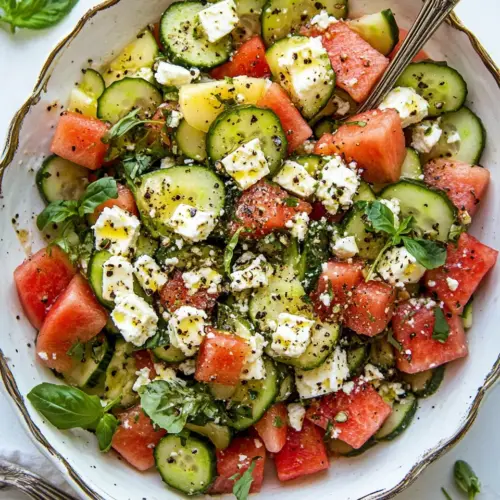
Smashed Cucumber and Watermelon Feta Salad
Smashed Cucumber and Watermelon Feta Salad is a bright, creamy, and crunchy summer bowl combining juicy watermelon, tender smashed cucumbers, creamy avocado, and salty feta cheese with toasty pistachios. It feels effortless to make and is perfect for easy weeknight dinners or afternoon gatherings, delivering fresh textures and bold contrasts you'll want to serve again.
Equipment
- Chef's Knife
- Cutting Board
- Large salad bowl
- Mixing Bowl
- Spoon or spatula
Ingredients
- 4 -6 Persian cucumbers, sliced in half lengthwise Slice and halve to create crisp, juicy ribbons that add a refreshing, crunchy base for the salad; smashing or lightly crushing releases extra cucumber flavor and texture to mingle with other ingredients.
- 4 cups cubed watermelon Cube into bite-sized pieces to provide sweet, hydrating contrast and vibrant color; balances savory and creamy elements while contributing a seasonal, juicy mouthfeel.
- 1 -2 avocados, diced Dice into slightly chunky pieces to introduce creamy richness and a buttery texture that complements the crisp cucumber and sweet watermelon; adds healthy fats for satiety and a mild flavor that carries dressings well.
- 1/3 cups salted pistachios, chopped Chop coarsely to contribute a salty, nutty crunch and visual interest; offers a contrasting texture and earthy flavor while enhancing mouthfeel and adding a pop of green color.
- 8 ounces feta cheese Crumble or roughly break into small pieces to deliver a tangy, salty creaminess that contrasts the sweet watermelon and crisp cucumber; dissolves into the salad to provide savory depth and a pleasant, briny finish.
- 1/4 cup extra virgin olive oil Drizzle to bind flavors and add smooth, fruity richness; brings healthy fats that carry aromatics and enhance the overall mouthfeel of the dressing and salad.
- 2 tablespoons lemon juice Squeeze fresh to add bright, acidic lift that balances the sweetness of watermelon and honey; sharp citrus notes brighten flavors and help meld the components together.
- 2 teaspoons honey Whisk in sparingly to introduce a touch of gentle sweetness that rounds acidity and enhances the fruit flavors; helps create a balanced dressing and subtle glaze on the salad components.
- 1/2 cup fresh basil Tear or chiffonade to scatter fragrant, sweet herbal notes throughout; adds aromatic freshness and a peppery-sweet complexity that complements both fruit and cheese.
- 1 tablespoon chopped fresh dill Chop finely to distribute an aromatic, slightly tangy herbaceous flavor throughout; provides a delicate, anise-like freshness that complements cucumber and feta without overpowering.
- kosher salt and black pepper Season to taste to bring out and balance the natural flavors of all components; adjust salt and pepper to enhance sweetness, cut richness, and tie the salad together.
- chili flakes Sprinkle lightly to introduce a subtle spicy heat and visual interest; adds warmth that contrasts sweet watermelon and creamy avocado while elevating the overall flavor profile.
Instructions
- Arrange the cucumbers on a cutting board, flesh side facing up. Take the flat side of a chef's knife and smash it into the cucumber, breaking the flesh. Chop into 1 inch pieces. In a salad bowl, toss together the cucumbers, watermelon, avocado, pistachios, and basil leaves. To make the dressing, crumble the feta cheese into a bowl. Add the olive oil, lemon juice, honey, and dill. Season with salt, pepper, and chili flakes. Mix well, breaking up the feta as you mix. Gently toss the salad with the dressing. Serve with fresh pita and chips. Yum!: You will notice a crisp, cool scent from the cucumbers as you line them up, and arranging them flesh side up exposes the inner moisture so the next action creates textural magic. The reason this matters is that smashing opens cells and releases juice that holds dressing better, producing a more cohesive mouthfeel. A common mistake is pressing too lightly, which leaves the pieces hard and unyielding, so press with confident weight to bruise the flesh just enough without turning it to mush.
- Take the flat side of a chef's knife and smash it into the cucumber, breaking the flesh: When you press the flat side of the knife onto each cucumber , you should hear a soft crack and feel the flesh give under pressure, releasing a faint cucumber perfume. This technique creates irregular surfaces that capture dressing, improving flavor pickup. The why here is simple, texture increases surface area and flavor adhesion. Avoid smashing with a dull motion or hitting the board, which can shatter pieces rather than create tender broken bites.
- Chop into 1 inch pieces: After smashing, chopping into roughly 1 inch pieces yields a pleasing bite size that balances with the cubed watermelon . Visually you want uniformity but not perfection, as slight variation makes the salad look artisanal. The goal is texture harmony, so being too precise can make the salad feel mechanical. A frequent misstep is cutting the pieces too small, which loses the satisfaction of a crunchy cucumber contrast.
- In a salad bowl, toss together the cucumbers, watermelon, avocado, pistachios, and basil leaves: As you toss, notice the mix of glossy watermelon flesh and the matte creaminess of avocado , with flecks of green from torn basil and the toasted shine of chopped pistachios . Tossing by hand gives you control over distribution and helps prevent the avocado from getting mashed. The purpose of this delicate toss is to build even layering; avoid vigorous shaking that bruises soft components.
- To make the dressing, crumble the feta cheese into a bowl: Crumbling feta cheese releases creamy pockets that will later mingle with oil and lemon, creating a textured, slightly grainy emulsion. You should smell a tangy, milky aroma as you crumble, which signals freshness. The why is that crumbled feta cheese integrates into the dressing better than large chunks, producing a cohesive coating. Avoid using pre-pressed large chunks which are harder to break down and distribute.
- Add the olive oil, lemon juice, honey, and dill: When you whisk the extra virgin olive oil with lemon juice , the dressing will turn glossy and loosen, while the honey adds a silk that tames acidity. The aroma becomes citrusy and herb-forward once chopped dill is added. This combination matters because the emulsion clings to the smashed cucumber surfaces, carrying flavor evenly. A common error is adding oil last without whisking, which can cause separation and uneven seasoning.
- Season with salt, pepper, and chili flakes: As you add kosher salt and freshly ground black pepper , taste frequently; the salt amplifies the natural sweetness of the watermelon and the heat from the chili flakes gives a bright finish. The reason for incremental seasoning is to avoid over salting, especially since the feta cheese contributes sodium. A mistake to avoid is dumping the salt in all at once, which can tip the balance irreversibly.
- Mix well, breaking up the feta as you mix: As you whisk and stir, you will see the feta cheese break into fine curds that add creamy flecks throughout the dressing, changing its texture and color slightly. This helps the dressing cling in small pockets to the salad components. The why is emulsification and distribution, which guarantees every bite carries a mix of dairy, acid, and oil. Avoid under-mixing, which leaves large chunks of feta cheese and uneven seasoning.
- Gently toss the salad with the dressing: Use a wide spoon or your hands to fold the dressing through the salad so the smashed cucumber and watermelon get light coats without becoming soggy. You should feel the difference as the dressing softens the surface slightly, and the aroma becomes integrated. This gentle action preserves the texture contrast that is essential to the salad. Resist the urge to over-toss aggressively, which will mash the avocado and bruise delicate herbs.
- Serve with fresh pita and chips: Plate the salad on a shallow bowl and present with warm, slightly crisp pita or chips for scooping. The contrast between the cool salad and the warm or crunchy accompaniment adds an interactive element to eating. Serving this way matters because it invites sharing and makes the salad more than a side. A pitfall is serving with soggy bread, which undermines the crunchy contrast you worked to create.
- Yum!: At this point you will notice the combined aromas of citrus, herb, and feta cheese lift from the bowl; take a moment to taste and adjust for salt or acidity if needed. The final balance is about harmony, letting the sweet, salty, creamy, and crunchy elements sing together. Avoid leaving the salad dressed for too long before serving, as the watermelon and smashed cucumber will weep and soften excessively.
Notes
- Extra Herbs: Increase the amount of dill or basil for a more herbaceous profile, tearing leaves gently to release their aroma without bruising.
- Nut Swap: Replace pistachios with toasted almonds for a different textural crunch and a slightly earthier finish that still pairs with feta cheese.
- Bolder Heat: Add a touch more chili flakes if you enjoy a pronounced spicy contrast to the sweet watermelon, but add incrementally to avoid overpowering the herbs.
- Feta Texture: Use a creamier feta cheese variety and crumble it very finely into the dressing to create a silkier mouthfeel that clings beautifully to the cucumbers.
- Honey Swap: If you prefer less sweetness, reduce the honey slightly and balance with an extra splash of lemon juice for brighter acidity.
- Crunch Boost: Add a few extra tablespoons of chopped pistachios on top at the end for visual contrast and an immediate crunch hit when serving.