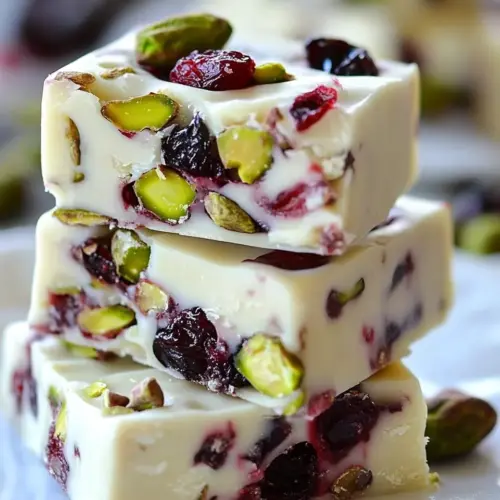
Small Batch 3 Minute Cranberry Pistachio Fudge
Small Batch 3 Minute Cranberry Pistachio Fudge is a creamy, easy no bake treat bursting with tart cranberries and crunchy pistachios. This quick holiday fudge delivers a luxurious texture with minimal gear, perfect for last minute gifts or a small dessert tray. Make it when you want something elegant without the fuss.
Equipment
- Microwave-safe Bowl
- Loaf Pan
- Foil
- Spatula
- Knife
Ingredients
- 12 oz white chocolate chips Melt smoothly to form the sweet, creamy base of the fudge; provides structure and sweetness when combined with cream and flavorings. Use tempered heat to avoid scorching and ensure a glossy, silky texture that sets firmly as it cools.
- 1/4 cup heavy whipping cream Enrich gently to create a lusciously smooth, creamy texture and help the chocolate emulsify for a fudgy consistency. Warm briefly before combining so it blends evenly and prevents graininess in the finished confection.
- 1 tbsp maple syrup OR honey or 1 tsp vanilla extract clear is best! Sweeten subtly or add floral depth depending on choice; maple syrup or honey contributes additional sweetness and nuanced flavor while clear vanilla extract adds pure vanilla aroma without color. Measure carefully to balance sweetness and avoid overpowering the white chocolate's delicate profile.
- 1/2 cup dried cranberries Craisins Add chew and bright, tart contrast that cuts through the richness of the white chocolate, providing bursts of fruity flavor and pleasant texture. Chop or soak briefly if desired to soften and distribute evenly throughout the fudge for balanced bites.
- 1/3 cup chopped pistachios Provide crunchy, nutty texture and a toasty, slightly savory counterpoint to the sweet base while contributing visual color contrast. Toast lightly if desired to enhance flavor, and chop uniformly to ensure even distribution and consistent mouthfeel.
Instructions
- Line a loaf pan (any size) with foil. Make sure to leave foil hanging over two sides of the pan for easy removal. If you are using non-stick foil - you're done. If not, lightly spray the foil with cooking spray.: When you handle the warm aroma of melting white chocolate chips and the first stir releases a soft sweet scent, move confidently to prepare the pan, because a lined pan makes removal effortless. The foil also gives you clean edges when you lift the set fudge out, and leaving overhang on two sides creates handles, which is a simple life saver. A common mistake is using too small a pan which will make the layer too thick and affect the set, so choose a pan that leaves a quarter to half inch layer for easy slicing.
- Combine white chips, heavy whipping cream, and maple syrup or honey or vanilla extract in a medium-size microwave safe bowl.: The tactile act of folding the foil over and creating those little handles will save you from wrestling with the fudge later, and when you pull it out the clean underside will look polished. If you skip the overhang, you might bruise the edges while trying to pry it out. Avoid skipping this step to keep presentation neat.
- Microwave for 30 seconds on high heat. Stir. Repeat until chips are melted and smooth.: Using non stick foil reduces the need for any additional spray, and you will notice the mixture gliding smoothly when you spread it, which is pleasing and efficient. The glossy surface helps the fudge release cleanly, and you will spend less time coaxing pieces out. The only pitfall here is assuming all foil is non stick, so double check packaging to avoid sticking surprises.
- Fold in dried cranberries and pistachios and spread the mixture evenly into the prepared pan.: A light spritz prevents any slight adhesion and ensures the edges lift cleanly, which matters for neat slices and attractive presentation. I like to hold the spray a bit further away for a fine, even mist, because heavy pooling can cause oily spots on the fudge surface. Too much spray can change mouthfeel slightly, so use sparingly.
- Let cool for an hour or more on the counter or refrigerate for 20-30 minutes until the fudge has completely set up.: At this stage the aroma of melting white chocolate chips mingled with sweet syrup is already inviting, and using a microwave safe bowl allows even heat circulation without losing steam. Mixing these ingredients before heating helps them meld quickly as the chips begin to soften, which leads to a silkier texture. A frequent error is using a very shallow bowl which causes uneven heating, so pick a bowl with some depth to encourage uniform melting.
- Remove the fudge from the pan using the foil as handles. Cut fudge into squares and serve.: The first 30 seconds will tease the chips into a softened state, releasing a sweet, milky scent that signals you to stir. You should hear nothing dramatic, just a soft shifting as the chocolate loosens, and your spoon will glide through partially melted chocolate. The danger is overheating right away; use short bursts to maintain creamy texture.
- Store leftovers in an airtight container for up to 1 week.: After that initial burst, stirring is where the magic happens because gentle motion encourages the chocolate to melt through residual heat, giving you a glossy emulsion. As you stir the mixture will transform from lumpy to smooth, and you can feel the viscosity thicken on your spoon, which is the right cue to stop heating. Over stirring is not usually a problem, but aggressive whipping can incorporate air and change the set, so take a calm folding approach.
- Repeat until chips are melted and smooth: Each short microwave cycle followed by stirring will gradually yield a silky, homogeneous mixture that smells rich and looks glossy. This staged approach prevents burning, and you will notice the texture becoming velvety and flowable, a visual clue that you are done. The common mistake here is impatience heating for too long at once, which risks graininess and scorch.
- Fold in dried cranberries and pistachios and spread the mixture evenly into the prepared pan: When you fold in the dried cranberries and pistachios , the bowl fills with a mix of fruity tang and nutty aroma that promises balance. Use a spatula to fold gently so the chunks stay intact and the mix stays glossy, then spread into the pan with a gentle tap to remove air pockets. If you press too hard you will compress the texture, making the fudge dense, so aim for an even, light spread.
- Let cool for an hour or more on the counter or refrigerate for 20 to 30 minutes until the fudge has completely set up: Cooling lets the fat crystallize slowly, producing a firm yet tender bite, and the scent will mellow into a sweeter finish. On the counter you will notice the surface lose its sheen as it begins to set, whereas refrigeration tightens the texture faster and may slightly mute aroma, but both deliver a stable sliceable fudge. Watch for condensation if you refrigerate and then leave it out, as moisture can create a dull surface.
- Remove the fudge from the pan using the foil as handles: Lifting the foil handles transforms the process from work to presentation, revealing clean edges and an even top. The tactile satisfaction of a clean lift is immediate, and it makes cutting easy, because the slab will sit firmly on the board. A common slip is trying to cut while still too soft, which leads to squashed squares, so be patient and ensure a complete set.
- Cut fudge into squares and serve: Cutting exposes the contrast of creamy white interior and flecks of cranberries and pistachios , and the first bite should offer a pleasing textural play. Use a sharp knife warmed under hot water and wiped dry for cleaner cuts. If you see ragged edges, chill briefly and trim again for neater presentation.
- Store leftovers in an airtight container for up to 1 week: Proper storage preserves texture and flavor, and an airtight container kept cool will keep the pieces tasting fresh. If you stack pieces, separate layers with parchment to prevent sticking. A frequent error is leaving the fudge exposed, which allows it to pick up aromas from the fridge and develop a film on the surface.
Notes
- Choose good quality white chocolate because it melts more predictably and yields a creamier finish than bargain chips.
- Use chilled heavy whipping cream to help form a smooth emulsion when combined with melted chocolate.
- Favor clear vanilla if using to maintain the snow white color of the fudge while adding subtle aroma.
- Lightly toast pistachios for extra depth, but cool them before folding in to avoid softening the chocolate.
- Soak very dry cranberries briefly to plump them, then drain well so they do not leach moisture out of the fudge.
- Work in short microwave intervals and stir to prevent overheating and grainy chocolate.