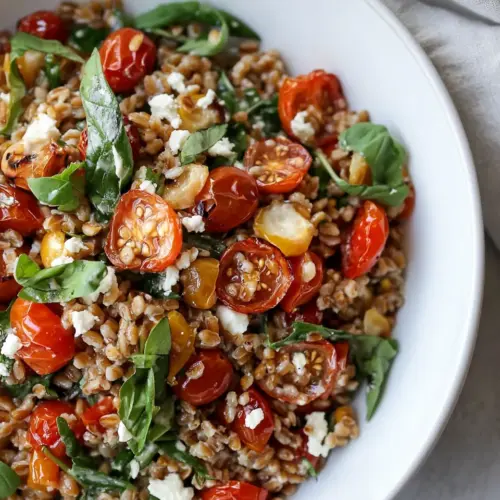
Slow Roasted Tomato Farro Salad
Slow Roasted Tomato Farro Salad is a summery, rustic bowl of jammy roasted tomatoes and chewy farro tossed with a bright lemon and vinegar dressing. Creamy feta and toasted pine nuts add salty and crunchy notes for an easy weeknight dinner or a make ahead potluck star. This satisfying salad is loaded with texture and flavor, a perfect reason to roast tomatoes while they are at their peak.
Equipment
- Oven
- Baking Sheet
- Parchment Paper
- Large Bowl
- Skillet
- Saucepan
- Whisk
Ingredients
- 2 pint cherry or grape tomatoes, halved Halved to expose juicy interiors and concentrate natural sweetness when roasted, enhancing texture and flavor in the salad; provide vibrant color and bite-sized pieces that mingle well with farro.
- 1 tablespoon olive oil Used to coat tomatoes before roasting to promote caramelization and prevent sticking, contributing a smooth mouthfeel and subtle fruitiness to the dressing and overall dish.
- 1/2 tablespoons sugar Added sparingly to balance tomato acidity and deepen caramelization during roasting, creating a mild counterpoint to savory and tangy elements in the salad.
- 1 garlic clove, minced Minced to infuse roasted tomatoes with a gentle aromatic punch and savory depth, complementing the sweetness while blending seamlessly into the dressing if mixed.
- 1/2 teaspoons salt Sprinkled lightly during roasting to enhance savory notes and bring out tomato umami while seasoning the grain and vegetables for balanced taste.
- 1/2 teaspoon pepper Ground and added to provide subtle heat and aromatic complexity, helping to round out flavors and contrast the sweetness of roasted tomatoes and honey.
- 1/2 teaspoon dried thyme Dried and included for an herbal backbone that withstands roasting, imparting warm, slightly floral notes that enrich the salad's savory profile.
- 2 cups cooked farro Cooked and used as the hearty base that absorbs flavors from roasted tomatoes and dressing, offering chewy texture, nutty taste, and substantive bulk to the salad.
- 1/2 cup crumbled feta cheese Crumble added for creamy, salty tang that cuts through sweetness and provides rich flavor contrast and pleasant creaminess in each bite.
- 1/2 cup pine nuts Toasted or added as-is for crunchy texture and buttery, resinous flavor that complements farro and tomatoes while adding a nutty richness.
- 1/4 cup fresh herbs, like parsley, chives, oregano, etc Chopped fresh to contribute bright, herbaceous lift and aromatic complexity, balancing roasted richness with clean, green notes throughout the salad.
- salt and pepper to taste Used at the finish to adjust seasoning to personal preference, ensuring the final balance of savory and bright flavors is correct.
- 3 tablespoons lemon juice Squeezed to add fresh acidity and brightness that lifts the dish, balancing sweetness and fat while enlivening farro and roasted tomatoes.
- 2 tablespoons champagne vinegar Added to introduce mild fruity acidity and depth that complements lemon and enhances the overall vinaigrette complexity.
- 1 1/2 tablespoons honey Stirred in to lend natural sweetness and help emulsify the dressing while balancing acidity from lemon and vinegar.
- 2 garlic cloves finely minced or pressed Finely minced or pressed to provide a sharper, more pungent garlic flavor in the dressing, intensifying savory aromatics without overwhelming other ingredients.
- 1/4 teaspoons salt Measured and added to the dressing to season gently, bringing out other flavors while maintaining balance and avoiding over-salting the salad.
- 1/4 teaspoon pepper Measured and included to add mild heat and aromatic lift to the dressing, helping to season without dominating the vinaigrette.
- 1/2 cup extra virgin olive oil Slowly whisked in to create a smooth, cohesive vinaigrette that carries and melds flavors, adding richness and mouth-coating texture to the salad.
Instructions
- Preheat the oven to 300 degrees F. Line a baking sheet with parchment paper.: When you slide the baking sheet into the oven you should feel a steady warmth, not an aggressive blast, so the tomato s roast slowly and concentrate their sugars. The parchment prevents sticking and makes cleanup effortless. One common mistake is using too hot a temperature, which can burst skins too quickly or scorch the sugars, so maintain a gentle heat for even caramelization. You'll notice the oven smell shift from neutral to faintly toasty as it comes to temperature.
- Place the cherry tomatoes on the sheet and drizzle with olive oil. Sprinkle with garlic, sugar, salt, thyme and toss well. Roast for 1.5 to 2 hours, tossing every 30 minutes, until the tomatoes are super caramely and shriveled and sweet.: The aroma of slowly roasting tomato s develops gradually, turning from bright and fresh to syrupy and roasted, with a sweet pop when a tomato gives way. Tossing every 30 minutes ensures even browning and prevents sticking, and you will see the juices condense into glossy, sticky pools. Avoid overcrowding the pan, which traps steam and prevents the concentrated, shriveled texture you want.
- P. S. These keep great in a sealed container in the fridge for a few days if you have extra!: The cooled roasted tomato s keep their concentrated sweetness and are fantastic later, with an intensified flavor that actually improves after resting. Store them in an airtight container to preserve texture and aroma. A common error is leaving them exposed in the fridge which can dry the edges, so always seal them properly.
- While the tomatoes are roasting, I like to cook the farro and toast the pine nuts. Cook the farro according to the directions (it’s usually 1 cup farro to 2 cups liquid, simmering for about 30 to 40 minutes) and let it cool. If desired, you can toss it with a bit of olive oil so it doesn’t stick together, but don’t use too much since we toss the salad in dressing.: As the farro simmers you will hear a gentle hum from the pot and see plump grains absorbing liquid, becoming slightly chewy yet tender. Cooling the grain prevents it from wilting fresh herbs and melting the feta cheese when combined. Overcooking is common, which yields a mushy texture, so taste for a firm chew before draining.
- To toast the pine nuts, heat the nuts in a skillet over medium-low heat. Toss the nuts and shake the pan a few times until they are golden and fragrant, about 5 minutes. Don’t take your eyes off them!: Toasting releases warm, nutty oils and a fragrant aroma that instantly tells you they are ready. The visual cue is a uniform golden tint, and the sound is a faint crackle. Pine nuts burn very quickly, so stay attentive and remove them from heat as soon as they color to keep their delicate buttery flavor.
- To make the salad, combine the farro with the tomatoes in a large bowl. If taking this to a party, I would combine it all cold and serve it cold. Toss in the feta cheese, pine nuts and fresh herbs. Add about 1/4 cup of the dressing, tossing well. Taste and season with salt and pepper as needed. If needed, you can add more dressing, or serve the salad as is with the dressing on the side so people can use it themselves.: When you toss everything you should notice a mingling of textures and aromas, the roasted tomato perfume, the nutty farro , and the salty tang of feta cheese . Start with a conservative amount of dressing so the salad does not become soggy, and add more if it feels dry. A frequent slip is overdressing early, which masks the individual flavors, so gently dress and then adjust after tasting.
- This stores great in the fridge for a few days!: Chilled, the flavors continue to meld, and the salad develops even more harmony between dressing and grains. Keep it airtight to preserve texture and freshness. Beware of long storage where the pine nuts can soften; if serving later, consider holding them separate until plating to maintain crunch.
- In a bowl, whisk together the vinegar, lemon juice, honey, garlic, salt and pepper. Continue to whisk while streaming in the olive oil. This dressing stays great in the fridge in a sealed container for a week or so, so feel free to make a double batch if desired!: The act of whisking while slowly adding the extra virgin olive oil builds an emulsion that gives the dressing body and sheen. You will see it go from thin to glossy and slightly thickened, and the aroma will be bright and layered. A common mistake is adding the oil too quickly, which prevents the dressing from emulsifying, so stream it in steadily for the creamiest texture.
Notes
- Swap grains carefully: If you cannot find farro, choose a similarly chewy grain like barley, keeping in mind cooking times and liquid ratios will differ, so watch for a firm yet tender bite.
- Adjust pine nut quantity: Increase or decrease the pine nuts to tune the crunch level, but toast them gently to maintain their buttery flavor without bitterness.
- Control salt with feta: Because feta cheese adds salty tang, taste the salad before adding final salt and pepper, adjusting only after the full assembly.
- Make-ahead roasted tomatoes: Roast a larger batch of tomatos and refrigerate in an airtight container, using them across several meals to save time while boosting flavor.
- Emulsify the dressing: Whisk the vinegar and lemon first, then stream in the extra virgin olive oil slowly to create a stable, glossy dressing that clings to the farro.