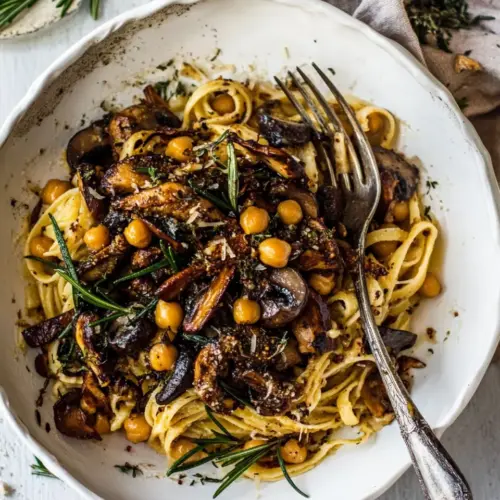
Slow Roasted Mushroom Pasta with Crisp Rosemary Chickpeas
Slow Roasted Mushroom Pasta with Crisp Rosemary Chickpeas is a creamy, crispy, and herbaceous pasta perfect for an easy weeknight dinner. Earthy mushrooms roast to deep brown while chickpeas turn crunchy, then everything is tossed with linguine, parmesan, and torn burrata for silky, savory bites. Make it for cozy fall meals, the texture contrast and bright balsamic lift make it impossible not to crave.
Equipment
- Rimmed Baking Sheet
- Large Pot
Ingredients
- 1/2 cup extra virgin olive oil Enhance richness and help roast mushrooms evenly by coating them with a generous amount of extra virgin olive oil; its fruity flavor also forms the base for the crisp rosemary chickpeas and helps prevent sticking during high-heat roasting.
- 1 1/2 pounds mushrooms, roughly torn (wild, cremini, or portobello) Add meaty texture and deep umami by using roughly torn mushrooms; slow roasting concentrates their flavor and yields tender, slightly caramelized pieces that pair well with pasta and creamy cheeses.
- 1 (14 ounce) can chickpeas drained and patted dry Provide a crispy, protein-rich contrast once roasted by draining and patting dry chickpeas; removing excess moisture ensures they become crunchy rather than steam during roasting.
- 3 -4 sprigs fresh rosemary (or 1 tablespoon dried rosemary) Infuse aromatic piney notes when using fresh rosemary sprigs or add a concentrated herb flavor if using dried; rosemary complements both the roasted chickpeas and mushrooms, brightening the overall dish.
- 2 tablespoons thinly sliced lemon zest Introduce bright citrus fragrance and a sharp lemony bite with thinly sliced lemon zest; it lifts the rich mushroom and cheese flavors and adds a refreshing counterpoint.
- 4 -6 cloves garlic, smashed Build savory depth and mellow heat by smashing garlic cloves; gentle roasting mellows garlic’s sharpness while releasing aromatic oils that flavor the oil and vegetables.
- kosher salt and black pepper Season and balance flavors with kosher salt and freshly ground black pepper; salt enhances umami and sweetness from roasting while pepper adds subtle heat and complexity.
- 1 pinch crushed red pepper flakes Add a touch of heat and visual interest with a pinch of crushed red pepper flakes; a small amount provides warmth that complements the richness without overpowering other flavors.
- 1 pound linguine or other long cut pasta Carry the sauce and ingredients while providing a tender bite when cooked al dente; choosing linguine or another long cut pasta helps strands catch bits of mushroom, kale, and chickpeas.
- 1/4 cup balsamic vinegar Concentrate sweet-tart acidity and deepen savory notes with balsamic vinegar; a splash brightens the sauce and balances the oil’s richness while adding a subtle glaze to vegetables.
- 3 tablespoons salted butter (optional) Optionally enrich the sauce and create silkier mouthfeel by stirring in salted butter; it adds gloss and rounds sharp flavors, particularly useful if the dish needs extra richness.
- 1 bunch Tuscan kale, finely shredded Contribute earthy color, slight bitterness, and a sturdy texture by finely shredding Tuscan kale; kale wilts into the sauce, adding nutrients and balancing richness from cheese and oil.
- 1 tablespoon chopped fresh sage (or 2 teaspoons dried sage) Add warm, savory herbiness by using chopped fresh sage or dried equivalent; sage pairs well with mushrooms and butter, lending a subtle autumnal flavor to the pasta.
- 1/2 cup grated parmesan cheese Provide salty, nutty umami and finishing richness by grating parmesan over the dish; it helps bind the sauce to the pasta and complements both mushrooms and chickpeas.
- 6 -8 balls fresh burrata or ricotta cheese, at room temperature Offer creamy, milky richness and a luscious finishing touch with balls of fresh burrata or ricotta at room temperature; spooning them over warm pasta creates pockets of soft, decadent cheese.
Instructions
- Preheat the oven to 425 degrees F. Position the oven rack in the upper 1/3 of the oven. On a rimmed baking sheet, combine 1/3 cup olive oil, the mushrooms, chickpeas, rosemary, lemon zest, garlic, and a pinch each of salt, pepper, and crushed red pepper flakes. Transfer to the oven and roast for 25-30 minutes. Stir halfway through cooking, until the mushrooms are golden and the chickpeas crisp. Watch closely. Meanwhile, bring a large pot of salted water to a boil. Add the pasta and cook according to package directions until al dente. Just before draining, remove 1 cup of the pasta cooking water. Drain. To the hot pot, add the butter, if using, and remaining olive oil. Add the sage and kale, cooking until the kale is wilted and crisping on the edges. Toss in the pasta, parmesan, ricotta (if using), and balsamic vinegar, tossing to combine. If needed, thin the sauce with additional pasta cooking water. Stir in the roasted mushrooms, chickpeas, and any oil left on the baking sheet. Divide the pasta among plates and top with torn burrata cheese and fresh pepper.: The smell of hot air filling the kitchen signals the start of flavor transformation, where herbs and garlic perfume the hot oil and sugars on the mushrooms begin to caramelize. As heat ramps up, you should hear the faint hum of the oven and feel warmth radiate when you open the door to arrange the sheet. The reason this temperature works is it encourages browning without drying ingredients too quickly, so you get golden edges and juicy interiors. A common mistake is preheating too low, which causes steaming instead of roasting. Check that your oven has reached temperature before sliding the pan in.
- Combine 1/3 cup olive oil, the mushrooms, chickpeas, rosemary, lemon zest, garlic, and a pinch each of salt, pepper, and crushed red pepper flakes on a rimmed baking sheet: When you toss these elements together, the sound is a light clatter, and you can almost smell the garlic and rosemary blooming in the oil. Lay the pieces out in an even layer so each piece gets direct heat and air can circulate, which is crucial for crisping the chickpeas . This arrangement prevents steaming and encourages the Maillard reaction, giving those deep browned notes. Mistakes include overcrowding the sheet, which results in soggy edges and uneven color.
- Transfer to the oven and roast for 25 to 30 minutes: As the tray roasts, aromas deepen and you will see the mushrooms shrink and take on an intense, mahogany hue while the chickpeas start to crisp and rattle against the sheet. Stirring halfway through redistributes the heat and exposes new surfaces to caramelize. The reason for this duration is to allow both textures to develop fully without burning the garlic. Overroasting can lead to bitter, desiccated bits, so set a timer and watch the last five minutes closely.
- Stir halfway through cooking, until the mushrooms are golden and the chickpeas crisp: When you stir, you want to flip pieces gently, listening for a faint sizzle and looking for even color patches. The visual cue is glossy, deep brown mushroom caps and chickpeas with darkened, crunchy skins. This step redistributes flavored oil and lets the rosemary infuse everything fully. A mistake here is stirring too often which interrupts browning, so do it just once to reposition items.
- Watch closely: Near the end of the roast you should be vigilant, because sugars can move from caramelized to burnt fast. Keep the oven door closed as much as possible to maintain consistent heat, but peek in the last five minutes to ensure there is no charring. Smell is a great early warning; a sharp acrid scent means it is time to remove the pan. Avoid walking away at this point, as even a couple of extra minutes can change the flavor profile sharply.
- Meanwhile, bring a large pot of salted water to a boil: The sound of a vigorous boil and the steam rising from the pot tell you it is ready for the pasta . Generous salting seasons the pasta from its core, which is why I always add salt to the water early. The why here is simple, the pasta itself needs to carry flavor before it meets the sauce. Under-salting is the most common oversight, resulting in bland noodles.
- Add the pasta and cook according to package directions until al dente: Cooking until linguine is just tender with a slight bite provides the best mouthfeel when it finishes in the pan. You will see the strands soften and swell, and taste-testing is key to avoid overcooking. The residual heat later in the pan will soften it further, so pull it a touch early if you prefer a firmer texture. Overcooking here compromises the final texture.
- Just before draining, remove 1 cup of the pasta cooking water: That starchy, hot water is gold for adjusting sauce consistency, giving a glossy sheen and helping the parmesan and butter emulsify into a cohesive coating. Ladling it out is tactile and warm in your hands, and you can see how cloudy it is compared to plain water. Forgetting this step often leads to a sauce that is too thick or clumpy.
- Drain: The act of draining separates the pasta from excess water while keeping enough surface starch to bind with the sauce. After you drain, return the hot pot to the stove to begin finishing the dish. Leaving the pasta sitting cold will cool down the pan and make sauce binding harder, so work quickly. A frequent error is letting drained pasta sit too long, which reduces sauce adherence.
- To the hot pot, add the butter, if using, and remaining olive oil: When the butter melts and mingles with the olive oil , you get a warm, aromatic glossy pool that will coat the pasta . The sound is a gentle sizzle and the scent is rich and inviting. This fat base carries the sage and helps the parmesan dissolve smoothly. If you skip butter entirely, ensure there is ample oil to avoid a dry final texture.
- Add the sage and kale, cooking until the kale is wilted and crisping on the edges: As the kale meets hot fat and sage , it softens and the edges take on slight crispiness, offering a contrast to silky pasta. You will hear a soft sauté and see the greens collapse into deep green ribbons. This step adds vegetal body and a slightly bitter note that balances the dish. Overcooking will make the kale limp, so watch for tender crispness.
- Toss in the pasta, parmesan, ricotta if using, and balsamic vinegar, tossing to combine: At this stage, the room fills with a melded aroma of cheese, vinegar, and herbs. The parmesan melts and helps thicken the sauce while the balsamic vinegar adds tangy depth. Tossing distributes flavors and encourages the starch to bind everything. Add ricotta carefully so it blends into creamy pockets; too much too soon can dilute the seasoning.
- If needed, thin the sauce with additional pasta cooking water: The right consistency is glossy and fluid enough to coat each strand without pooling at the bottom of the bowl. Drizzle in reserved hot water slowly until you reach that balance. This technique prevents clumping and enhances mouthfeel. Overwatering will make the sauce soupy, so add sparingly.
- Stir in the roasted mushrooms, chickpeas, and any oil left on the baking sheet: The roasted mixture brings caramelized notes and crunchy contrast; when you fold it in, you should hear a soft clink and see flecks of browned bits disperse. The leftover oil carries concentrated flavor and is worth adding back. Be gentle so you don’t mash tender components. A mistake is adding them too early, which can soften the crisp chickpeas .
- Divide the pasta among plates and top with torn burrata cheese and fresh pepper: Tearing burrata over hot pasta is theatrical and delicious, the cheese melting into creamy pockets that punctuate each bite. Freshly ground black pepper adds the final bright counterpoint. Serve immediately to enjoy the contrast of warm pasta and cool, creamy cheese. Waiting too long allows the burrata to fully collapse and lose that lovely textural surprise.
Notes
- Choose firm mushrooms: Select mushrooms that are dry and solid, avoiding ones with slimy spots. Firmer mushrooms hold their texture while roasting and develop better browning. If you use a mix like cremini and portobello, the varying sizes give a pleasant textural contrast. Clean them with a damp cloth rather than soaking, to avoid waterlogged pieces which will not brown well.
- Dry the chickpeas thoroughly: After draining the can, pat the chickpeas with paper towels and let them air a few minutes. Moisture is the enemy of crispness, so this step matters. If you have time, lay them on a towel and press gently to remove as much surface water as possible before oiling and roasting.
- Layer flavor with zest and vinegar: Add some lemon zest before roasting for a subtle floral lift and finish with balsamic vinegar at the end for a glossy, tangy flourish. The two act differently, so using both at separate times gives a more complex brightness than either alone. Be conservative at first and taste, increasing if needed.
- Don’t crowd the pan: Spread the mushrooms and chickpeas into a single layer; if pieces overlap they steam and lose caramelization. If your baking sheet is small, use two sheets instead of overloading one. This extra step yields crisp, evenly browned results that make the dish sing.
- Reserve starchy pasta water: Save at least one cup before draining, then add it in small amounts to achieve the sauce consistency you want. The starch helps the parmesan and butter cling to the pasta, creating a silky coating. If you skip it, the sauce often separates or feels dry.