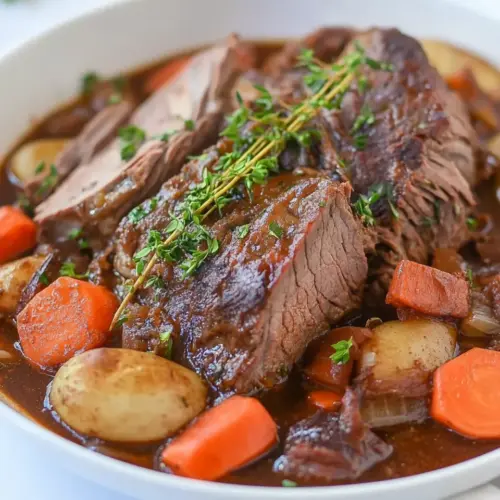
Slow Cooker Yankee Pot Roast
Slow Cooker Yankee Pot Roast brings tender, fall apart beef simmered with vegetables and a savory, glossy gravy. This hearty, easy weeknight dinner features robust, comforting flavors and hands off cooking, perfect for cold evenings and family gatherings. Make it for a practical, soul warming meal that tastes like homemade tradition and rewards patience with deep, satisfying richness.
Equipment
- Large cast-iron pan
- Dutch Oven
- Slow Cooker
Ingredients
- 1 (3.5 – to 5-pounds) top round roast or chuck roast or round tip roast Season generously and provide the main protein base for the roast, offering rich, beefy flavor and tender texture after long, slow cooking; choose a cut like top round, chuck, or round tip that becomes succulent and shreddable when braised, ensuring the roast holds together while absorbing aromatics and liquids.
- Kosher or sea salt Season liberally to enhance natural flavors and aid in creating a savory crust during initial searing; use coarse kosher or sea salt to balance sweetness from vegetables and to help extract juices from the meat during slow cooking.
- Freshly ground black pepper Season coarsely to add warming pungency and depth; freshly ground black pepper brightens the dish and complements the roast’s savory profile, contributing aromatic heat throughout the braising liquid.
- 3 tablespoons vegetable oil Brown the roast in hot vegetable oil to develop deep, caramelized flavors through the Maillard reaction; use the oil for initial searing and to carry aromatics, helping to build a flavorful base for the slow cooker.
- 1 cup red wine or beef broth Deglaze the pan with red wine or beef broth to lift browned bits and enrich the braising liquid with acidity or additional beef flavor; choose red wine for bright, fruity complexity or broth for a milder, savory base.
- 1 cup beef broth low sodium Provide a savory, low-sodium braising liquid that melds flavors and tenderizes the meat over hours in the slow cooker; beef broth deepens umami and supplies moisture for vegetables and roast to cook evenly.
- 1 large onion quartered Contribute sweet and savory aromatics that mellow and add body to the sauce as they soften; quartered onion releases natural sugars and layers of flavor into the braising liquid while cooking down.
- 2 large carrots cut into chunks or 2 cups of baby carrots Add sweet, earthy texture and bulk while absorbing braising flavors; cut carrots or baby carrots lend natural sweetness and a tender bite that complements the hearty roast and enriches the pot.
- 10 mini red potatoes washed Provide small, starchy potatoes that absorb savory juices and add hearty rustic texture; mini red potatoes retain shape when simmered and contribute a creamy, tender contrast to the meat.
- 1 tablespoon minced garlic Introduce pungent, aromatic depth to the braising liquid and sauce; minced garlic infuses the roast and vegetables with savory, slightly sweet garlic flavor as it slowly cooks.
- 1 teaspoon dried thyme Impart subtle, woodsy herbal notes that complement beef and vegetables; dried thyme releases fragrant oils into the braising liquid, enhancing savory complexity during the long cook time.
- 1 teaspoon dried rosemary Add aromatic, pine-like flavor to support the dish’s herb profile and savory bite; dried rosemary infuses the roast with robust, resinous notes that pair well with slow-cooked beef.
- 1 (14.5 oz) can diced tomatoes Contribute bright acidity and tomatoey depth to the braising liquid while adding texture; canned diced tomatoes blend into the sauce, adding savory-sweet balance and a bit of body.
- 2 tablespoons Worcestershire sauce Enhance umami and savory richness while adding a tangy, slightly sweet depth to the sauce; Worcestershire sauce layers complex flavors that boost the roast’s overall savory profile.
- 1 tablespoon cornstarch Thicken pan juices into a glossy gravy when mixed with liquid and heated, creating a clingy sauce for serving; cornstarch slurry helps transform the braising liquids into a smooth, velvety consistency.
- 2 tablespoons water Create a smooth slurry when combined with cornstarch to dissolve lumps and activate thickening; cold water ensures even dispersion before adding to hot juices to finish the gravy.
- Fresh chopped parsley Garnish with fresh herbal brightness and color, adding a lively finish that contrasts the rich, slow-cooked flavors; chopped parsley refreshes the palate and enhances presentation.
Instructions
- Season beef with salt and pepper.: The aroma of coarse salt and freshly cracked black pepper hitting the surface of the beef is immediate, and you should notice the salt begin to dissolve into the meat as it sits. This step is about building internal seasoning so the roast is flavorful throughout, not just on the outside. If you skip this, the final dish can taste flat, so resist the temptation to underseason. Common mistake to avoid, skimping on salt which leads to bland meat even after long cooking.
- Place a large cast iron pan or Dutch oven on the stove over heat. Once hot, add oil, and sear roast on all sides.: Heat the pan until it is shimmering and you can feel the warmth radiating when you hover your hand a few inches above it, then add the vegetable oil . When the oil ripples and moves easily, lay the beef down and listen for an immediate sizzle, the sound that indicates a good sear. Browning creates Maillard reactions that contribute deep savory notes and brown fond on the pan, which later becomes part of the sauce if deglazed. Avoid crowding the pan which lowers the temperature and causes steaming instead of browning; that will prevent the development of rich color and flavor.
- Place the roast in the slow cooker and add the remaining ingredients from the "Slow Cooker Ingredients" list. Stir well to combine.: The visual cue here is a deeply golden to brown crust forming on each face of the roast, not black char. The crust should be slightly firm with a toasted aroma. This crust locks in juices and produces flavorful bits for the gravy. If the meat releases too easily when you try to turn it, it likely needs a little more time to develop the crust. A common mistake is flipping too often, which interrupts crust formation and yields a paler roast.
- Cover and cook on Low for 8-9 hours or High for 5 hours. Until the beef is tender.: As you transfer the hot roast into the cooker, you will notice steam and a gentle dispersal of the seared aromas into the cooker environment. Add the onion , carrots , potatoes , canned diced tomatoes , both cups of beef broth and the optional cup of red wine or beef broth , minced garlic , dried thyme , dried rosemary , and Worcestershire sauce . Stirring everything briefly will combine the liquids and aromatics so the flavors marry during the slow cook. Do not over stir once cooking starts, since gentle braising is preferable to agitating the meat and vegetables into mush.
- Mix water and cornstarch in a small bowl until the cornstarch is fully dissolved.: During the long, slow process you should smell a gradual deepening of savory, tomato, and herb notes. The meat will move from firm to fork tender, and connective tissues will soften into a silky mouthfeel. This low and slow approach extracts flavor without drying the meat out. A common pitfall is opening the lid repeatedly, letting heat escape and prolonging cooking time unnecessarily; keep the lid steady for best results.
- During the last 30 minutes of cooking, add the slurry to the slow cooker to thicken the gravy. Gently stir to combine the ingredients.: Creating a smooth slurry prevents lumps when it hits hot liquid. The texture should be uniformly milky, without gritty bits. This step is crucial for achieving a glossy, pourable gravy. If you add undissolved cornstarch directly, you will end up with grainy pockets instead of a smooth sauce, so take the time to whisk until completely smooth.
- Cover and cook for 30 minutes on High. If needed, add more slurry.: When you stir the slurry into the hot braising liquid, notice an immediate change as the sauce thickens and gloss appears, coating the vegetables and meat. The thickened gravy enhances mouthfeel and helps ingredients cling together. If the sauce does not thicken to your liking, let it cook a bit longer on high, but add slurry gradually because over thickening can give the sauce a pasty texture. Avoid dumping all the slurry in at once which can quickly overshoot the desired thickness.
- Serve the roast with the veggies and topped with the gravy sauce. Garnish with fresh chopped parsley.: This final stir unites the gravy with the softened carrots , potatoes , and onion , distributing flavor evenly. The sound will be a soft, wet shuffle, and you will see glossy surfaces on the vegetables. Be gentle to keep the beef pieces intact if you want slices rather than shredded meat. A common error is vigorous stirring which can break down vegetables into indistinct mash.
- Cover and cook for 30 minutes on High If needed, add more slurry: This finishing period allows the gravy to reach its final viscosity and for flavors to concentrate slightly. The warm, herb scented steam will fill the kitchen and the roast will relax into an easily sliced or shredded state. If after this time the sauce is still too thin, add a small amount more slurry and monitor, because too much thickener will create a gluey texture.
- Serve the roast with the veggies and topped with the gravy sauce: The plating moment should feel comforting, with aromatic steam rising as you ladle glossy gravy over the beef and vegetables. Garnish with fresh chopped parsley for a bright herbal note and a pop of color. Serve promptly while everything is warm, since the gravy will thicken as it cools. A frequent oversight is leaving the roast sitting too long off heat which can cool and firm the gravy, dulling the sensory appeal.
- Garnish with fresh chopped parsley: The final flecks of green provide visual contrast and a fresh, slightly peppery lift to balance the savory richness. The aroma of fresh parsley on top brightens each bite. Skipping a fresh herb garnish can make the plate seem heavier, so I recommend at least a light sprinkle for balance.
Notes
- Season generously Salt early and taste toward the end so the entire roast and vegetables are properly seasoned rather than just the surface.
- Sear thoroughly Take the time to brown every side of the roast until you have a rich crust, this builds complex umami in the final gravy.
- Use low sodium broth It gives you control over the final salt level and prevents an overly salty sauce after reductions.
- Make a smooth slurry Whisk the cornstarch into cold water until no lumps remain before adding to hot liquid to ensure a silky gravy.
- Keep the lid closed Maintain steady temperature and moisture in the slow cooker by avoiding unnecessary lid lifts during cooking.
- Check vegetables size Cut carrots and potatoes into consistent pieces so they cook evenly and finish tender at the same time as the meat.