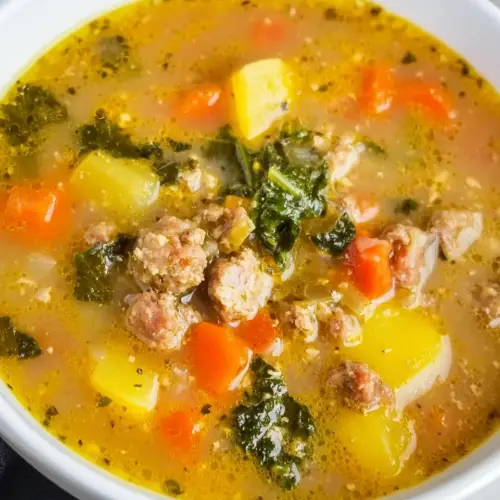
Slow Cooker Tuscan Sausage Soup
Slow Cooker Tuscan Sausage Soup is a creamy, savory, easy weeknight dinner filled with tender potatoes, hearty sausage, and bright kale. The long simmer brings out deep, comforting flavors while the late addition of heavy cream creates a silky finish. Perfect for chilly evenings, this soup is both family friendly and great for leftovers, making it a reliable weeknight favorite to make again and again.
Equipment
- 6 quart slow cooker
Ingredients
- 1 pound hot Italian sausage Brown and crumble to render fat and build a savory base for the soup, providing spicy, umami-rich flavor throughout. Adjust cooking time to ensure sausage is fully cooked and slightly caramelized for deeper taste.
- 1 medium onion, diced Sweat and soften to add natural sweetness and aromatics that underpin the soup's savory profile. Dice uniformly to ensure even cooking and integration into the broth.
- 1 celery rib, diced Sauté until tender to contribute a mild, aromatic crunch and subtle savory depth to the mirepoix. Dice finely to release flavor and blend with other vegetables.
- 4 garlic cloves, minced Mince and cook briefly to release pungent aromatics that enhance complexity and aroma. Add towards beginning of cooking to infuse the broth with garlicky notes.
- 1 teaspoon dried oregano Sprinkle and stir in early to provide warm, earthy Mediterranean flavor and aromatic lift. Use measured amount to balance against other herbs and spices.
- 1/2 teaspoon black pepper Season to taste to impart mild heat and savory balance while enhancing overall flavor clarity. Grind freshly if possible for the best aromatic quality.
- 1/2 teaspoon crushed red pepper flakes Add sparingly to introduce bright, spicy heat and a lingering kick that complements the sausage. Adjust level to control spiciness of the finished soup.
- 1 medium carrot, peeled and sliced Peel and slice to contribute natural sweetness, body, and a tender texture that complements the potatoes and greens. Monitor during cooking to maintain pleasant bite without becoming mushy.
- 4 red potatoes, diced Dice and simmer to add hearty starch, creaminess, and structure that helps thicken the broth slightly. Choose uniform pieces to ensure even tenderness throughout the soup.
- 5 1/2 cups chicken broth Pour in as the primary liquid to create a flavorful cooking medium that marries all components and balances seasoning. Use good-quality broth for richer, more developed taste.
- 3/4 cup heavy cream Stir in near the end to enrich and add silky creaminess that rounds out flavors and mouthfeel. Heat gently after adding to prevent curdling and maintain smooth texture.
- 6 cups chopped kale Chop and add toward the finish to provide vibrant color, earthy bitterness, and nutritional punch that brightens the soup. Wilt thoroughly but avoid overcooking to preserve texture and nutrients.
- freshly grated or shredded Parmesan cheese Grate or shred and sprinkle as a finishing garnish to add salty, nutty umami and a creamy melting quality. Offer at the table so diners can customize cheesiness to preference.
Instructions
- Brown and crumble sausage in a large nonstick skillet. Drain the grease off. Add the onion and celery and cook 3 minutes.: The pan will hiss as the sausage hits it, and you should smell a rich, meaty aroma as it browns, with little golden bits forming on the surface. This caramelization is essential because it creates those deeply savory fond bits that later dissolve into the broth, adding umami. Use a sturdy spatula to break the sausage into small pieces so it cooks evenly. A common mistake is to rush this step on high heat, which can burn the exterior while leaving the interior undercooked; aim for a steady medium heat so the color develops slowly. When the meat is done, its texture should be firm yet juicy, and the smell should be savory with toasted spices. If the sausage seems overly greasy, pause and tip the pan so fat pools, then continue to the next task.
- Transfer sausage mixture to a 6-quart slow cooker. Add garlic, oregano, black pepper, red pepper flakes, carrots, potatoes, and chicken broth.: As the sausage finishes, you will notice pools of rendered fat in the skillet, which can make the final soup greasy if left. Carefully tilt the pan and spoon or pour off excess grease into a heatproof container; alternatively, blot with paper towels. Leaving a small amount of fat is good because it carries flavor, but removing most prevents an oily mouthfeel. Be cautious of hot grease splashes, they can burn. If you accidentally remove too much fat, add a teaspoon of olive oil to preserve flavor depth.
- Cover and cook on LOW for 5 to 6 hours.: When you add diced onion and celery , the pan will hiss and a sweet, aromatic scent will rise. Cooking them briefly softens edges and releases natural sugars that balance savory meat. Stir often so the pieces sweat rather than burn, and watch for translucence in the onion as the visual cue. Overcooking until deeply browned will change the flavor profile, so aim for softened, fragrant vegetables. If the skillet looks dry, splash a tablespoon of chicken broth to deglaze and capture those browned bits.
- Stir in heavy cream and kale. Cover and cook another 5 to 10 minutes.: When you move the mixture, notice how the aroma intensifies. Scrape every flavorful brown bit from the skillet into the slow cooker to preserve that depth. This transfer step ensures the slow cooker has the most concentrated base. Be sure the cooker is clean and set at a stable location. A typical error is leaving browned bits stuck in the pan, which wastes flavor; a quick rinse with a bit of broth loosens them for transfer.
- Check for seasoning and add salt and pepper to taste. Serve with Parmesan cheese.: Once everything is in the cooker, the scent of raw garlic and dried oregano will be bright before cooking, and then mellow into rounded notes during the long simmer. Stir to combine so the herbs and spices distribute evenly among the carrot and potatoes . Pour in the chicken broth , which should cover the solids and allow even cooking. Use your hand to move ingredients gently, ensuring nothing sticks. A mistake here is adding too little liquid, which can leave potatoes undercooked and cause scorching if your slow cooker runs hot.
- Cover and cook on LOW for 5 to 6 hours: As the cooker warms, the broth will begin to inhale the meat and vegetable essences; you may hear a soft bubbling and smell aromas filling the kitchen like a slow perfume. Low and slow allows connective flavors to marry, giving tender potatoes and infused broth without breaking down everything into mush. Avoid lifting the lid frequently since each lift lets heat escape and extends cooking. Your visual cue is tender vegetables and a broth that looks cohesive rather than thin. If the broth seems too thin after cooking, mash a few potato pieces against the side to thicken naturally.
- Stir in heavy cream and kale: Adding heavy cream will immediately make the broth look silkier, and the scent will turn slightly sweet and lush. Stirring will distribute the cream so it coats the potatoes and kale . The chopped kale will darken and wilt within minutes, taking on a tender chew. Because dairy can separate if boiled vigorously, keep the cooker on low and allow the cream to warm gently. A common misstep is adding cream too early; that can change texture and mute flavors, so this late addition preserves both silkiness and brightness.
- Cover and cook another 5 to 10 minutes: During this short final simmer, the kale will soften while retaining its green color, and the cream will integrate fully into the broth creating a cohesive mouthfeel. Listen for a gentle simmer rather than an aggressive boil, and smell the melded herbs and dairy. This brief finish ensures the greens are tender but not limp. Overcooking in this short window makes the kale lose vibrancy and become stringy, so check at five minutes first and extend if needed.
- Check for seasoning and add salt and pepper to taste: The broth will taste layered now, and you should sample it warm to judge salt balance since the Parmesan cheese will add salt later. Tiny adjustments matter, so add small pinches and re-taste. Seasoning at the end allows the flavors to settle so you avoid over salting early. A pitfall is assuming canned chicken broth has the same salt level as another brand; always taste before final seasoning.
- Serve with Parmesan cheese: As you ladle into bowls, grate fresh Parmesan cheese over each serving; the cheese will melt slightly into the warm broth and offer a nutty, salty counterpoint. Visually, ribbons of cream and flecks of herb make the bowl inviting. Let guests add cheese to their liking at the table. Avoid pre topping the entire pot, since the cheese can clump or form a film as it cools; individual portions look and taste better.
Notes
- Brown for flavor Always take the extra minutes to brown the sausage properly, since those browned bits dissolve into the broth and create depth.
- Control the grease Drain most of the rendered fat after browning, leaving just enough to carry flavor and avoid a slick final soup.
- Even chop Cut the potatoes and carrot to uniform sizes so they cook at the same rate and you avoid a mix of undercooked and mushy pieces.
- Add greens late Stir in the kale close to the end to maintain its color and texture, checking at five minutes first to avoid overcooking.
- Use good broth Choose a quality chicken broth because it is the liquid backbone; a richer broth results in a noticeably better soup.