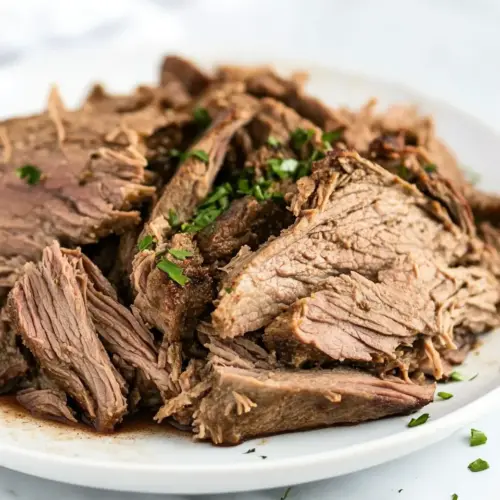
Slow Cooker Tri Tip
Slow Cooker Tri Tip yields tender, shreddable beef infused with garlic, herbs, and a whisper of smoked paprika. This easy weeknight dinner is both hearty and approachable, perfect for sandwiches or family style meals. The long low cook transforms an economical roast into juicy, pull apart meat that pairs well with toasted buns and melted Swiss cheese, making it a recipe worth trying for effortless comfort.
Equipment
- Slow Cooker
- Mixing Bowl
- Forks
- Strainer
Ingredients
- 1 1/4 teaspoons salt Season liberally to enhance overall flavor and help tenderize the meat during slow cooking; dissolve into juices to create a balanced base for the sauce. Add early to ensure even distribution and proper seasoning throughout the roast.
- 1/2 teaspoon black pepper Crack freshly or use preground to provide sharp, warming heat and contrast to richer elements; helps brighten the dish’s flavor profile. Sprinkle to taste before cooking and adjust at the end if needed.
- 3/4 teaspoon dried thyme Add dried to contribute an earthy, slightly floral note that complements beef; holds up well in long, slow cooking without becoming bitter. Rehydrate in the cooking liquid to release aromatic oils into the sauce.
- 1/2 teaspoon dried rosemary Crush or chop dried to deliver piney, resinous undertones that pair well with roasted meat; small amount goes a long way in slow braises. Infuse into broth early so flavor mellows and integrates.
- 4 cloves garlic minced Mince finely to provide pungent, savory depth and aromatic sharpness; melds into the sauce to enhance umami and complexity. Add with other aromatics early so garlic flavors mellow and permeate the roast.
- 1 teaspoon onion powder Sprinkle as a concentrated savory seasoning that adds subtle sweetness and oniony depth; helps round out savory layers in the braising liquid. Mix into dry rub or broth for even flavor release during cooking.
- 3/4 teaspoon dried oregano Include dried to supply warm, slightly bitter herbal character that supports tomato and meat flavors; blends with other Mediterranean herbs for complexity. Allow time in the slow cooker for its flavors to develop and soften.
- 1/2 teaspoon smoked paprika Add smoked to introduce gentle smoky warmth and color without using a grill; complements roasted beef and enhances savory richness. Use sparingly to avoid overpowering more delicate herbs and aromatics.
- 3 pound tri-tip beef roast trimmed Trim and place in the slow cooker as the main protein; provides hearty, flavorful beef suitable for shredding or slicing after long, gentle cooking. Brown briefly if desired to develop a deeper crust before braising for added flavor.
- 2 cups beef broth Pour into the cooker to supply savory liquid for braising and to deglaze browned bits; contributes body and beefy flavor to the sauce. Use low-sodium broth if monitoring salt and adjust seasoning later as needed.
- 1 1/2 tablespoons Worcestershire sauce Stir in to add tangy, savory depth and umami; helps balance richness and enhances overall meaty flavor in the cooking liquid. Add during cooking so its flavors meld with broth and aromatics.
- 6 sandwich buns optional Serve as optional vessels for sliced or shredded beef to turn the roast into sandwiches; provide a soft, neutral base that soaks up saucy juices. Warm slightly before serving to improve texture and prevent cooling the meat.
- 6 slices Swiss cheese optional Top sandwiches as an optional melty, creamy element that adds nutty, salty richness; slices melt nicely over warm beef for added indulgence. Place on buns near the end of serving so cheese softens without fully disintegrating.
Instructions
- In a small bowl, mix salt, black pepper, dried thyme, dried rosemary, minced garlic, onion powder, dried oregano, and smoked paprika. Rub the spice mix evenly over the tri-tip roast.: The spice mix should look evenly combined, a dusty mosaic of red and green flecks that smell fragrant when you bring the bowl close. As you rub the mixture into the tri tip , press firmly so the rub adheres and creates a thin crust that will brown slightly as it cooks slowly. You should notice the perfume of garlic , the piney note of rosemary , and the warm sweetness of smoked paprika all at once. This contact between seasoning and meat is crucial because the long cook time draws those flavors inward; if the rub sits for even 10 to 15 minutes, it starts to penetrate the surface. A frequent misstep is applying too little pressure or not spreading the rub uniformly, which leads to uneven seasoning where some bites taste muted. If your rub feels damp, pat it dry with a paper towel and re apply so it clings rather than sliding off.
- Place the seasoned tri-tip into the slow cooker. Carefully pour beef broth and Worcestershire sauce around the meat to keep the seasoning intact.: When lowering the roast into the cooker, you want to avoid disturbing the seasoned surface, so tilt and nestle it gently. Pouring the beef broth and Worcestershire sauce around the edges, rather than straight onto the top, preserves that seasoning crust while still providing the moisture needed for connective tissue to break down. You will hear a soft wet sound as the liquid settles, and steam will begin to rise as the cooker warms. This liquid acts like a flavor reservoir, bathing the meat and concentrating as it reduces; without it the roast can dry at the exposed top. A common oversight is adding the liquid on top which makes the rub slide off and dilutes the concentrated flavors.
- Cover the slow cooker and set it on low for 6-7 hours, or until the meat is tender and easily shreds with a fork.: As the cooker warms, you will notice a gentle, building aroma in the kitchen that shifts from the sharpness of raw garlic to a rounder, savory stew like scent. The long low heat allows collagen in the tri tip to convert into gelatin, giving the meat that melt in your mouth texture. Resist the urge to lift the lid often, because every peek releases heat and lengthens cooking time; only check in the final hour. A telltale sign of readiness is when the meat yields easily to a fork and the edges appear frayed, glossy from the rendered juices. If after the stated time it still resists shredding, continue to cook in 30 minute increments, as undercooking is the most common mistake here.
- Remove the tri-tip from the slow cooker and shred it using two forks. For a sandwich option, lightly butter and toast buns, layer with shredded meat, and top with a slice of Swiss cheese; place under a broiler just until the cheese melts. Serve with a small bowl of the strained cooking liquid as a dipping sauce if desired.: When you lift the roast from the cooker, it should come away in large, tender pieces that pull apart with little effort. The texture is glossy and moist, and the aroma is intensified when you shred, releasing the concentrated juices. Shredding with two forks creates irregular strands that trap sauce and melt slightly when paired with toasted buns. For the sandwich finishing, the tiny sizzle as buttered buns hit the pan is a sensory cue that the bread is crisping properly, while the brief broil to melt the Swiss cheese should be watched carefully because cheese can go from oozy to scorched in seconds. Straining the cooking liquid removes solids and gives you a silky dipping sauce, which elevates each bite by adding moistened richness. A common error is letting the shredded meat sit too long without moisture, which can make it seem dry; reserve some liquid and toss gently before serving.
Notes
- Swap for low sodium: If your beef broth is high in salt, choose a low sodium version to control saltiness, then adjust seasoning at the end.
- Herb flexibility: If you are out of one dried herb, increase another complementary herb slightly, for example use a touch more thyme if you do not have oregano.
- Cheese option: If you do not have Swiss cheese, pick any mild melting cheese you enjoy, keeping in mind the final flavor balance.
- Broth alternatives: If beef broth is not available, a light, well seasoned stock will do, but avoid anything overly salty or strongly flavored which can overpower the roast.
- Worcestershire intensity: If you prefer a subtler tang, reduce the Worcestershire sauce slightly and taste the finished jus before serving.