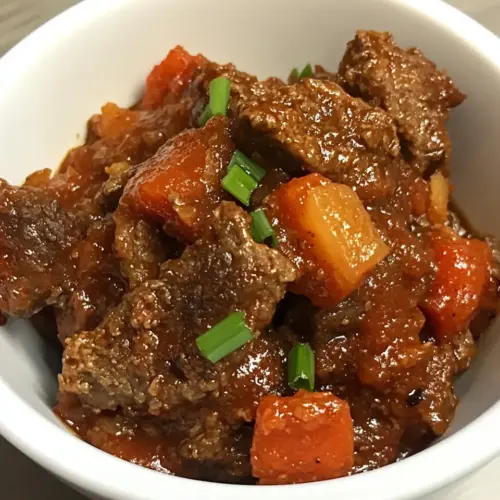
Slow Cooker Sweet and Sour Beef
Slow Cooker Sweet and Sour Beef delivers tender, fork melting beef with a glossy sweet and tangy sauce, perfect for an easy weeknight dinner or cozy winter supper. The long cook time yields deep savory notes while the balanced sauce keeps each bite bright and satisfying, making it a crowd pleasing, make ahead favorite worth trying.
Equipment
- Frying Pan
- Slow Cooker
- Food Processor
- Spoon
Ingredients
- 4 lb . boneless chuck roast, trimmed well Trimmed well and cut into large chunks, provides rich, gelatinous collagen and deep beef flavor that becomes tender when slow-cooked for hours; supplies the hearty base and savory richness central to the dish.
- 2 tsp . olive oil Heated briefly to sear surfaces, helps develop a browned crust and concentrated flavor through the Maillard reaction; contributes a light cooking fat to prevent sticking and enhance browning.
- steak rub, to season meat (see notes) Used sparingly to impart concentrated savory and aromatic notes, adds depth and a balanced seasoning profile tailored to red meat; can include salt, garlic, paprika, and other spices to complement slow cooking.
- black pepper, to season meat Applied to taste to provide a subtle pungent heat and aromatic lift, enhances overall flavor complexity and balances richness from the beef and fat; can be freshly ground for brighter peppery notes.
Instructions
- Trim as much fat as you can from roast, and cut if necessary to fit into Crockpot. Rub meat well with steak seasoning and black pepper.: The aroma of fresh cracked black pepper and seasoning hitting the meat is immediate, signaling the beginning of flavor development, and pressing the rub into the surface helps it form a flavorful crust later. This trimming step reduces rendered fat in the slow cooker, yielding a cleaner sauce, and it improves the sliceability of the finished roast. One sign you did it right is that the roast feels evenly coated and not slick with excess fat. Avoid leaving thick cap fat, which can pool and make the sauce greasy; a common mistake is under trimming which forces extra skimming later.
- Heat olive oil in a large frying pan and brown roast well on both sides. This will take a few minutes; don’t rush the browning step. Put browned roast into slow cooker.: When the olive oil shimmers and the roast hits the pan, you should hear an assertive sizzle, and after a few minutes a deep brown crust will form that smells toasty and meaty. That Maillard reaction is crucial because it creates complex savory notes the slow cooker alone cannot replicate. Transfer the roast to the Crockpot as soon as a reliable crust forms so it seals juices inside. A common error is rushing the sear, which results in pale meat and a flatter final taste.
- Deglaze the pan while meat browns, combine onion powder, garlic powder, ginger puree, sweetener of your choice, rice vinegar, tomatoes, soy sauce, and anchovy paste (if using) in food processor. Process several minutes with steel blade until tomatoes are pureed and ingredients are well combined.: Deglazing lifts browned bits from the pan that are packed with flavor, and when you process the combined aromatics and liquids the mixture will smell bright, tangy, and savory all at once. The texture should be smooth and slightly thick, with the sweetness and acid balanced so neither dominates. Processing until silky ensures the sauce coats the meat uniformly during slow cooking. One troubleshooting point is to avoid leaving large tomato chunks which can separate during simmering and create an uneven sauce texture.
- Put the pureed sauce into the frying pan where you browned the meat and simmer on low heat until the sauce thickens; you should be able to draw a spoon through it and have the sauce stay together.: As the sauce simmers gently you will notice the aroma intensify, and small bubbles will form around the edges, indicating water reduction and concentration of flavors. The visual cue is the spoon test, where the sauce leaves a clean line, showing it has reduced enough to glaze the roast rather than remain watery. This step deepens the flavor and helps glue the sauce into a glossy finish on the meat. A frequent mistake is skipping this reduction, which leaves a runny sauce that does not cling to sliced beef .
- Once it’s thickened to that point, pour sauce mixture over the meat in the slow cooker.: Pouring the sauce right away warms the slow cooker contents and ensures the roast is evenly surrounded, so the flavors permeate during the long cook. You should hear a gentle hiss as warm sauce meets the residual heat of the crockpot, and the glossy sauce will settle around the meat, promising a cohesive finish. This immediate contact helps the roast absorb the sweet and sour profile. Avoid pouring a cold, unthickened sauce on the roast, which can dilute the cooking environment and delay proper flavor melding.
- Cook on low 7-8 hours (or more) or on high for 3-4 hours, or until meat is very tender. (If I’m home I usually turn it a couple of times, but it’s not necessary.): During the long, low cook the kitchen fills with warming, slow roasted aromas as connective tissue breaks down and the beef becomes fork tender, often with an audible gentle simmer from the crockpot. The low and slow method creates a tender, shreddable texture and lets the sauce infiltrate the meat. If cooking on high, monitor for doneness earlier to prevent drying the exterior, a common issue when switching to higher heat settings. Turning occasionally is optional but can ensure more even color and saucing.
- Remove meat from slow cooker and keep warm. Skim off any visible fat from sauce mixture if needed, or use a fat separator.: After removing the roast, you may notice a thin film or pockets of rendered fat on the surface of the sauce, which can dull the flavor if left. Use a spoon or fat separator to clarify the sauce until it shines, which brightens the final presentation. The smell at this stage is concentrated and savory, and the reduced sauce should feel silky. A common oversight is serving without skimming, which can leave an overly greasy mouthfeel.
- Slice the pieces of roast and serve hot, with sauce spooned over meat.: The final plate should show slices with glistening edges and sauce pooled beneath and over them; each bite should combine tender beef and that glossy sweet and sour coating. The sound of the knife sliding through yields satisfaction, and the sauce should cling rather than run off. Serve immediately to enjoy the ideal temperature and texture. Avoid slicing too early while the meat is cold, which can cause uneven, ragged pieces; let it rest briefly so juices redistribute.
Notes
- Choose the right cut: A well marbled beef chuck roast gives the best balance of flavor and tenderness after long cooking, because its connective tissue converts to gelatin, enriching the sauce.
- Pat the roast dry before seasoning: Removing surface moisture helps the steak rub and black pepper adhere better, and promotes a stronger sear which improves flavor development.
- Work in batches when browning: Avoid crowding the pan to ensure each surface browns properly instead of steaming, which preserves that deep roasted aroma.
- Blend until silky: Processing the sauce ingredients thoroughly creates a smooth texture that reduces evenly and yields a glossy finish that clings to the beef.
- Monitor thickness by spoon test: When a spoon draw leaves a clean trail in the sauce, it is ready to go into the slow cooker; this prevents a thin, runny result.
- Let it rest briefly before slicing: Allow the roast to rest a short time so juices redistribute and slices hold together without falling apart immediately.