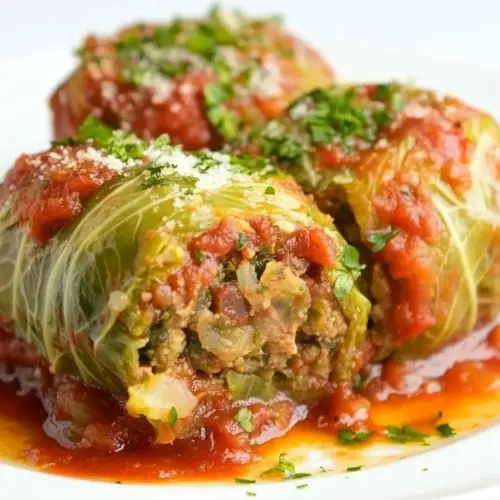
Slow Cooker Stuffed Cabbage Rolls
Slow Cooker Stuffed Cabbage Rolls deliver tender cabbage wrapped around a savory ground turkey and rice filling, braised in a glossy tomato sauce with honey and lemon for balanced sweet and bright notes. This easy weeknight dinner is comforting, hands off, and great for feeding a family of six, making it a dependable choice when you want a cozy, make-ahead meal that improves with time.
Equipment
- Large Pot
- Mixing Bowl
- Slow Cooker
- Whisk
Ingredients
- 12 cabbage leaves Use to wrap the filling securely and provide a tender, leafy exterior after slow cooking; remove tough core and blanch leaves briefly to make them pliable for rolling. Maintain whole leaves to present classic stuffed cabbage rolls with a soft, melt-in-your-mouth texture when finished.
- 1 cup long-grain rice cooked Provide bulk and a tender bite to the filling after cooking; cook ahead until just tender to avoid over-softening during slow cooking. Bind with egg and seasonings to give structure and a neutral flavor that absorbs tomato sauce and aromatics.
- 1 egg beaten Bind the rice and meat mixture together while adding a light, cohesive texture to the filling; beat thoroughly for even distribution. Add gradually and mix well to ensure rolls hold their shape during assembly and slow cooking.
- 1/4 cup milk Add moisture and a subtle richness to the filling, helping to tenderize the mixture during cooking; choose a low-fat option if desired to control richness. Incorporate evenly with egg and rice so the filling stays moist without becoming soggy.
- 1/4 cup white onion or yellow, finely chopped Contribute a mild, sweet-onion flavor and slight crunch when finely chopped, enhancing depth in the filling; sweat gently to release sugars without browning. Balance other savory elements and meld with garlic and ground turkey for a rounded savory profile.
- 1 garlic clove finely chopped Provide a pungent, aromatic note that brightens and deepens the overall flavor; finely chop or mince to distribute flavor evenly. Sauté briefly to mellow sharpness or add raw for a more assertive garlic presence in the filling or sauce.
- 1 pound lean ground turkey raw Form the primary protein component giving lean, savory substance to each roll; choose lean ground turkey for lower fat content and a delicate flavor. Season well and mix gently with rice and binders to prevent a dense, tough texture after slow cooking.
- 1 1/4 teaspoons salt Enhance overall seasoning and bring out natural flavors in the meat and filling; measure carefully to avoid over-salting. Dissolve into the mixture so it seasons throughout rather than clustering in spots.
- 1 1/4 teaspoons ground black pepper Add mild heat and earthy warmth to the filling while amplifying savory notes; grind fresh or use pre-ground for convenience. Incorporate with other dry seasonings to distribute peppery flavor evenly across the filling and sauce.
- 15 ounces tomato sauce can Create a tangy tomato base for the cooking liquid that keeps rolls moist and infuses them with acidity; choose a plain tomato sauce for a smooth, consistent texture. Pour around and over the rolls in the slow cooker to allow flavors to meld and tenderize leaves.
- 2 tablespoons ketchup Contribute a sweet-tangy tomato glaze component that deepens sauce complexity and balances acidity; stir into tomato sauce for an integrated flavor. Use measured to avoid overpowering the savory profile while adding familiar ketchup notes.
- 1 teaspoon worcestershire sauce Introduce a savory, umami depth that enhances meaty flavors and enriches the sauce; add sparingly to avoid overwhelming other seasonings. Mix well into the tomato sauce to lend complexity and a slightly savory backbone to the cooking liquid.
- 1 teaspoon paprika Provide warm, smoky-sweet undertones that complement the meat and tomato sauce; measure to taste as paprika intensity varies between types. Sprinkle into the filling or sauce for color and a subtle layer of spice without heat.
- 2 tablespoons lemon juice Add bright acidity that lifts the sauce and balances richness from meat and honey; stir into the sauce near the end to preserve fresh citrus notes. Adjust amount to enhance overall brightness without making the sauce overly tart.
- 2 tablespoons honey Provide a gentle sweetness and caramel-like depth that balances acidity and savory elements; incorporate into the sauce to meld with tomato and lemon. Use sparingly to prevent excess sweetness while creating a rounded, nuanced flavor profile.
- 1/2 teaspoon dried thyme leaves Contribute a subtle herbal, slightly lemony aroma that complements both meat and tomato components; add dried thyme to the sauce for steady, low-maintenance flavor during long cooking. Disperse evenly so the herb infuses the rolls and cooking liquid without dominating other herbs.
Instructions
- Bring a pot of salted water to a boil over high heat. Boil cabbage leaves for 2 minutes. Whisk together tomato sauce, honey, spices, lemon juice, ketchup, salt, and pepper, and Worcestershire sauce.: The moment the water roars, the kitchen fills with a faint mineral steam smell, and you can see rapid bubbling across the surface, signaling it is hot enough to soften the cabbage quickly. This technique helps the leaves become pliable without breaking, preserving a tender but intact wrapper for the filling. Why this matters: quick blanching loosens the fibers so rolling is easy and the leaves will continue to soften in the slow cooker. Sensory cue: the water should be actively boiling, with steam rising and audible rolling bubbles. Troubleshooting: if you underheat the water and the leaves are still stiff, they will tear while rolling, so ensure a full boil before adding cabbage .
- In a separate bowl, combine the cooked rice, egg, milk, onion, garlic, and ground turkey. Add in 1/4 of the sauce and combine well.: After slipping the leaves into boiling water, you will notice their color deepen and edges become translucent, a visual sign that they are pliable enough to roll. The brief cooking keeps them tender but not limp, so they still hold the filling snugly. Why this matters: overcooking will create fragile leaves that can disintegrate during handling or in the slow cooker. Sensory cue: the leaves should bend easily without snapping, and the aroma will be lightly sweet and vegetal. Troubleshooting: if a leaf tears, reserve it to layer between rolls as reinforcement rather than discarding it.
- Scoop about 1/4 cup of the ground turkey mix into the center of each cabbage roll. Roll up the leaves, tucking in the ends. Top with tomato sauce and cover.: As you whisk, the sauce becomes glossy and homogenous, releasing bright citrus notes from the lemon juice and a subtle sweetness from the honey . The sound of the whisk is soft and continuous as the ingredients emulsify into a cohesive braising liquid. Why this matters: blending the sauce ensures even seasoning so every roll receives balanced flavor during the slow cook. Sensory cue: the sauce will smell tangy and slightly sweet with a warm spice undertone. Troubleshooting: if the sauce tastes flat, a tiny extra pinch of salt will sharpen the flavors before adding it to the cooker.
- Cook on low for 8 to 9 hours or on high for 4 to 5 hours.: When you fold these elements together, the bowl fills with savory, oniony steam and the mixture feels tacky and cohesive thanks to the egg and milk . The rice gives body while the onion and garlic offer aromatic bursts. Why this matters: combining raw ground turkey with the binder ingredients ensures even seasoning and uniform texture inside each roll. Sensory cue: the mixture should be moist but not soupy, and the scent will be warmly savory. Troubleshooting: if the mixture is too wet, it will be hard to shape and may leak, so add slightly more rice if needed.
- Add in 1/4 of the sauce and combine well: Adding a portion of the sauce into the filling brings moisture, flavor, and binding while avoiding oversaturation. The filling will glisten slightly and become more cohesive, the aromas blending into a single savory perfume. Why this matters: incorporating some sauce into the filling means every bite inside the leaf is seasoned and juicy after long cooking. Sensory cue: the mixture should hold shape when scooped but release a little juice. Troubleshooting: if you add all the sauce here, the cooker may become too watery, diluting the final flavor, so reserve most for braising.
- Scoop about 1/4 cup of the ground turkey mix into the center of each cabbage roll: As you portion the filling, it should feel soft and slightly springy beneath your spoon, and the rice grains should be distinct. Why this matters: consistent portions ensure even cooking across all rolls so nothing is underdone or overcooked. Sensory cue: each mound will sit neatly on the leaf, slightly domed, with faint aromatic steam from the onion and garlic. Troubleshooting: overfilling makes rolling difficult and can rupture the leaf while cooking, so stick to the measured scoop.
- Roll up the leaves, tucking in the ends: When you fold and roll, the cabbage should snugly encase the filling, and you may hear a faint tearing if a leaf is over-stretched, a sign to be gentler. Why this matters: tucking ends secures the filling so it does not leak into the sauce, keeping the presentation neat when serving. Sensory cue: the roll should feel compact and firm in your hand, yet not rock-hard. Troubleshooting: if a seam opens, press it closed and place that roll seam-side down in the cooker to minimize leaks.
- Top with tomato sauce and cover: Piling the reserved sauce over the arranged rolls will create a fragrant, bubbling blanket as it heats, releasing an enticing tomato perfume. Why this matters: the sauce provides braising liquid so the rolls stew gently, infusing moisture and flavor through long cooking. Sensory cue: as the cooker heats, the sauce will steam and reduce slightly at the edges, smelling bright and herbaceous. Troubleshooting: if the sauce level is too low, the rolls at the top can dry out, so ensure even coverage and tuck extra sauce between rolls.
- Cook on low for 8 to 9 hours or on high for 4 to 5 hours: During the long, slow cook, you will notice the aromas deepen and the sauce thicken slightly, with occasional soft bubbling and a slow release of steam. The meat will become tender and the rice will integrate fully. Why this matters: slow heat allows connective textures to relax and flavors to meld into a cohesive dish, producing tender rolls and a rich sauce. Sensory cue: the rolls should be yielding to a fork and the sauce glossy with gentle bubbles. Troubleshooting: avoid lifting the lid repeatedly, as heat loss can extend cooking time and interrupt the gentle braise.
Notes
- Choose the right cabbage: Firm, dense heads yield larger leaves that are easier to work with, which reduces tearing during blanching and rolling.
- Don’t overblanch: Two minutes in boiling water softens the leaves just enough; overcooking makes them fragile and prone to falling apart in the cooker.
- Measure the filling: Use roughly 1/4 cup portions so each roll cooks evenly and you avoid underfilled or overstuffed results.
- Reserve sauce wisely: Mix only a quarter into the filling and keep the rest for braising so the cooker does not become too watery.
- Check seasoning early: Taste the sauce before adding to the cooker and adjust salt or acid, because long cooking will concentrate and mellow flavors.
- Layer with care: Place rolls seam-side down and snug them close together to prevent them from unwrapping while they cook.