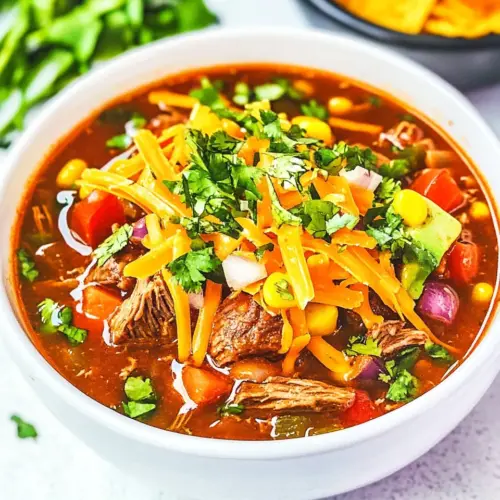
Slow Cooker Steak Enchilada Soup
Slow Cooker Steak Enchilada Soup is a creamy, hearty, and easy weeknight dinner that combines tender shredded steak with beans, corn, and rich enchilada sauce for bold, satisfying flavor. This crowd friendly soup simmers slowly to develop deep savory notes, perfect for feeding a family or prepping ahead for busy evenings. Make it for a comforting meal that reheats beautifully and stretches to feed many.
Equipment
- 6-qt Slow Cooker
Ingredients
- 2 lbs tew meat Tenderly sear the meat to develop deep, browned flavor and create a rich base for the soup; cutting into bite-sized pieces ensures even cooking. Allow rendered juices to mingle with seasonings so the slow cooker finishes tenderizing without becoming tough.
- 1/4 cup all-purpose flour Lightly coat the meat with flour to promote a crisp exterior during browning and help thicken the soup as it simmers. Distribute evenly so the flour absorbs savory juices and gives the broth a subtle body.
- 1/2 tsp salt Season generously with salt to enhance and balance all flavors throughout the pot; salt helps proteins and vegetables release their natural tastes. Add incrementally to control overall sodium depending on broth and canned component levels.
- 1/2 tsp ground pepper Sharply season with ground pepper to introduce warm, pungent heat and aromatic complexity; freshly ground varieties will offer brighter spice. Use sparingly at first and adjust after slow cooking to avoid overpowering the dish.
- 2 tbsp canola oil Heat canola oil to sear the meat and transfer heat efficiently without smoking at typical browning temperatures; its neutral flavor won’t compete with the spices. Use enough to coat the pan so pieces brown evenly and do not stick.
- 1 (11-oz) can corn, drained Drain canned corn before adding to prevent diluting flavors while contributing pops of sweet, crisp texture that contrast the tender meat. Stir in during the final portion of cooking time to maintain brightness and prevent mushiness.
- 1 (15-oz) can black beans, drained Rinse or drain the black beans to remove excess canning liquid and add hearty, creamy texture plus fiber and protein to the soup. Fold in gently so beans hold shape and thicken the broth with their slightly starchy consistency.
- 1 (15-oz) can pinto beans, drained Drain pinto beans to concentrate flavors and introduce soft, earthy notes and a creamy mouthfeel that complement the meat and enchilada sauce. Combine with other beans for varied texture and additional protein and fiber.
- 1 (10-oz) can diced tomatoes with green chiles, undrained Pour diced tomatoes with green chiles undrained to contribute bright acidity, savory tomato depth, and a mild chile kick that lifts the overall flavor profile. Distribute evenly so spicy, tangy juices permeate the broth.
- 1 (1-oz) package ranch dressing mix Sprinkle ranch dressing mix to add a tangy, herbed richness that layers savory, garlicky, and dried-dairy notes into the soup. Mix thoroughly so the powdered seasonings dissolve and meld with the broth and sauces.
- 1 (1-oz) package taco seasoning Add taco seasoning to infuse smoky chili, cumin, and paprika flavors that reinforce the Southwestern character of the soup. Stir to dissolve the spice blend fully so heat and aromatics are evenly distributed.
- 2 1/2 cups beef broth Pour beef broth to establish a savory, meaty liquid foundation that carries all ingredients and balances concentrated canned flavors. Adjust quantity to control final soup thickness and to ensure sufficient cooking liquid for slow simmering.
- 2 (10-oz) cans red enchilada sauce Ladle in red enchilada sauce to impart concentrated chili flavor, rich tomato depth, and a velvety body that defines the soup’s enchilada-inspired taste. Use both cans for bold saucy intensity and a cohesive spicy-savoury base.
- tortilla chips and cheese, for topping Top with tortilla chips and cheese to add crunchy, salty texture and melty, creamy richness at serving; they create classic enchilada soup finishing touches. Break chips into bowls and sprinkle cheese so each portion gets contrast and gooey topping.
Instructions
- Combine roast, flour, salt, and pepper in a large ziplock bag. Seal and shake to coat beef.: Right after sealing the bag, you'll notice the flour clinging to the meat and the aroma of the pepper waking up, which sets the stage for browning. The light coating helps create a thin crust during the sauté, leading to deeper color and flavor as those browned bits dissolve into the cooking liquid. A common slip here is overcrowding the bag, which prevents even coating, so work in a single layer or two batches to ensure every piece gets covered.
- Heat oil in a large skillet over medium-high heat. Remove beef from the ziplock bag, discard any excess flour mixture. Sauté beef until browned, about 5 minutes.: When the oil is hot you should hear a steady sizzle as the beef hits the pan, and small brown bits will form on the surface producing a toasty, meaty scent. Browning not only adds flavor but also gives texture contrast in the finished soup. Avoid moving the beef too frequently, because that prevents proper crust formation; if you notice steam instead of sizzle, the pan is too crowded or not hot enough.
- Place meat into the slow cooker. Add corn, black beans, pinto beans, diced tomatoes and green chiles, Ranch mix, taco seasoning, beef broth, and enchilada sauce.: As you transfer the browned pieces, you'll see a faint oil sheen and browned fond in the skillet that you can deglaze with a splash of the beef broth to capture those flavors and pour them into the slow cooker. The mixture of beans, corn , and sauces creates a layered broth that will become rich and cohesive over time. A typical pitfall is dumping everything cold into a large, unheated slow cooker; using hot broth or at least prewarming the insert shortens the time it takes to reach a safe simmer.
- Cook on LOW for 8 hours or HIGH for 4 hours, or until beef is tender.: During the long, slow cook you will start to smell the spices mellow and meld, and the meat fibers will soften until they practically fall apart when prodded with a fork. This gentle simmer allows connective tissue to break down, resulting in silky, fork tender steak . Be careful not to lift the lid frequently, as every peek lets heat escape and can add an hour to the cooking time. If the meat feels firm at the shorter time, give it another hour and check again rather than upping the heat, which can dry the beef.
Notes
- Make ahead convenience You can brown the meat the night before and refrigerate it, which saves active time on the day you want the meal. For the best results, cool the browned meat quickly before refrigerating, and bring the insert to room temperature before turning on the slow cooker to avoid thermal shock.
- Overnight slow cooker prep Brown the meat and place it in the slow cooker insert with the other ingredients, then refrigerate the entire insert overnight. In the morning, place the insert into the slow cooker base and set to cook, which makes morning launches effortless. Ensure the insert is properly sealed and that your refrigerator shelf can hold the weight safely.
- Use mild sauces to control heat If you prefer less spice, choose mild enchilada sauce and mild diced tomatoes with green chiles. Taste a small spoonful of the sauce before adding to the cooker if you are uncertain about brand heat levels, because brands vary widely in spice intensity.
- Freezing for future meals This soup freezes exceptionally well; portion into airtight containers or freezer bags and label with the date. To reheat, thaw overnight in the refrigerator and warm gently on the stove to preserve texture, and avoid microwaving from frozen which can make beans mealy.
- One pot assembly If you want fewer dishes, brown the beef in the skillet and if your slow cooker insert is stovetop safe, you can use it for browning and then transfer directly to the slow cooker base. Confirm the insert manufacturer allows stovetop use to prevent damage or hazards.