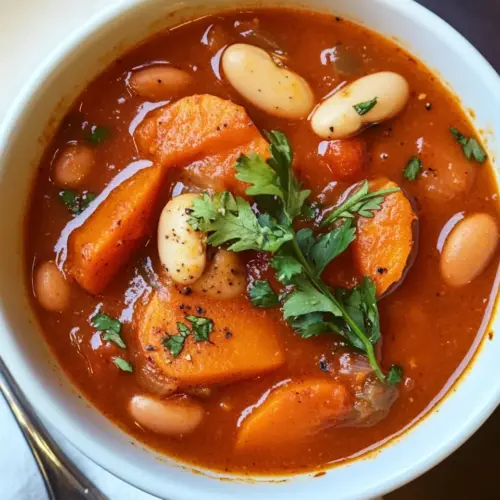
Slow Cooker Spicy Sweet Potato Bean Soup
Slow Cooker Spicy Sweet Potato Bean Soup is a creamy, cozy bowl with mashed sweet potato, tender great northern beans, and a gentle kick from crushed red pepper flakes. This easy weeknight dinner builds deep flavor with minimal hands on time, making it perfect for cold evenings. Make it for friends or a quiet night in because it rewards patience with comforting, layered taste.
Equipment
- Oven
- Baking Sheet
- Aluminum Foil
- Medium skillet
- Slow Cooker
- Heavy pot
Ingredients
- 1 sweet potato medium Peel and dice into cubes to provide natural sweetness, body, and a creamy texture when slow-cooked, helping thicken the soup.
- 1 tablespoon extra virgin olive oil Use to sauté aromatics and develop a flavor base while adding healthy fats and a subtle fruitiness to the broth.
- 1 onion diced Sauté until translucent to build savory depth and sweetness that complements the vegetables and spices in the soup.
- 4 carrots medium, peeled and sliced into 1/2 inch pieces Slice into half-inch pieces to add tender, slightly sweet bites and balanced starchiness that hold up well during long cooking.
- 15 ounces great northern beans can Drain and rinse before adding to supply protein, creaminess, and a comforting bean texture while absorbing surrounding flavors.
- 1 cup vegetable juice optional tomato juice Use as a flavorful liquid base to add tomato-like acidity and additional vegetable nutrients, or substitute with plain vegetable broth if preferred.
- 2 1/2 cups vegetable broth Pour in as the primary cooking liquid to hydrate ingredients, carry flavors, and create a cohesive soup with consistent texture.
- 1 cup lite coconut milk canned Stir in to impart a mild coconut creaminess and gentle sweetness, enriching the broth and smoothing spicy elements.
- 1/2 teaspoon crushed red pepper flakes Sprinkle in to introduce heat and a lingering spice kick that contrasts with the sweetness of the potatoes and coconut milk.
- 1/2 teaspoon cumin Add to contribute warm, earthy undertones that pair well with the sweetness and heat, enhancing overall savory complexity.
- 1/2 teaspoon black pepper Season with to provide a sharp, aromatic finish and balance sweeter components while accentuating other spices.
- kosher or sea salt to taste Season to taste to control overall saltiness and bring out the natural flavors of the vegetables and beans without overpowering them.
- 1 teaspoon ginger freshly grated Grate fresh to add bright, zesty warmth and a subtle peppery-sweet complexity that lifts the soup's flavor profile.
Instructions
- Preheat oven to 400 degrees. Wrap sweet potato in foil, place on an oven-safe pan, and bake until tender, approximately 1 hour. Allow to cool slightly before peeling.: You will smell a faint mineral warmth from the oven as it reaches 400 degrees, which is ideal for coaxing sweet, caramelized notes from the sweet potato . Roasting at this temperature encourages the sugars to concentrate and the flesh to become tender without drying out, so you get a silky texture once it joins the soup. One common mistake is skipping foil, which can cause the skin to burn; wrapping keeps moisture in and ensures even roasting. The oven should hum steadily, and a fork should slide into the potato with little resistance when done.
- In a medium skillet, add oil and sauté onion over medium-low heat until tender, approximately 5 minutes. Add onion, sweet potato, and all other ingredients to the slow cooker, stir to combine. Cover and cook on low 6-8 hours, or high 3-4 hours.: As the sweet potato roasts, you will notice its skin darken and the aroma of caramelizing sugars develop, a sweet, almost nutty fragrance that promises depth for the soup. The foil traps steam so the interior steams and softens while the exterior gently browns. Allow the potato to rest briefly so the steam settles; this also makes peeling safer and easier. A typical error is checking too often, which lets heat escape and prolongs cooking. Use a fork test to confirm tenderness, aiming for flesh that gives under light pressure.
- Stovetop version: Follow the instructions above except add ingredients to a heavy pot, bring to a boil over medium-high heat, reduce heat to a simmer and cook until carrots are tender, approximately two hours. Add additional broth or water for a thinner soup consistency.: Cooling helps the sweet potato set, making the skin easier to remove and preventing you from burning your hands. You’ll feel the warmth dissipate and the steam subside, which signals when it is safe to peel. Peeling while piping hot can be tricky and messy, and you might lose some of the concentrated juices. Letting it rest also lets the flavors concentrate further inside the flesh.
- In a medium skillet, add oil and sauté onion over medium-low heat until tender, approximately 5 minutes: As the onion softens in the extra virgin olive oil , you will hear a gentle sizzle and watch the pieces go translucent and fragrant, releasing sweet and savory aromatics. This step builds the soup’s flavor base by coaxing out sugars from the onion , which deepens the broth. Keep the heat moderate to avoid browning too quickly, which changes the sweet profile to bitter. A typical slip is using high heat and burning the onion , so stir frequently and watch for a glossy, soft texture.
- Add onion, sweet potato, and all other ingredients to the slow cooker, stir to combine: When you combine the roasted sweet potato , softened onion , canned great northern beans , sliced carrots , vegetable juice , vegetable broth , lite coconut milk , and spices, you will see a mosaic of colors and hear a soft clink as the pieces settle. Stirring helps distribute seasoning and pockets of heat evenly, and you should notice a fragrant mix of cumin and ginger rising as they mingle. The reason this matters is that even distribution ensures consistent flavor in every spoonful. Avoid dumping everything without stirring, which can leave pockets of unblended spice or thicker seams of coconut milk.
- Cover and cook on low 6 to 8 hours, or high 3 to 4 hours: As the slow cooker warms, aromas will gently escape from the lid, a cozy steam that signals slow melding of flavors. On low, the carrots and beans soften gradually and the sweet potato further integrates, producing a cohesive broth. Cooking on high accelerates this process but can slightly reduce the depth that slow extraction creates. A common mistake is lifting the lid frequently, which drops the internal temperature and lengthens cooking time; resist peeking unless necessary. When done, textures should be tender and the broth fragrant with ginger and cumin.
- Stovetop version: The stovetop alternative adjusts technique but keeps the same flavor goals as the slow cooker, providing a good option if you need dinner sooner. In a heavy pot, you will hear the initial vigorous bubble as the liquid approaches a boil, then a softer simmer as you reduce heat; this change in sound is your guide. Simmering for about two hours allows the carrots to become tender and for flavors to concentrate. Watch the pot to ensure a gentle, even simmer, and add extra vegetable broth or water if the soup reduces too much; a common mistake is letting it boil hard which causes excessive evaporation and tougher textures. The final broth should be rich and fragrant, with the sweet potato integrated smoothly.
- Add additional broth or water for a thinner soup consistency: If the soup feels too thick after cooking, adding warm vegetable broth helps you reach a preferred viscosity. You will see the surface gloss lighten as liquid loosens the body, and you’ll hear a soft lap of liquid against the spoon. Adjust in small increments, tasting as you go to keep seasoning balanced. Over thinning can dilute flavors, so add gradually and re-season if necessary.
Notes
- Make it milder by starting with half the crushed red pepper flakes and tasting at the end before adding more, this keeps the heat controlled and lets the sweetness of the sweet potato shine.
- Boost creaminess by using a slightly higher proportion of lite coconut milk or blending a portion of the soup until smooth, which yields a silkier mouthfeel without altering core ingredients.
- Adjust thickness by stirring in warm vegetable broth a little at a time for a thinner consistency, making sure to re-season after diluting the soup.
- Oven roast for depth by ensuring the sweet potato is well caramelized at 400 degrees, which deepens flavor and adds a roasted note to the final soup.
- Double the beans if you want a heartier, protein forward bowl, keeping the rest of the ingredients the same to maintain balance.
- Swap vegetable juice for plain tomato juice if you prefer a more tomato forward flavor, watching salt levels closely since some juices are saltier.
- Finish with fresh ginger grated at the end for brighter aromatics, which refreshes the bowl and lifts the overall flavor profile.