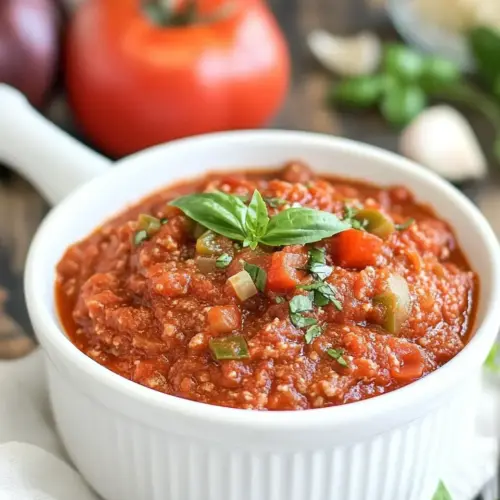
Slow Cooker Spaghetti Sauce
Slow Cooker Spaghetti Sauce brings out rich, slow cooked tomato flavor with a silky texture and savory aromatics. This easy, comforting sauce is perfect for an easy weeknight dinner or a large family gathering, delivering savory depth and bright herb notes. Make it to enjoy a hearty, crowd pleasing classic that tastes even better the next day.
Equipment
- Large Pot
- Large Bowl
- Medium sauté pan
- Slow Cooker
Ingredients
- 5 lbs fresh tomatoes (see note below for using canned tomatoes) Provide a juicy, fresh base when peeled and cooked down; adds natural sweetness, acidity, and body to the sauce. Simmer slowly to concentrate flavors and create a rich tomato texture that carries herbs and seasonings. Use ripe tomatoes for best flavor or substitute canned tomatoes following the note provided.
- 2 tbsp extra virgin olive oil Enhance flavor and mouthfeel by gently sautéing to release fruity, peppery notes; coats other ingredients and helps meld aromatics. Use sparingly to avoid greasiness while promoting a smooth, rounded sauce.
- 1 large yellow onion diced Add a savory, slightly sweet backbone when diced and softened; releases natural sugars that balance tomato acidity during long cooking. Sauté until translucent to build depth and provide textural contrast to the finished sauce.
- 1 red bell pepper diced Contribute a bright, sweet pepper flavor and subtle crunch when diced; softens and melds with tomatoes to add complexity. Roast or sauté briefly to deepen its sweetness and integrate into the sauce.
- 1 jalapeno diced (optional) Introduce a mild to moderate heat and vegetal sharpness when diced; optional addition elevates overall flavor complexity without overpowering. Remove seeds for milder spice or keep them for more pronounced heat.
- 3 cloves of garlic minced Provide an aromatic, pungent lift when minced; infuses sauce with savory depth and pairs well with onions and herbs. Add early in cooking to mellow raw edge and distribute garlicky flavor throughout.
- 1 tsp salt Season and amplify other flavors while controlling overall saltiness; helps extract moisture from vegetables and balance acidity. Add gradually and taste during simmering to achieve the desired savory profile.
- 1/2 tsp pepper Balance seasoning by contributing subtle heat and spice; helps counterbalance sweetness and acidity in the tomatoes. Adjust to taste to keep the sauce flavorful without overwhelming other elements.
- 1 tbsp Worcestershire sauce Introduce umami richness and a subtle tang that deepens savory complexity; a small amount brightens the tomato profile. Stir in early to let the flavor integrate throughout the long cook.
- 6 oz tomato paste Thicken and intensify tomato flavor while adding concentrated richness; dissolves into the sauce to provide body and a deeper tomato taste. Use evenly to avoid clumping and to anchor the sauce’s texture.
- 2 tbsp chopped fresh basil Add fresh herbal brightness and a sweet, peppery aroma when chopped; layers a lively note that complements cooked tomatoes. Stir in toward the end of cooking to preserve some fresh herbal character.
- 2 bay leaves Impart a subtle, earthy depth and an aromatic bay leaf flavor when simmered whole; contributes to the overall bouquet of the sauce. Remove leaves before serving to avoid tough, leathery pieces.
- 2 tbsp Italian seasoning Provide a robust, herby Italian flavor profile with oregano, thyme, and rosemary notes that blend into the sauce. Sprinkle in early to allow the dried herbs to rehydrate and infuse the mixture.
- 1 tbsp sugar Neutralize acidity and round out sharp tomato flavors with a touch of sweetness; helps harmonize the sauce’s savory and acidic elements. Add sparingly and adjust to taste for balanced flavor.
- 1 to 2 pounds lean ground beef, turkey, or Italian sausage Offer a protein-rich option that adds meatiness, texture, and savory fat when browned; choice of lean ground beef, turkey, or Italian sausage alters flavor profile. Cook thoroughly and drain excess fat if needed before combining with the sauce.
Instructions
- Bring a large pot of water to a boil.: You will feel the heat radiating from the stove and hear a steady, rolling boil that signals the water is hot enough to loosen tomato skins quickly. This intense steam will smell faintly mineral depending on your water. Why it matters: hot water makes peeling efficient so you keep maximum fresh flavor without extra skins. Troubleshooting: if the water never reaches a full boil, the skins will not slip, wasting time. Ensure your pot is large enough to hold several tomatoes comfortably.
- Fill a large bowl with ice water.: The ice bath will hiss softly when the hot tomatoes hit it and you will see a quick chill that stops cooking instantly, preserving bright tomato color and texture. This contrast also firms the fruit slightly, making it easier to handle. Why it matters: shocking prevents overcooking the tomatoes while you prepare the rest of the batch. Troubleshooting: skip this step and the tomatoes will continue to cook, becoming mushy and losing freshness.
- Drop tomatoes 5-6 at a time into the boiling water for about 45 seconds. Transfer to the ice bath. Repeat with all tomatoes.: You will notice the skins starting to split and wrinkle as the flesh loosens, a visible cue that the skins are ready to slip. The bubbling sound is reassuring, and the quick dunk into ice will create a brief steam plume. Why it matters: this timing is short enough to loosen skins but not cook the flesh fully, preserving natural acidity and brightness. Troubleshooting: boiling too long leads to waterlogged tomatoes and a loss of fresh flavor, so be strict on the timing.
- Peel skin off of tomatoes and squeeze out excess liquid and seeds. (The skin should very easily just peel off.): As you handle each tomato , the skin should lift away easily and the flesh will yield under gentle pressure, releasing sweet tomato juice. You can press gently to remove seeds, which keeps the sauce from thinning excessively. Why it matters: removing seeds and excess liquid refines the texture and concentrates flavor, preventing a watery sauce. Troubleshooting: if you find the skins stubborn, the tomatoes may not have been blanched long enough; pop them back in boiling water for a few seconds more.
- Heat olive oil in a medium saute pan. Add onion and peppers and saute for 4 to 5 minutes until onions are translucent. Stir in garlic, salt, and pepper and cook for an additional minute.: In the pan you should hear a soft sizzle as the onion and peppers soften and become glossy, releasing sweet, fragrant aromas. The color will shift from raw white and bright red to translucent and tender. Why it matters: gentle sautéing mellows sharpness and develops savory notes that ground the sauce. Troubleshooting: do not rush with high heat or the garlic will scorch and turn bitter; keep heat moderate and stir regularly.
- Combine tomatoes, onion mixture, Worcestershire sauce, tomato paste, basil, bay leaves, Italian seasoning, and sugar in a large slow cooker and stir to combine.: As you mix, the vivid red of the tomatoes will become flecked with herb green and the paste will dissolve into the juices, giving a thicker, glossy appearance. The scent will lift with sweet and savory layers. Why it matters: combining these elements before cooking lets flavors marry slowly and evenly, producing a cohesive sauce. Troubleshooting: if the tomato paste stays in clumps, press it against the side of the pot with your spoon to incorporate it fully, otherwise pockets of concentrated taste will remain.
- If you are making a meat sauce, stir in meat now.: If using browned meat , it will sink into the mixture and impart rich, savory fat that perfumes the sauce, giving it a meaty backbone. The temperature will feel warm as you stir, and you will see small rendered bits distributed throughout. Why it matters: adding cooked meat now allows it to continue flavoring the sauce without overcooking. Troubleshooting: adding raw, unbrowned meat can make the texture uneven and leave the sauce clouded, so brown and drain first for best results.
- Place a folded paper towel between the lid and the insert of the slow cooker and cook on low for 6 to 8 hours or on high for 3 to 4 hours.: During the long, slow simmer you will notice a gentle bubbling sound and the aroma will deepen into rich tomato and herb notes. The sauce will reduce gradually and thicken, gaining a silky, clingy texture. Why it matters: low, extended heat transforms acidic fresh tomatoes into a mellow, well rounded sauce with cohesive flavors. Troubleshooting: avoid lifting the lid frequently, which releases heat and prolongs cooking time; the paper towel trick controls condensation but check only if absolutely needed.
Notes
- Make it vegetarian: Omit the meat and increase the tomato paste slightly to maintain body, or add cooked lentils for texture.
- Use canned tomatoes: Substitute three 28 ounce cans of crushed or diced tomatoes when fresh are unavailable, and taste for seasoning as canned fruit can vary in acidity.
- Smooth sauce: After cooking, use an immersion blender to create a silky texture, blending carefully to avoid over smoothing if you prefer some chunky bits.
- Spicy kick: Keep the jalapeno and include some red pepper flakes, but add slowly so you can control the heat level to your family’s preference.
- Herb forward: Stir in more fresh basil and a handful of chopped parsley near serving to emphasize fresh herbal brightness.