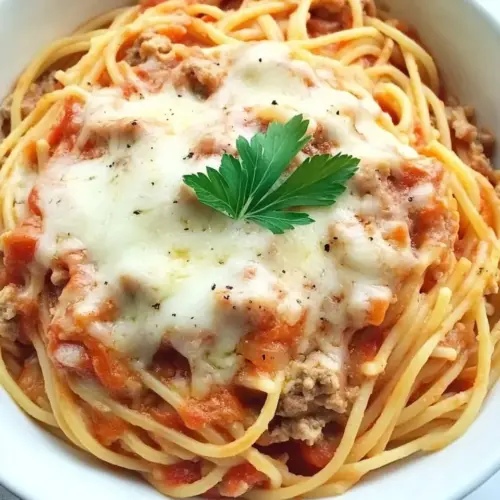
Slow Cooker Spaghetti Casserole
Slow Cooker Spaghetti Casserole is a creamy, cheesy, and easy weeknight dinner that combines browned meat, savory tomatoes, and melty cheeses for a crowd pleasing bake. The slow cooker develops deep, comforting flavors while you get on with your day, making it perfect for busy families and potlucks. Make it for a cozy dinner that stretches to seconds and leftovers.
Equipment
- Large Skillet
- Slow Cooker
- Pot for boiling pasta
- Colander
Ingredients
- 1 pound ground turkey or beef, 93% lean Cook ground turkey or beef until browned and crumbly; provides the primary protein and savory base for the casserole. Season while cooking to build depth and ensure even flavor throughout the dish. Drain excess fat if needed to prevent a greasy final texture.
- 12 ounces white mushrooms sliced Sauté white mushrooms sliced until they release moisture and brown lightly; contribute earthy umami and a meaty bite. Add to the slow cooker to meld with sauces and proteins for added texture. Retain some moisture to keep the casserole from drying out during long cooking.
- 1/2 cup white onion diced Sweat white onion diced until translucent to add natural sweetness and aromatic complexity. Provide a flavorful foundation that complements the garlic and herbs. Even small pieces melt into the sauce for cohesive texture.
- 1 garlic clove minced Press or mince garlic clove to release pungent aromatics and bright, savory notes. Enhance the overall flavor profile and pair well with tomatoes and herbs. Add early so its fragrance infuses the sauce during slow cooking.
- 1/4 teaspoons salt Sprinkle 1/4 teaspoons salt to season ingredients and elevate all flavors without overpowering. Use measured amounts to control sodium, especially with canned sauces and tomatoes. Adjust at the end if needed to suit taste.
- 1 teaspoon dried oregano Crumble or sprinkle 1 teaspoon dried oregano to introduce warm, slightly bitter herbal notes. Complement tomato-based sauces and Italian-style seasonings within the casserole. Support overall complexity without needing fresh herbs.
- 1 teaspoon dried basil Add 1 teaspoon dried basil to contribute sweet, aromatic, and slightly peppery flavors that match tomato sauce. Help round out the Italian herb profile for a classic spaghetti casserole taste. Rehydrate during cooking to release its fragrance.
- 24 ounces tomato and basil pasta sauce jar Pour 24 ounces tomato and basil pasta sauce jar to form the saucy backbone of the casserole. Provide seasoned tomato flavor, moisture for the pasta, and a cohesive binder for all components. Choose a quality jarred sauce to simplify preparation.
- 14 1/2 ounces diced tomatoes can Stir in 14 1/2 ounces diced tomatoes can for added tomato texture, acidity, and juiciness. Balance the smoother jarred sauce with chunks of tomato to enhance mouthfeel and brightness. Include the juices to help cook and soften the pasta.
- 1 pound spaghetti broken in half Break 1 pound spaghetti in half to fit the slow cooker and ensure even cooking throughout the casserole. Supply the carbohydrate structure and classic pasta element expected in a spaghetti casserole. Toss with sauce to prevent clumping and promote thorough absorption.
- 1 cup cream cheese low-fat Soften 1 cup cream cheese low-fat before adding to create a rich, creamy binder that lends tang and silkiness. Melt into the sauce to make the casserole luscious without excessive fat. Stir well to distribute creaminess evenly for a smooth texture.
- 1 cup mozzarella cheese part-skim, shredded Sprinkle 1 cup mozzarella cheese part-skim, shredded on top and within the casserole for a melty, stretchy finish. Provide a mild, milky flavor and attractive golden browning when heated. Use part-skim to reduce fat while maintaining good meltability.
Instructions
- In a large skillet set over medium-high heat, brown the meat, mushrooms and onions together. After the meat is browned add the garlic, cook for a minute longer. Drain the fat. Add the salt, oregano and basil and stir. Pour the pasta sauce and can of tomatoes into the slow cooker, then add the meat onto the sauce in the slow cooker and stir.: The moment the skillet hits heat you'll hear an energetic sizzle, signaling the start of flavor building through the Maillard reaction. As the meat and mushrooms brown, you should see edges darken to a warm golden brown, and a rich aroma will rise that smells almost nutty and deeply savory. This browning is crucial because it creates browned bits that dissolve into the sauce, lending complexity. Stir occasionally so that everything cooks evenly, and if the mushrooms release liquid allow it to evaporate so they can caramelize. A common mistake here is keeping the heat too low, which causes steaming instead of browning, and you miss out on that roasted flavor.
- Cover and cook on low for 6 hours or high for 4 hours without opening the lid. After the cooking time is up, cook the noodles as directed on the package in boiling water on the stove-top. Note that the noodles will cook a bit more after adding them to the slow cooker. Drain the noodles and add them to the meat sauce in the slow cooker. Stir, then flatten the noodles in an even layer.: When you add minced garlic , your nose will pick up a bright, aromatic burst almost immediately, but it cooks quickly so timing matters. One minute of gentle cooking softens the raw edge and infuses the mixture without letting the garlic burn. If the garlic darkens too much it will taste bitter, so watch its color and aroma closely. This step helps layer a fresh, savory lift on top of the caramelized base, improving the final sauce depth.
- In a small bowl break up the cream cheese into small squares then layer on top of the pasta. Add the mozzarella cheese. Cover and cook for an extra 20 minutes on LOW. Serve and enjoy!: Draining excess fat leaves a cleaner sauce texture and prevents greasiness, so tilt the skillet and spoon or pour off the rendered fat carefully. You should still keep some flavorful juices and browned bits stuck to the pan, because scraping those into the slow cooker later maximizes taste. If you skip draining, the final casserole can feel heavy and oily, masking the more delicate herb notes.
- Add the salt, oregano and basil and stir: Adding salt and dried herbs at this stage lets their flavors bloom in the warm pan, harmonizing with the caramelized meat. Stir thoroughly so the seasonings coat all pieces and release aromas. This early seasoning contributes to an evenly flavored sauce later, since the slow cook will blend everything together. A common oversight is under seasoning here, which makes the finished casserole taste flat, so taste and adjust as needed after the final meld.
- Pour the pasta sauce and can of tomatoes into the slow cooker, then add the meat onto the sauce in the slow cooker and stir: As you pour the jarred pasta sauce and canned diced tomatoes into the slow cooker, you'll notice a fragrant tomato perfume filling the air, with herbs and sweetness. Spoon the browned meat mixture on top, then stir to combine so the browned bits and rendered juices incorporate into the tomato base. Stirring ensures the sauce envelops the meat evenly, creating a unified flavor profile. A mistake to avoid is dumping everything and then walking away without stirring, which can leave pockets of intense or underdeveloped flavor.
- Cover and cook on low for 6 hours or high for 4 hours without opening the lid: During the long, gentle cook the sauce will deepen in flavor and the dried herbs will soften and bloom, producing a rounded, cohesive taste. You will notice a slow thickening and a concentrated tomato scent as water evaporates and flavors concentrate. Resist the urge to open the lid, as each peek releases heat and extends cooking time; only open if absolutely necessary. Opening the lid too often is the most common timing mistake because it interrupts the gentle temperature buildup that develops flavor.
- After the cooking time is up, cook the noodles as directed on the package in boiling water on the stove top: The bubbling pot and the rhythm of stirring the strands will give you sensory signals that the spaghetti is approaching the ideal bite. Cook until the pasta is just shy of package al dente because it will soften further after combining with the hot sauce. You want the strands firm enough to hold texture, not mushy. Overcooking the pasta here is a frequent error, since it becomes overly soft after the final bake.
- Note that the noodles will cook a bit more after adding them to the slow cooker: When you add the drained spaghetti to the hot sauce, the residual heat will complete the cooking, and the pasta will soak up flavorful juices. You should watch for the visual cue of the sauce thickening around the strands; this shows the starches are integrating. If the sauce seems too loose, allow a few extra minutes uncovered to reduce. A common pitfall is adding fully cooked, soft pasta which results in a mushy casserole.
- Drain the noodles and add them to the meat sauce in the slow cooker: As you drain the pasta, listen for the gentle clatter of the colander and notice how the strands glisten. Add them directly to the slow cooker so they mingle immediately with the hot sauce, which helps set the texture. Toss gently to avoid breaking the strands too much, then flatten them into an even layer for an even bake. Aggressive stirring can make the pasta fray and lose structure, so be gentle.
- Stir, then flatten the noodles in an even layer: Once combined, smoothing the top creates a uniform surface for the cheese layer, ensuring even melting. This is the moment you can see the dish come together visually, with sauce pockets and pasta strands melding. Press lightly so the cheese will sit evenly. Rushing this step may cause an uneven finish, where some areas melt more than others.
- In a small bowl break up the cream cheese into small squares then layer on top of the pasta: Breaking the low fat cream cheese into small pieces helps it melt into ribbons and pockets of cream throughout the casserole. As the warm sauce meets the chilled cream cheese, you will see creamy streaks form that promise a velvety texture when melted. If you place large chunks, melting can be uneven and leave cold pockets, so size matters here.
- Add the mozzarella cheese: Sprinkle shredded part skim mozzarella cheese evenly so it blankets the cream cheese and pasta, promising a stringy, melty top layer with gentle browning. The visual of the white cheese turning glossy and slightly bubbled is your cue that it is ready. Too much cheese can overwhelm, while too little will not provide the desired pull when served.
- Cover and cook for an extra 20 minutes on LOW: This short final phase lets all the cheeses soften and meld into the pasta and sauce, producing a cohesive, sliceable casserole. You will hear quiet bubbling and smell a warm, cheesy aroma as the top finishes. Twenty minutes on low allows gentle melting without overbrowning. Leaving it much longer risks drying out the top or making the pasta overly soft.
- Serve and enjoy: When you uncover the slow cooker, the steam will rise carrying tomato, herb, and melted cheese notes, and the top should look glossy and unified. Spoon portions onto plates so each serving gets meat, pasta, and melty cheese, and watch how the textures and flavors come together in the first bite. A common serving mistake is letting it sit too long before serving, which cools and firms the cheese excessively.
Notes
- Adjust protein choice: If you prefer a lighter option, choose the ground turkey listed, and if you want richer depth go with ground beef. Both brown well and contribute savory flavor, but watch cook times when swapping as leaner meats dry more quickly.
- Mushroom handling: Sauté mushrooms until their liquid evaporates and edges caramelize for concentrated umami. This avoids a watery sauce and adds a savory backbone to each bite.
- Pasta timing: Cook spaghetti to just under al dente, because carryover heat will finish it in the slow cooker. This prevents a mushy final texture and keeps each strand distinct.
- Cheese distribution: Break the cream cheese into small pieces and scatter the mozzarella cheese evenly so every serving gets creamy pockets and a melty top, avoiding cold or overly cheesy spots.
- Season carefully: Taste the sauce near the end of the long cook, and adjust the salt or add a pinch more dried oregano or dried basil if you want a brighter herb profile. Small adjustments make a big difference in the final balance.