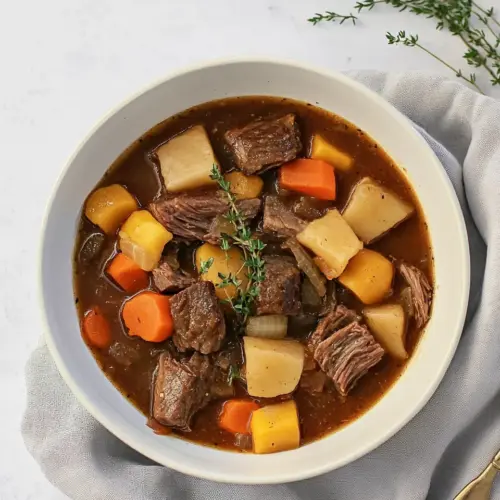
Slow Cooker Short Rib Stew
Slow Cooker Short Rib Stew is a rich, comforting bowl of tender beef, hearty potatoes, and sweet carrots simmered in a savory tomato and broth base. This easy weeknight dinner becomes deeply flavorful with minimal fuss, offering a silky mouthfeel and warming spice notes. It’s perfect for cozy winter nights and makes excellent make ahead leftovers, a reason to cook it this weekend.
Equipment
- Skillet
- Slow Cooker
Ingredients
- 2 pounds boneless short ribs Provide rich, tender meat and hearty texture that forms the stew's protein base, releasing deep savory flavors as it slowly braises and breaks down. Enhance collagen-rich gelatin that thickens the cooking liquid naturally, contributing to a luxurious mouthfeel. Pair well with root vegetables and aromatics to create a satisfying, meaty centerpiece.
- 1 tablespoon extra-virgin olive oil or grass-fed butter Sear quickly to develop a savory crust and add a layer of caramelized flavor before slow cooking. Contribute healthy fats that help carry and meld flavors throughout the stew. Offer a subtle fruity or creamy note depending on whether olive oil or butter is chosen.
- 3 garlic cloves minced Infuse aromatic pungency and savory depth when minced finely, releasing natural oils that perfume the stew during browning and simmering. Provide slight sweetness and complexity that balances richer elements like meat and broth. Blend seamlessly into the base for even distribution of flavor.
- 1 onion diced Sweat until translucent to create a flavorful foundation, offering natural sweetness and savory umami that supports the stew's overall profile. Add textural contrast when diced, giving small pockets of tender onion throughout the finished dish. Combine with garlic and herbs to deepen aromatic complexity.
- 4 potatoes cubed Hold tender bite and absorb flavors from the cooking liquid while releasing starches that slightly thicken the stew. Provide hearty substance and a comforting, familiar texture, making the dish more filling. Pair well with carrots and parsnips for a classic root vegetable medley.
- 4 large carrots diced Contribute natural sweetness and earthy flavor while maintaining body and bite after long cooking, complementing the meat and potatoes. Add color and nutritional value, supplying fiber and vitamins that round out the stew. Diced shape allows even cooking and easy spoonfuls in each serving.
- 2 cups Tuttorosso Diced Tomatoes Introduce bright tomato acidity and umami that balances the richness of the beef and broth, lending a subtle tangy backbone to the stew. Release small tomato pieces that meld into the sauce, enhancing mouthfeel and depth. Offer preserved tomato flavor consistent in canned form for reliable results.
- 5 cups beef broth Provide the primary simmering liquid and savory backbone, concentrating meaty flavor during long cooking while hydrating all ingredients. Add salt and umami naturally, enabling gelatin from the short ribs to create a rich body in the stew. Choose a hearty beef stock for best depth and richness.
- 1 tablespoon arrowroot flour Thicken when dissolved and added to hot liquid, producing a glossy, slightly silkier texture without altering the flavor profile. Help stabilize the stew's consistency, particularly useful if broth is thinner after prolonged cooking. Offer a grain-free alternative to wheat-based thickeners for clearer sauces.
- 1 teaspoon fine sea salt more to taste Season early to build layers of flavor, enhancing the natural tastes of meat, vegetables, and broth while allowing adjustment to personal preference. Provide essential mineral balance that brings out other ingredients without overwhelming them when used judiciously. Allow for additional seasoning at the end to fine-tune taste.
- 1/2 teaspoon black pepper more to taste Season with warm, penetrative heat to brighten savory flavors and provide a mild spicy note when adjusted to taste. Create contrast against the stew's richness, helping other aromatics sing through the broth. Use sparingly and adjust after slow cooking to avoid overpowering subtler flavors.
- Pinch of paprika Add a subtle smoky warmth in small amounts that complements beef and roasted aromatics, deepening the stew's flavor profile. Enhance visual color slightly while contributing a faint, layered spice note. Use a pinch to accentuate rather than dominate the overall seasoning.
- 4 sprigs fresh thyme Provide fresh herbal complexity and a light, slightly floral aroma that infuses the stew during long simmering. Shed leaves slowly, releasing balanced earthy and lemony notes that elevate meaty and vegetable flavors. Tie together other aromatics like onion, garlic, and bay leaf harmoniously.
- 1 bay leaf Impart an underlying savory, slightly bitter herbaceous note that lends depth and complexity as it simmers. Release gentle aromatics that integrate with thyme and other seasonings to support the stew's long-cooked profile. Remove before serving to avoid overly leathery bay leaf pieces in bowls.
- Pinch of red pepper flakes Brighten the stew with restrained heat and a touch of spice that can enhance savory flavors without overwhelming them. Add a subtle tingle that lifts richness and complements smoky or peppery elements. Use sparingly to control overall spiciness while keeping flavor balanced.
- Optional: 1 cup cremini mushrooms Provide optional earthy umami and meaty texture that absorbs the stew's savory liquid and adds bite when included. Enhance mushroomy depth and complement beef flavors, contributing additional nutrients and a meaty vegetarian-friendly note. Slice or quarter for even cooking throughout the stew.
- Optional: 2 parsnips diced Offer optional sweet, nutty root vegetable character that adds complexity and natural sweetness when included alongside potatoes and carrots. Contribute tender texture and a slightly firm bite after slow cooking, enriching the stew's variety of flavors and mouthfeels. Dice to match other vegetables for uniform cooking.
Instructions
- Trim excess fat off of the short ribs and cut them into small 1 1/2 inch bite-size cubes. Season generously with salt and pepper.: As you work, you will notice the raw meat has a cool, slightly metallic scent, and removing thick slabs of fat helps the final broth stay clean and balanced. Cutting into consistent 1 1 2 inch cubes ensures even cooking, so the pieces become uniformly tender rather than having some fall apart and others stay chewy. While trimming, keep a sharp knife and steady hand; a dull blade will tear the meat and create ragged edges, which can make the surface harder to brown evenly. One tip is to pat the pieces dry with paper towel before cutting and seasoning, because moisture inhibits browning. A common mistake is leaving large caps of fat on, which can make the stew greasy; trim judiciously but not so much that you remove all the flavor-rich marbling.
- In a skillet, heat oil or butter and brown short ribs on all sides.: When you season now, the salt begins to penetrate the meat, building seasoning from the inside out, and the black pepper adds aromatic heat. You'll see crystals adhere to the surface and create a coarse crust when browned, which contributes to flavor depth. Let the seasoned meat sit briefly so it can come closer to room temperature; this helps sear better. Avoid under seasoning; many cooks add salt only at the end and end up with a flat result. On the flip side, do not oversalt at this stage if your beef broth is already high in sodium, taste and adjust later.
- Place garlic, onion, potatoes, carrots, and the parsnips and mushrooms if adding, in the bottom of your slow cooker.: As the oil warms, it shimmers and releases a faint aroma, and when the meat first hits the pan you should hear a satisfying sizzle. Browning creates Maillard reaction notes, those savory caramelized bits that give the stew its complexity, so take your time to get good color on each face without burning. Use medium to medium-high heat and work in batches to avoid crowding, otherwise steaming will occur and you won't achieve that deep brown crust. A mistake I see often is rushing this step by using too high heat, which chars the outside but leaves the interior underdeveloped in flavor. Reserve any fond stuck to the pan; deglazing later with a splash of broth scrapes up those concentrated flavors and adds them back to the stew.
- Place meat on top, then add in the diced tomatoes, beef broth, arrowroot flour, teaspoon of salt, pepper, thyme, bay leaf, and red pepper flakes.: Layering these aromatics and roots at the bottom creates a bed that insulates and gently steams, helping them break down into the broth slowly. The diced onion will sweeten and nearly melt into the liquid, while the potatoes and carrots absorb the developing flavors and release starch to thicken the stew. When adding optional parsnips or mushrooms , spread them evenly so their flavors meld rather than concentrating in one spot. A common misstep is chopping unevenly resulting in some pieces being overcooked and others still firm; aim for uniform dice for predictable doneness.
- Set slow cooker to low for 8 hours. Once done, remove thyme sprigs and bay leaf, and add additional salt, pepper, paprika, and red pepper flakes as desired.: Topping the vegetables with the browned short ribs allows juices to drip into the roots, infusing them with meaty richness as everything simmers. Pour the diced tomatoes and beef broth around the meat so liquids surround but do not wash away surface browning all at once. Dissolve the arrowroot flour in a splash of cool broth before whisking it in to prevent lumps, this gentle thickening will create body without clouding the liquid. Add the thyme sprigs and bay leaf for herbal notes that release slowly over time. Stir the spices so they disperse but avoid vigorous mixing that breaks down vegetables prematurely. One thing to avoid is overfilling the slow cooker; leave headspace for bubbling and reduction. Also, be mindful of salt content from your broth and canned tomatoes to prevent over seasoning early.
- Set slow cooker to low for 8 hours: The long, low temperature invites connective tissue in the short ribs to dissolve into gelatin, giving the stew its luxurious mouthfeel; you will notice a gentle murmur as the liquid simmers. Over this time the aroma will slowly deepen, becoming richer and more layered. Do not lift the lid frequently, because each opening releases heat and lengthens the cooking time. A common error is switching to high and expecting the same results, but high can tighten proteins and yield less tender meat. Trust the low and slow approach, and plan ahead so the timing fits your day.
- Once done remove thyme sprigs and bay leaf and add additional salt pepper paprika and red pepper flakes as desired: At the finish, the stew should glisten and the meat should fall apart with gentle pressure; the smell will be intensely savory and rounded. Removing the thyme sprigs and bay leaf prevents woody textures from appearing in the bowl. Now adjust seasoning, tasting to balance salt , pepper , and a pinch of paprika or extra red pepper flakes to taste. This is the moment to correct any flatness, because reduction concentrates flavors and final seasoning brings everything into harmony. A typical mistake is adding too much heat at the end; add spicy elements gradually and let them meld for a few minutes before deciding on more.
Notes
- Swap fats thoughtfully If you prefer a richer mouthfeel, use grass fed butter instead of olive oil for browning, but lower the heat slightly to prevent the butter solids from scorching.
- Mushroom option If adding cremini mushrooms, sauté briefly beforehand to concentrate their flavor and reduce the water they release during the slow cook.
- Thickening control Mix the arrowroot flour with cold liquid before adding and stir it in during the final hour to prevent over thickening and to maintain a glossy finish.
- Salt management Taste before adding extra salt at the end, especially if your beef broth or canned tomatoes are high in sodium; you can always add more but you cannot remove it.
- Vegetable timing If you like firmer potatoes, add them halfway through the cook instead of at the start so they keep more texture.
- Herb tweaks Substitute dried thyme if fresh is unavailable, but use one third the amount because dried herbs are more concentrated.