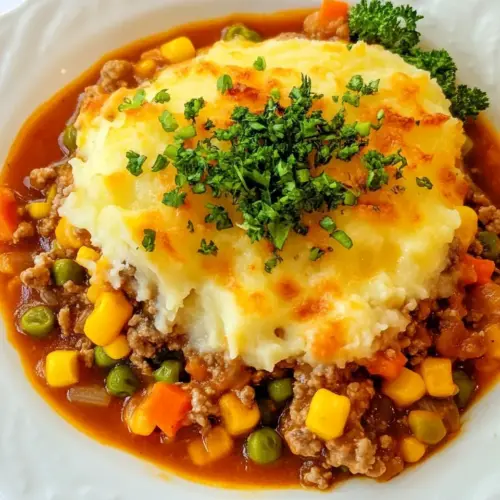
Slow Cooker Shepherds Pie
Slow Cooker Shepherds Pie is a creamy, comforting casserole that layers savory cooked ground turkey and vegetables under a fluffy mashed potato topping with melted cheddar. Perfect for an easy weeknight dinner, it offers hearty textures and warm, homey flavors with minimal hands on time. Make it when you want a satisfying family meal that reheats beautifully and always pleases a crowd.
Equipment
- Slow Cooker
- Large soup pot
- Mixing Bowl
- Masher
Ingredients
- 1 pound ground turkey cooked and broken into small pieces Cooked and broken into small pieces provides the lean protein base and texture for the filling, absorbing savory flavors from the sauce. Adds moisture and structure while keeping the dish lighter than traditional lamb or beef versions. Browning and breaking ensures even distribution throughout the pie.
- 3 garlic cloves minced Minced to release pungent aromatics that build the foundational savory flavor when sautéed or combined with the cooked turkey. Infuses the filling with a warm, slightly spicy nuance that complements herbs and umami components. Small pieces distribute flavor evenly without overpowering other ingredients.
- 4 carrots medium, peeled and diced small Peeled and diced small to contribute sweet, earthy notes and tender bite after slow cooking, adding body to the vegetable mix. Provides natural sweetness and slight starchiness that balances savory elements in the filling. Small dice ensures quick, even cooking and pleasant texture.
- 2 cups button mushrooms chopped Chopped to add savory, umami-rich depth and meaty texture that enhances the overall heartiness of the filling. Releases additional moisture and concentrates flavor during cooking, complementing the turkey and sauce. Chop size ensures mushrooms integrate smoothly without dominating the dish.
- 1 cup corn frozen (thawed) Frozen and thawed to supply bursts of sweet corn flavor and bright color, contributing texture contrast in the filling. Adds natural sweetness and a pop of juiciness that complements savory and creamy components. Thawing prevents excess ice from diluting the sauce.
- 1 cup peas frozen (thawed) Frozen and thawed to provide tender-sweet bites and bright green color that lighten the filling's appearance and flavor. Adds subtle sweetness and vegetable variety, balancing richer components like cheese and potato. Thawing reduces excess moisture for better texture.
- 3/4 cup chicken broth low-sodium Low-sodium to form the savory liquid base that melds flavors and helps create a cohesive gravy for the filling. Adds depth and salt balance while allowing other seasonings to shine without excessive sodium. Low-sodium choice gives better control over final taste.
- 1/4 cup tomato paste low-sodium, no sugar added Low-sodium, no sugar added to concentrate tomato flavor and thicken the filling, contributing a rich, tangy backbone to the sauce. Enhances color and umami while providing acidity that balances richness from dairy and meat. Small amount intensifies tomato presence without adding sweetness.
- 2 teaspoons soy sauce low-sodium Low-sodium to introduce salty, savory umami that deepens the overall flavor profile without overwhelming sodium levels. Adds a subtle fermented complexity that complements soy and broth in the sauce. Low-sodium version allows precise seasoning control.
- 1 teaspoon dried oregano Dried to impart warm, slightly bitter herbal notes that enhance the savory profile and pair well with meat and vegetables. Provides subtle Mediterranean character and helps round out the sauce’s flavor complexity during slow cooking. Dried form releases flavors gradually over time.
- 2 1/2 pounds russet potatoes peeled and cut into 2-inch pieces Peeled and cut into 2-inch pieces to be boiled and mashed into a creamy topping that creates the classic shepherd's pie crust. Supplies starchy body and neutral flavor that carries butter, milk, and cheese to form a smooth, spreadable mash. Proper cut size ensures even cooking for silky texture.
- 1 cup skim milk Used to loosen and enrich the mashed potatoes, adding creaminess without excessive fat to create a smooth, spreadable topping. Supplies moisture and a slight dairy sweetness that melds with cheese for flavor and texture. Skim milk keeps the topping lighter while still creamy.
- 1 cup cheddar cheese low-fat, shredded Shredded low-fat to melt into the mashed potato topping, adding salty, tangy richness and a golden, slightly crisp finish when baked. Contributes flavor and helps create a cohesive, slightly stretchy texture while controlling fat content. Low-fat option balances creaminess with lighter nutrition.
- 1/4 cup parsley fresh, chopped Fresh and chopped to provide bright herbal lift and color when folded into the filling or sprinkled on the finished pie. Adds a clean, slightly peppery freshness that lightens richer elements and enhances presentation. Fresh parsley balances flavors and offers aromatic contrast.
Instructions
- Place the cooked ground turkey into the slow cooker with the garlic, carrot, mushrooms, corn, and peas. In a small bowl, whisk together the broth, tomato paste, soy sauce, and oregano. Pour over the meat and vegetables. Cover and cook on high for 2 hours or low for 4 hours.: The moment you nestle the browned ground turkey into the slow cooker with the minced garlic , diced carrots , chopped mushrooms , corn , and peas , you start building the foundation of aroma and texture. You will notice a savory steam rising as the ingredients settle together, and the colors form a rustic mosaic of orange, green, and brown. This layering matters because it ensures the vegetables mingle with the meat during the long cook, allowing flavors to exchange. A frequent error is adding undercooked or too large vegetable pieces which can remain firm, so keep the dice modest. If the mixture seems dry at this point, a small splash of broth helps prevent scorching and encourages gentle simmering.
- Meanwhile, place the potatoes in a large soup pot and cover with water. Bring to a boil for about 10 minutes or until tender.: When you whisk chicken broth , concentrated tomato paste , low sodium soy sauce , and dried oregano , you create a glossy, deeply flavored sauce that will cling to the ingredients. The aroma becomes tangy and savory, with the tomato paste adding a dense, slightly sweet backbone and the soy sauce contributing a rounded umami note. Getting the paste fully incorporated prevents clumps and ensures even flavor distribution. A common misstep is stirring this mixture in directly without first combining, which leads to sticky pockets of tomato paste rather than a unified sauce. If your broth seems thin, a touch more paste will thicken as it cooks.
- Drain and place the potatoes in a large bowl and mash until mostly smooth with the skim milk.: As you pour the seasoned liquid over the layered filling, watch it spread and coat the vegetables, creating a tan glossy sheen. The sound is quiet, just a gentle splash, but the effect is immediate the scent lifts and becomes more robust. This step matters because it hydrates and seasons every piece, transforming the filling from dry to braising-ready. Avoid pouring all at once in a clump, which can displace lighter vegetables; pour evenly so the sauce distributes across the surface. If you see too much liquid pooling, skim some after cooking to concentrate flavor.
- After the cook time is complete for the meat and vegetables, skim off any excess liquid. Spread the mashed potatoes on top of the meat mixture in an even layer and sprinkle cheese on top. Cover and cook another 20 minutes on high.: During the long, slow cook the filling will soften and the flavors will marry, releasing a warm, savory perfume into your kitchen. High temperature develops flavors faster, producing tender vegetables and a cohesive sauce in two hours, while the low setting is gentler and allows deeper melding over four hours. The slow movement of bubbling is a good cue, a relaxed, steady simmer rather than violent boiling. One pitfall is overcooking on high so that vegetables lose texture, so check for tenderness toward the end of the interval. If your cooker runs hot, prefer the low setting to preserve bite.
- Sprinkle with parsley and serve.: Placing the cut russet potatoes into a pot and covering them with cold water sets them up to cook evenly. As the water heats and begins to shimmer, you will see steam and hear a faint, steady boil. Starting with cold water helps the potatoes cook through without the exterior disintegrating while the interior stays raw. A typical mistake is starting in boiling water, which can cause uneven cooking and gummy texture. Keep an eye on the pot and salt the water lightly to season from the inside out.
- Bring to a boil for about 10 minutes or until tender: As the pot reaches a rolling bubble, the scent of warm potato emerges, and you can test doneness by spearing a piece with a fork; it should slide off gently. This timing will vary slightly with the size of the pieces, so rely on the fork test rather than the clock. The reason this matters is that properly tender potatoes mash into a smooth, airy topping, while undercooked pieces create lumps, and overcooked ones absorb too much liquid. Avoid boiling too vigorously which can break potatoes into waterlogged bits.
- Drain and place the potatoes in a large bowl and mash until mostly smooth with the skim milk: Draining removes excess water so the mash stays fluffy, and adding warmed skim milk helps achieve a creamy texture without cooling the potatoes. As you mash, notice the steam rising and the silky, pale mass forming under your spoon. The goal is smoothness with a bit of body so the topping holds its shape. Overworking with a mixer can make them gluey, so mash with intention. If the mash seems stiff, add milk gradually; if too loose, let steam escape to thicken.
- After the cook time is complete for the meat and vegetables, skim off any excess liquid: When the slow cooker signals the end of cooking, you might see a shallow pool of broth on top of the filling; skimming this concentrates flavor and prevents the potatoes from sliding. The surface should glisten rather than swim, and removing excess liquid gives you a thicker, clingier filling. A common oversight is skipping this step, which can result in a watery final dish, so use a spoon to gently lift off extra liquid. Save any skimmings if you want to adjust seasoning later.
- Spread the mashed potatoes on top of the meat mixture in an even layer and sprinkle cheese on top: As you dollop the warm mash over the filling and spread it outward, you will feel the textural contrast between the dense, saucy filling and the soft, pillowy potatoes. The surface should be mostly smooth with peaks that brown slightly when warmed. Sprinkling shredded low fat cheddar cheese across the top introduces pockets of melty tang. This layering technique matters because it seals the filling and keeps moisture balanced. Avoid pressing the potatoes too thin, which can expose the filling and dry out the top.
- Cover and cook another 20 minutes on high: Returning the covered slow cooker to heat for twenty minutes melts the cheese and warms the potato layer through, producing that satisfying bubbling scent and a lightly golden top. Listen for a gentle simmer, and you will see tiny bubbles at the edges where the filling meets the potatoes. This short finish ensures the flavors integrate and the textures align. Do not skip it, as serving immediately may leave the center cooler than the edges. If your slow cooker runs very hot, reduce the time slightly to avoid overbrowning.
- Sprinkle with parsley and serve: A scatter of fresh chopped parsley over the finished pie adds a bright, herbal contrast to the rich, warm notes beneath. The green flecks lift the plate visually and add a clean finish on the palate. Serve while still warm so the cheese remains melty and the filling holds together. A common mistake is adding the parsley too early, which causes it to wilt and lose its vibrancy. Garnish at the last moment for best color and flavor.
Notes
- Boost umami: Toast a small amount of the tomato paste in a hot pan until it darkens slightly before whisking into the broth, this deepens flavor without adding extra salt and enhances the savory profile of the filling.
- Vegetable texture: If you prefer softer vegetables, dice the carrots a touch smaller or sauté the mushrooms first to reduce their moisture, which helps the filling thicken rather than thin out.
- Make ahead: Assemble the filling and refrigerate overnight, then prepare the mashed russet potatoes just before the final bake to keep the topping fresh and fluffy for serving.
- Cheese topping: Mix a little of the shredded low fat cheddar cheese into the mashed potatoes as well as sprinkling on top, this creates a creamier inside and a consistent cheesy flavor throughout.
- Skim milk swap: If you want a richer mash, substitute whole milk for the skim milk, adding it gradually until the desired creaminess is reached.
- Herb finish: Toss chopped parsley with a tiny squeeze of lemon before sprinkling to add a bright, zesty note to cut through the richness.