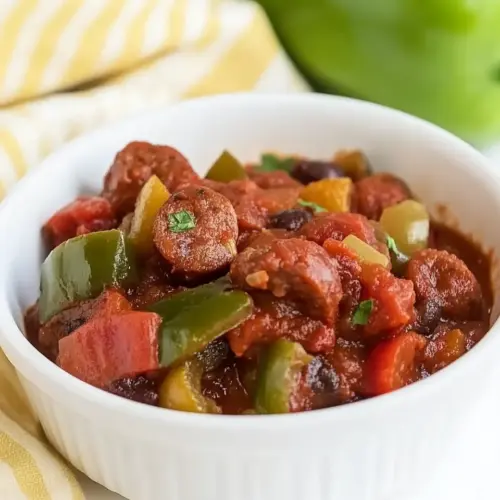
Slow Cooker Sausage and Peppers
Slow Cooker Sausage and Peppers brings together savory browned sausage, sweet bell peppers, and rich marinara for an easy weeknight dinner that feels indulgent. The slow cooker melds flavors to create a saucy, comforting meal with tender texture and bold aroma, perfect for busy evenings or casual gatherings. Make it for a fuss free, crowd pleasing dinner you will come back to again and again.
Equipment
- Non-stick frying pan
- Turner
- Cutting Board
- Slow Cooker
Ingredients
- 5 links Italian Sausage (see notes) Provide savory, fatty richness and a primary source of protein; brown thoroughly to develop deep caramelized flavors before slow cooking. Release rendered fat that flavors the sauce and peppers, and help create a hearty, satisfying texture throughout the dish.
- 2 T olive oil Add fruity, peppery richness and serve to prevent sticking; heat briefly to bloom flavors before combining with sausages and sauce. Contribute a subtle silky mouthfeel and help carry aromatics into the slow-cooked mixture.
- one 24 oz. jar Rao's Marinara Sauce (see notes) Deliver concentrated tomato, herb, and umami depth to form the sauce base; pour over sausages and peppers to create a cohesive, saucy finish. Offer consistent seasoning and texture so the slow cooker yields a well-balanced, comforting dish.
- 2 large red bell peppers Provide sweet, slightly charred crunch and bright color when sliced and softened in the slow cooker; balance the savory sausage and savory tomato sauce. Contribute natural sweetness and moisture that melds with other components during long, gentle cooking.
- 1 large green bell pepper Contribute a slightly bitter, grassy counterpoint and vivid green color when cooked until tender; slice and add to the pot to balance sweetness from the red peppers. Add crisp aromatic tones and a pleasant contrast to the rich sausage and tomato sauce.
Instructions
- Heat half the olive oil in a non-stick frying pan over medium-high heat, add sausages, and cook until they're nicely browned on both sides. They won't be cooked through.: Right away you should notice the oil shimmering and a soft sizzle when the sausage hits the pan, that sound means flavor is forming. As the surfaces brown, they will develop deep golden patches and a fragrant, roasted aroma that smells slightly sweet and savory, which is the Maillard reaction at work. This step matters because those browned bits are concentrated flavor, and skipping this will leave the final dish flatter. A common slip is crowding the pan which traps steam, preventing browning, so give each link space. If the pan begins to smoke, lower the heat, and if the casings puff too much, poke a small vent to release steam so the sausages brown evenly.
- Remove sausage to cutting board and cut each sausage in half lengthwise.: You will feel the contrast between the hot, crisp exterior and the still slightly soft interior as you transfer the sausage to a board, and cutting lengthwise exposes the browned interior surface which will brown even more in the next step. The exposed cut surface gives more area for browning, improving texture and flavor distribution. Watch for hot juices when you slice, and let them rest just enough so you don't squeeze out flavor. Avoid cutting too soon while the links are searing hot, which can cause jagged slices; a brief pause makes cleaner cuts.
- Heat the rest of the olive oil, add sausage, and brown the cut side of the sausage.: When you add the second splash of olive oil , it will hiss slightly as it meets the hot pan, a promising sign. Press the cut sides gently to ensure full contact so that they crisp and caramelize, turning those inner surfaces a rich brown. This extra browning unlocks more savory depth that will marry with the marinara sauce . If you rush this step, the interior will remain pale and the dish will lack that roasted, meaty note. Mistakes here include moving the pieces too frequently; let them sit to form a crust before flipping.
- Put sausage on cutting board and cut into pieces when it's cool enough to handle. Put sausage pieces in slow cooker and turn to LOW.: After a short rest, chopping the sausage into bite sized pieces releases the rich browned edges and makes it easy to layer in the slow cooker. When you add the pieces, you should hear a soft thud and notice the pan aromas lingering in the air. Setting the slow cooker to LOW ensures slow, gentle melding of flavors, preserving sausage tenderness without drying. Avoid piling everything too tightly; give pieces room so sauce can circulate. A common oversight is setting the cooker too high, which can over soften the peppers and change the texture dramatically.
- Add the pasta sauce to the frying pan and simmer about 10 minutes so sauce is slightly reduced. Use the turner to scrape any sausage bits off the bottom of the pan.: As the marinara sauce hits the pan it will steam and pick up those deeply flavored browned bits, transforming into a richer, meat kissed sauce. Gentle simmering for about 10 minutes concentrates the tomato notes and thickens the liquid slightly, which helps the sauce cling to the sausage and peppers later. Use a turner to lift the fond, you should see tiny brown flecks dissolving into the sauce, which is exactly what you want. Watch the heat so it does not boil aggressively, which can break down the sauce texture. The mistake to avoid is skimming or discarding those bits; they are flavor gold.
- While sauce reduces, cut red and green peppers into pieces a little bigger than one inch across.: Cutting the peppers to a bit larger than an inch ensures they keep a pleasant bite after the slow cook, giving contrast to the tender sausage . As you slice, notice the crisp snap and the fresh vegetal aroma, which will mellow in the cooker. Uniform pieces cook evenly, so take a moment to match sizes. A common pitfall is making pieces too small, which can lead to mushy texture, or too large, which may not soften enough. Remove the white ribs and seeds for a cleaner mouthfeel.
- Add peppers to slow cooker. When sauce has reduced by about 1/4 pour over sausage and peppers in the slow cooker and stir to combine.: The moment you drop the bright peppers into the slow cooker the color contrast is joyful, and pouring the reduced marinara sauce over everything brings an immediate steam and mingled aroma. Stirring distributes sauce and bits of sausage evenly so each bite is balanced. This step matters because uniform coating allows the flavors to infuse throughout during the slow cook. Avoid dumping the sauce cold without reducing, as the fond needs time to dissolve into the sauce. Also, don’t over stir which can break up pepper pieces too much before they soften properly.
- Put lid on the slow cooker and cook on LOW about 1 1/2 hours for peppers that are still slightly crisp, or a bit longer if you prefer softer peppers.: As the cooker warms, you will notice a steady, comforting steam rising and the sauce will bubble gently, releasing a melded aroma of tomato and spice. Cooking on LOW for about 1 to 1 1/2 hours gives pepper pieces that tender crispness while keeping good structure, while extending the time yields a softer, stew like texture. The gentle, even heat lets connective tissue relax without drying out proteins. A frequent mistake is opening the lid often, which lets heat escape and prolongs cooking unnecessarily. Trust the process and resist peeking unless you need to adjust texture.
- That's it for this easy recipe; enjoy!: At the finish you should see glossy sauce clinging to browned sausage pieces and slightly softened peppers , and the aroma will be deep and inviting, with savory, sweet, and tomato notes in harmony. Allow the dish to rest briefly before serving so flavors settle and juices redistribute. If reheating leftovers, warm gently to preserve texture. A misstep here is overcooking when reheating, which can make the peppers collapse further, so rewarm at low heat and check frequently.
- This will keep on the fridge for at least a week. It can also be frozen, although the peppers will soften when they're frozen. And I bet you won't have any left to freeze anyway!: Stored in an airtight container, the flavors continue to meld and often taste even better after a day or two, with the savory notes integrating into the sauce. Freezing is an option for longer storage, but expect the texture of the peppers to be softer on reheating; the taste remains strong. When refrigerating, cool to room temperature first, then chill promptly. A common mistake is leaving it out too long before refrigerating, which risks bacterial growth, so get it into the fridge within two hours.
Notes
- Spicy kick Add spicy Italian links if you want more heat, or mix sweet and spicy sausages for contrast, which transforms the overall profile without changing technique.
- Cheesy finish Stir in grated cheese at the end for creamy richness, adding it off heat so it melts without becoming stringy or oily.
- Vegetable boost Fold in sliced onions with the peppers for more sweetness and an additional layer of texture, cooking them to translucence before combining.
- Make it saucier Reduce the pan sauce longer before adding to concentrate flavors and thicken the final sauce for clinging to the sausage.
- Freezer friendly Cool completely before freezing in portions, label clearly, and defrost gently in the fridge overnight for best reheating results.