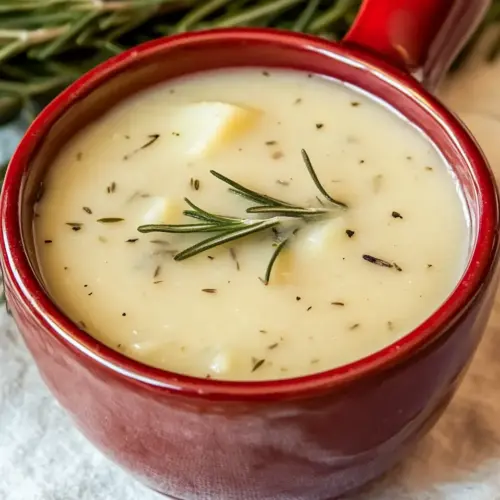
Slow Cooker Rosemary Potato Soup
Slow Cooker Rosemary Potato Soup is a creamy, herb forward bowl that uses simple pantry staples to deliver cozy, savory comfort. This easy slow cooker soup offers a silky texture and bright rosemary notes, ideal for an easy weeknight dinner or a relaxed winter meal. Make it for gatherings or a soothing solo supper, you will love how little effort yields a soulful result.
Equipment
- Slow Cooker
- Immersion Blender
- Countertop blender
Ingredients
- 4 russet potatoes medium, cooked, peeled and cut into chunks. Provide creamy body and potato texture when cooked, peeled and chunked; contributes starch to thicken the soup naturally. Enhance with mashing or leaving chunks for varied mouthfeel and serve as the primary hearty base.
- 4 cups chicken broth low-sodium Add savory, slightly salty liquid to simmer ingredients and meld flavors; low-sodium version preserves control over final seasoning. Use to deglaze any browned bits and to adjust soup consistency to desired thickness.
- 4 vegetable bouillon cubes low-sodium Concentrate umami and savory depth when dissolved into the broth; low-sodium bouillon cubes boost flavor without over-salting. Crumble and stir in early to allow flavors to disperse evenly throughout the slow-cooked soup.
- 1 tablespoon garlic powder Impart warm, mellow garlic aroma and savory undertone in powdered form; provides consistent garlic flavor without fresh prep. Sprinkle evenly to build a rounded seasoning profile that complements potatoes and herbs.
- 2 tablespoons onion powder Contribute sweet, aromatic onion notes and savory backbone; powdered form dissolves easily for even distribution. Use to enhance overall depth and harmony among other seasonings without adding texture.
- 1 tablespoon rosemary fresh, chopped plus extra to taste: we used an extra 2 tablespoons Aromatize and lend piney, floral herbal character when fresh and chopped; the measured tablespoon plus extra adjusts intensity. Add during cooking for infused flavor and reserve a bit to finish for bright, fresh rosemary accents.
- salt to taste Season to personal preference, balancing and enhancing all other flavors; use sparingly at first due to low-sodium components. Taste and adjust toward the end of cooking to achieve the desired savory finish.
Instructions
- Place everything in your slow cooker, EXCEPT THE ADDITIONAL ROSEMARY AND SALT, and cook on low for 2-4 hours. The potatoes are already cooked, so the real purpose of cooking this is to get the bouillon cubes dissolved and to get all the flavors to meld, which a slow cooker does wonderfully. You don't want to cook this too long, as the flavor of the potatoes will change.: As the cooker warms, you will notice a gentle steam lifting with an herbal aroma as the rosemary and powdered aromatics bloom into the chicken broth . The surface will show small ripples and the sound is a barely audible simmer. This low, even heat encourages the bouillon cubes to dissolve fully, releasing concentrated savory flavors into the liquid, which is why we avoid boiling. A common mistake is running the cooker on high which can over soften the texture and alter the delicate potato flavor, so resist the urge to rush. Visually, the broth will deepen slightly in color as it marries with the spices, and you may see tiny flecks of dried powders becoming suspended, a sign flavors are integrating.
- When you're done cooking, use a hand blender to blend everything right in the slow cooker until smooth.: As you blend, the sound changes to a steady whirr and the mixture will thicken, moving from a brothy texture to a silkier, denser body. The aroma becomes creamier, with the potatoes offering a warm, earthy scent. Blending in the cooker keeps the liquid hot and reduces mess. Take care to submerge the blender fully before engaging it to prevent splatter. Overblending can create a gluey texture, so pause and check the mouthfeel often; you want smoothness without losing the soup's comforting weight.
- You can also transfer small amounts at a time to a regular blender. But a hand blender is MUCH easier and far less messy.: When using a countertop blender you will hear a loud, pulsing chop and you may see the mixture steam at the top, so vent the lid slightly to avoid pressure buildup. This method yields very even puree results and sometimes a slightly lighter texture because you can pulse and reduce blending time. A pitfall here is overfilling the blender, which can cause spills or scalding; work in batches and cover the lid with a dish towel when pulsing. Expect each batch to release a fragrant burst of rosemary and warmed spices as you open the lid.
- Blend in the extra rosemary and some salt to taste.: After pureeing, adding the reserved fresh rosemary and finishing with salt brings brightness and clarity. The fresh herb will release bright, resinous notes that cut through the starchiness, and the salt will amplify flavors across the board. Stir gently to distribute the herb so you still see flecks of green, which signals freshness. The main mistake here is adding too much salt at once; always start with a little, taste, and adjust until the balance sings. Texturally, the soup should feel round and aromatic, with the herb providing a pleasant contrast.
- Allow to cool and enjoy.: As the soup cools you will notice the aromas mellow and the surface will form a thin sheen, a signal that flavors are settling. Cooling briefly helps flavors calibrate and makes it easier to taste and adjust seasoning if needed. Serve in warm bowls so the soup stays pleasant longer, and expect spoonfuls to carry savory broth, soft potato body, and herbaceous notes. Avoid leaving the soup out too long at room temperature; if storing, cool to room temperature and refrigerate within two hours to preserve safety and freshness.
- Excellent served with a piece of whole-grain bread and a side of chicken breast!: Pairing the soup with hearty bread provides a textural counterpoint, the crust offering crunch against the soup's silk. If you choose to add a protein side such as a simply cooked chicken breast, it creates a more complete meal. Be mindful that any additions will change the meal balance, so season the sides simply to let the soup remain the star. A common error is overcomplicating sides with heavy sauces that overwhelm the subtle rosemary notes.
Notes
- Boost the herb. Add the additional rosemary gradually after blending so you can tune the herbal intensity without overpowering the potatoes.
- Control salt. Since the recipe uses low sodium ingredients, season at the end with salt a little at a time, tasting between additions to avoid oversalting.
- Adjust texture. For a chunkier soup, blend partially and leave some potato pieces intact; for ultra smooth, blend longer but stop before a gluey mouthfeel appears.
- Use an immersion blender. It minimizes mess and keeps the soup hot while pureeing, making the process faster and cleaner than batch blending.
- Scale easily. This recipe multiplies well, so increase quantities for a crowd and cook the same amount of time because the ingredients are already cooked.