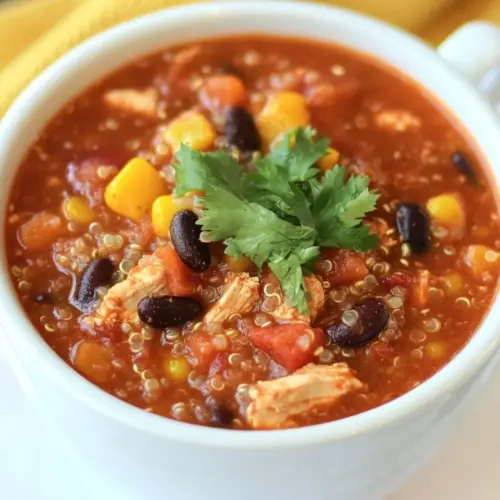
Slow Cooker Quinoa Chicken Chili
Slow Cooker Quinoa Chicken Chili is a hearty, easy weeknight dinner with creamy texture and bold southwestern spices. Tender shredded chicken, nutty quinoa, beans, and tomatoes simmer together into a comforting, protein packed bowl that reheats beautifully. Perfect for feeding a crowd or prepping meals, it's a flavorful, low fuss option you'll make again and again.
Equipment
- 6 quart slow cooker
- Mesh sieve
- Two forks
- Tongs
Ingredients
- 1 (28 ounce) can of diced tomatoes Adds a bright, acidic base and chunky tomato texture to the chili; provides liquid and savory tomato flavor that melds with spices. Helps balance richness and supports slow-cooked flavors as it breaks down slightly over long cooking times.
- 1 (14 ounce) can diced tomatoes with green chilies Contributes mild heat and tang from the green chilies while layering additional tomato body; brings complementary flavor and a subtle kick. Enhances overall chili complexity without overpowering other ingredients.
- 1 (15 ounce) can of black beans, rinsed and drained Supplies creamy texture, protein, and fiber while soaking up seasonings; rinsing removes excess sodium and starch for cleaner flavor. Adds heartiness and a pleasant contrast to the quinoa and chicken.
- 1 (15 ounce) can of chili beans, rinsed and drained Delivers a saucy, bean-forward element with chili-seasoned flavor and extra body; rinsing helps control saltiness. Works with other beans to create depth and textural variety in the chili.
- 1 (15 ounce) can of corn, drained Provides sweet bursts of corn and a pop of color while contributing light texture; draining prevents watering down the chili. Adds a pleasant contrast to beans and grains.
- 2 cups chicken broth Offers a savory liquid base and boosts overall umami while cooking quinoa and chicken; chicken broth enhances the meat flavor and enriches the stew-like consistency. Controls saltiness and helps meld spices together during the slow-cook.
- 2 large boneless skinless chicken breasts, (use 3 if they're small) Supplies tender, lean protein that shreds into the chili for substantial, meaty bites; cooking in the slow cooker infuses it with spice and broth flavors. Adjusting quantity ensures proper meat-to-grain ratio for a satisfying meal.
- 2 teaspoons garlic powder Imparts concentrated garlic flavor and aroma in a convenient, shelf-stable form; garlic powder disperses evenly throughout the chili to season every spoonful. Enhances savory notes without added moisture.
- 2 teaspoons onion powder Adds mellow onion flavor and sweetness in dry form, blending smoothly into the chili; onion powder provides consistent seasoning throughout the dish. Complements other spices and reduces prep time.
- 2 teaspoons cumin Contributes warm, earthy depth and slight citrusy notes that are essential for chili seasoning; cumin helps anchor the flavor profile and pairs well with chili powder and tomatoes. Enhances savory complexity and richness.
- 1/2 teaspoon red pepper flakes Introduces concentrated heat and a lingering spicy undertone to the chili; red pepper flakes allow for adjustable spice intensity. Adds pleasant warmth without altering texture.
- 2 -3 teaspoons chili powder Provides core chili seasoning with smoky, pungent, and slightly sweet notes; amounts can be adjusted to taste for milder or bolder heat. Blends with cumin and garlic to create the classic chili flavor.
- 1 cup of quinoa, rinsed Adds nutty flavor, protein, and a light, fluffy texture that soaks up broth and spices; rinsing removes bitter saponins for a cleaner taste. Helps thicken the chili and makes it more filling.
- toppings of your choice, (cheese, sour cream, avocados, and tortilla strips) Offers optional finishing flavors and textures like creaminess, tang, coolness, or crunch to customize each serving; toppings enhance presentation and balance heat. Allows diners to tailor richness and freshness to preference.
Instructions
- Make sure you rinse the quinoa and then add everything into a 6 quart slow cooker.: Start by rinsing the quinoa under cool running water until the water runs clear, which removes surface saponins that can taste bitter, and you should notice the water becoming clearer after perhaps 30 to 60 seconds of gentle rubbing. When you add the rinsed quinoa to the cooker with the canned tomatoes, beans, corn, chicken , spices, and 2 cups of chicken broth, you will see a mosaic of colors and aromas that hint at the final dish. As the ingredients settle, press the chicken pieces gently into the liquid so they are mostly submerged, which helps them cook evenly and shred easily later. The surface should glisten with tomato juices and broth, not be dry. You will start to smell cumin and chili notes as the pot begins to warm, and that first savory wave is rewarding. A common mistake at this stage is inadequate rinsing of the quinoa , which leads to a lingering bitterness, or adding too little liquid, which causes the quinoa to cook poorly and gnaw at a grainy texture. Make sure to level the ingredients so the cooker lid sits flush, preserving steam and consistent heat.
- Cook for 6-8 hours on low or 4-6 hours on high. If you're using frozen chicken you may have to cook it longer.: As the cooker moves into its long simmer, aromas will intensify and the broth will take on the tomato color, thickening slightly as the quinoa absorbs liquid. On low heat you will notice a gentle simmer sound and minimal bubbling near the edges, a sign of patient melding where spices bloom slowly and the chicken becomes tender without drying out. On high, the bubbling is livelier and the process accelerates, but I watch for any sign of sticking at the bottom. If you use frozen chicken , internal temperature starts much lower, so extend time as necessary so the meat reaches a safe, shreddable tenderness. A key sensory cue is when the chicken yields easily to a fork and the quinoa appears plump and translucent, not chalky. Avoid lifting the lid repeatedly, which lets heat escape and lengthens cooking time, and be mindful of overcooking where grain texture can become mushy if left too long.
- Remove chicken and shred it with two forks. Return to slow cooker.: When the internal texture of the chicken is tender and easily separates, lift the pieces out with tongs or a slotted spoon and place them on a cutting board. The meat should feel soft, yielding when touched, and you may see juices that are clear rather than pink. Using two forks, pull the chicken apart into long, moist shreds; this exposes more surface area so the shredded pieces soak up the chili broth when returned. The sound is subtle, a soft tearing as the muscle fibers give, and visually you'll notice frayed edges that blend into the pot. Watch out for shredding hot chicken without protection, as steam can burn your hands; let it rest briefly so it is easier to handle. Overly dry chicken suggests it cooked too long or at too high heat, which can be remedied by returning it to the broth to rehydrate.
- Garnish with cheese, sour cream, avocados, and tortilla strips.: After shredding, tuck the shredded chicken back into the simmering pot so it can soak up the concentrated flavors. As the meat reintegrates, you will hear a gentle settling and see the flocked pieces mingle with beans and quinoa , creating a cohesive texture. Stir gently so the chicken permeates with the broth while avoiding smashing beans or making the quinoa mushy. Let it sit on warm for another 10 to 20 minutes if possible, which lets the flavors knit and the chicken fully hydrate. A common mistake here is stirring vigorously, which breaks beans and can turn the chili pasty, so be patient and use a slow folding motion.
- Garnish with cheese, sour cream, avocados, and tortilla strips: Final presentation transforms the bowl. Before serving, prepare toppings and arrange them so diners can personalize bowls. The visual contrast is satisfying, with creamy avocados and white sour cream against the deep tomato base, and crunchy tortilla strips adding textural lift. As you spoon chili into bowls, taste and adjust if you want more salt or heat, but usually the toppings balance everything: cheese melts into warm pockets, sour cream cools spice, and avocado brings freshness. A frequent oversight is adding cold toppings too early, causing them to sink or lose texture; reserve them until plating to keep contrasts vivid and pleasing.
Notes
- Boost the aromatics by stirring in a teaspoon of smoked paprika for a smoky layer that enhances the cumin, it pairs well with the canned tomatoes without changing texture.
- Adjust protein by using three smaller chicken breasts if yours are petite, this ensures even cooking and easy shredding when you take them out.
- Control the heat by starting with two teaspoons of chili powder and a half teaspoon of red pepper flakes, then let everyone add more at the table to suit their taste.
- Make it chunkier by leaving some beans slightly less mashed when stirring, this gives pleasant bites and textural contrast against the soft quinoa.
- Turn leftovers into something new by spooning chilled chili into taco shells and topping with fresh avocado for quick tacos that retain flavor and save time.