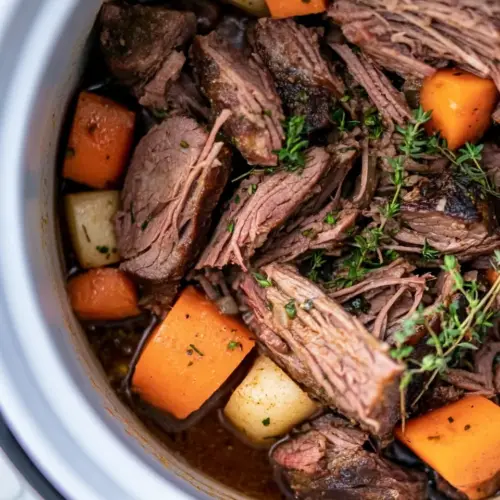
Slow Cooker Pot Roast
Slow Cooker Pot Roast delivers fork tender beef, glossy gravy, and hearty vegetables in a comforting, easy weeknight dinner. The long slow cook creates deep savory flavor and a silky texture that makes each bite feel indulgent yet familiar. Make this when you want a hands off meal that still feels special, perfect for family dinners or relaxed gatherings.
Equipment
- 7-quart slow cooker
- Large Skillet
- Medium Saucepan
- Mixing Bowls
Ingredients
- 1 cup (240 ml) beef broth Adds savory liquid and depth, helping keep the roast moist while transferring flavor into the meat during slow cooking; can be adjusted in saltiness to control overall seasoning and forms part of the braising liquid that becomes gravy.
- 1 tablespoon (16 g) tomato paste Provides concentrated tomato richness and umami, helping to thicken and deepen the sauce; dissolves into the broth to lend a subtle tang and color to the pot roast during long cooking.
- 1 tablespoon (15 ml) Worcestershire sauce Imparts a savory, slightly tangy complexity with mild anchovy and fermented notes that enhance the beefiness; balances sweetness and adds background flavor to the braising liquid.
- 1 teaspoon dried rosemary Lends piney, aromatic notes that complement beef and roast vegetables, releasing flavor slowly over the long cook; pairs well with thyme to create a classic roast herb profile.
- 1 teaspoon dried thyme leaves Contributes earthy, slightly minty flavor that brightens the meat and vegetables, releasing its aroma throughout the slow-cooking process; helps create a balanced herbaceous backbone for the dish.
- 1 pound (450 g) baby potatoes halved Supplies tender, starchy rounds that absorb flavors and provide a hearty, rustic texture; halving ensures quick, even cooking so they become fork-tender without falling apart.
- 3 large (300 g) carrots peeled and cut into 2.5 cm pieces Offers natural sweetness and body to the dish while softening into tender pieces, adding color and substance; cutting into uniform chunks ensures even cooking with the meat and potatoes.
- 1 large (225 g) yellow onion cut into 2.5 cm chunks Adds savory-sweet aromatic layers and soft texture when cooked, enhancing the overall savory profile; chunky cuts hold their shape and release moisture and flavor into the braise.
- 1 tablespoon (15 ml) olive oil Facilitates browning of the roast before slow cooking and contributes a subtle fruity aroma; helps develop fond on the pan for richer sauce when deglazed with broth and other liquids.
- 3 pounds (1.4 kg) beef chuck roast excess fat trimmed Serves as the main protein and hearty centerpiece, becoming tender and shred-able after prolonged, low-temperature cooking; trimming excess fat prevents excessive grease while maintaining enough fat for flavor and juiciness.
- 1 teaspoon salt Provides basic seasoning to amplify and balance flavors throughout the roast and vegetables; added judiciously to avoid over-salting, especially if using salted broth.
- 1/2 teaspoon ground black pepper Adds mild heat and aromatic bite that enhances the savory elements without overpowering; cracked freshness helps cut through richness and brightens the overall flavor profile.
- 3 tablespoons (24 g) cornstarch Acts as a thickening agent when combined with water to create a slurry, allowing the braising liquid to be transformed into a glossy gravy; neutral flavor preserves the sauce's taste while improving texture.
- 3 tablespoons (45 ml) water Used to create a smooth slurry with cornstarch for thickening the cooking liquid, ensuring even dispersion and preventing lumps; cold water helps the starch dissolve before adding to hot sauce.
- Fresh parsley chopped, for garnish (optional) Provides a fresh, bright finish and visual contrast when sprinkled over the finished dish; optional use adds herbal aroma and a pop of color to the pot roast presentation.
Instructions
- In a medium bowl, whisk together the beef broth, tomato paste, Worcestershire sauce, rosemary, and thyme; set aside.: The aroma when you whisk these together should be layered, with savory broth at the forefront and an undercurrent of herb and tomato. Whisk until the tomato paste fully dissolves and no streaks remain, because undissolved paste will clump during cooking and leave uneven pockets of flavor. This mixture creates the braising liquid that will penetrate the roast, so taking a moment to balance salt and acid here will pay off later. A common mistake is under-whisking, which leads to concentrated tomato bits in the gravy; to avoid that, vigorously whisk until silky and uniform, and taste so you can adjust the Worcestershire or salt if needed.
- Add the potatoes, carrots, and onion to the slow cooker and toss to combine.: You should hear a soft thump as the potatoes and carrots settle into the cooker, and the colors will look bright against the pot interior. Tossing distributes them into an even layer that will act as a supportive bed for the roast. This positioning allows the vegetables to steam and braise in the juices rather than becoming waterlogged at the bottom. Avoid overcrowding the slow cooker because crowded vegetables can steam unevenly; give them a single layer when possible.
- Season the roast all over with salt and pepper.: When you season, press the salt and black pepper into the meat so it adheres during searing. The seasoning at this stage flavors the outer crust and begins the seasoning process for the interior. Properly seasoned meat will smell bright and slightly briny, not flat. A pitfall is over-salting if your broth is already high in sodium; taste your broth earlier, and dial back the salt on the roast if needed.
- Heat the olive oil in a large skillet over medium-high heat, then sear the roast on all sides until browned.: You will see a rich brown crust develop, and the skillet will release a toasty, caramelized aroma as the Maillard reaction works its magic. Searing locks in flavor and creates fond on the pan, which later dissolves into the braising liquid adding depth. Make sure the oil is shimmering before adding the meat, and do not move the roast too soon or it will not form a proper crust. A common mistake is crowding the pan which reduces the skillet temperature, causing steaming instead of searing; sear in batches if necessary.
- Place the roast on top of the vegetables in the slow cooker.: As you lower the browned roast onto the bed of potatoes , carrots , and onion , you will notice the contrast between the browned exterior and the fresh vegetables beneath. Positioning the meat on top allows juices to drip down, flavoring the vegetables and keeping the roast elevated so it braises evenly. Avoid submerging the roast completely; a partially exposed top will brown slightly and concentrate flavor. Do not press the roast into the vegetables, which can crush their texture.
- Pour the broth mixture over the meat and vegetables.: As the liquid cascades over the roast, you should see it settle into the cooker, surrounding the vegetables and reaching about halfway up the meat. The aromatics will begin releasing into the steam, filling the kitchen with an appetizing scent. Pour slowly and scrape any residual paste from the bowl into the pot to capture all flavor. One mistake is overfilling the slow cooker; leave space for steam to circulate so the cooking remains gentle and consistent.
- Cover and cook on low for 8 hours, until the beef is fork-tender.: During this long, patient cook the beef will slowly transform, becoming tender and easy to shred. You will notice the kitchen filling with savory scent as gelatin and fat render into the liquid. Resist the urge to open the lid often, because each lift releases heat and extends cooking time. A sign it is done is when a fork slides into the meat with little resistance; undercooking will yield chewy bites, so allow the full time for proper breakdown.
- Remove the roast to a cutting board and shred into large chunks.: The roast should be cool enough to handle but still warm, and as you shred it you will feel the fibers separating easily, releasing savory juices. Shredding into large chunks preserves texture and makes for a more appealing plate than overly fine shredding. Collect the juices that escape onto the board and return them to the reserved gravy if needed. Avoid shredding into microscopic pieces which can make the dish feel mushy; large, rustic chunks keep an appetizing mouthfeel.
- Strain the cooking liquid into a medium saucepan, reserving the vegetables. Whisk the cornstarch and water together, then whisk into the liquid. Bring to a boil, then simmer until thickened into gravy.: The strained liquid should smell concentrated and savory, and straining removes solids for a glossy sauce. When you whisk the cornstarch slurry into the hot liquid it should be fully incorporated without lumps, and as it comes to a boil you will see the gravy thicken and shine. Boiling for a minute or two is necessary to cook out the raw cornstarch flavor, then reduce to simmer to achieve the right viscosity. A common error is adding cornstarch directly to hot liquid, which causes lumps; always mix cornstarch with cold water first.
- Arrange the beef and vegetables on a serving platter. Spoon some gravy over top and serve with the remaining gravy on the side.: The final visual cue is a glossy coat of gravy and warm, vibrant vegetables around tender chunks of beef . Spoon gravy so it pools under the meat and vegetables, enhancing each bite with moisture and savory flavor. Garnish with chopped parsley if using, and serve immediately so textures remain at their best. Avoid letting the dish sit too long before serving, which can cool the gravy and dull the flavors.
Notes
- Reduce sodium caution — If you prefer lower salt levels, choose reduced sodium beef broth and taste the braising liquid before salting the roast. Because broth can vary widely, starting with less salt and adjusting after the gravy is made lets you control the final seasoning more precisely.
- Choose the right cut — A well marbled beef chuck roast yields the best tenderness and flavor for slow cooking; leaner cuts may dry out or lack richness, so I recommend chuck for consistent results.
- Vegetable sizing — Cut the carrots and potatoes into large chunks to prevent them from turning mushy during the eight hour cook, preserving texture while still absorbing braise flavors.
- Searing technique — Heat the olive oil until shimmering and sear the roast without moving it too soon; a properly formed crust adds depth to the gravy later, so patience during searing pays off.
- Gravy control — Whisk the cornstarch with cold water before adding to the hot liquid, and bring to a boil so the cornstarch cooks fully; simmer until you reach the desired thickness and stop early if you plan to thicken more later.
- Make ahead — The roast stores well for three to four days refrigerated, and flavors often deepen overnight. Reheat gently to preserve texture, and add a splash of broth if the gravy tightens too much when chilled.