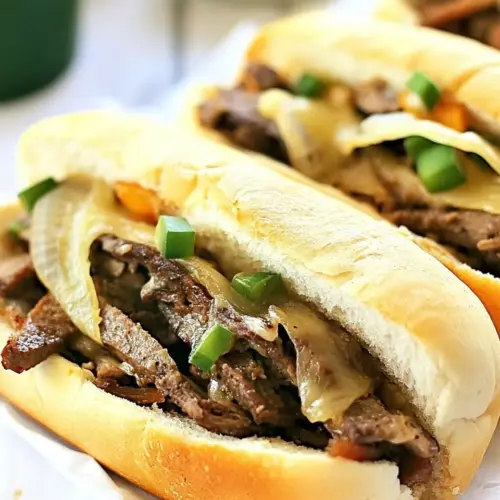
Slow Cooker Philly Cheesesteaks
Slow Cooker Philly Cheesesteaks delivers tender, savory round steak braised in beef broth until meltingly soft, paired with sautéed onion and bell pepper, finished with gooey cheese on toasted rolls, making an easy weeknight dinner that tastes indulgent. The slow cooking deepens flavor while keeping hands free, perfect for feeding a hungry crowd. Make it for a comforting meal everyone will love.
Equipment
- Slow Cooker
- Oven
- Tongs
Ingredients
- 1.5 lbs round steak 1.5 to 2 lbs - thinly sliced (the more thinly they are sliced, the less cooking time is required) Slice thinly and provide the primary beefy base for the sandwiches; cooks until tender in the slow cooker and soaks up the broth and seasonings. Ensure slices are as thin as possible to reduce cooking time and yield more tender meat. Can be seared briefly before slow cooking to develop extra brown flavor.
- 1/2 tsp pepper Season lightly to add sharp heat and balance the savory flavors; distributes evenly over the meat for a subtle peppery bite. Use freshly ground for brighter flavor and adjust to taste before serving.
- 1/2 tsp garlic powder Season gently to introduce warm, aromatic garlic notes that complement the beef and vegetables; mixes into the broth for even flavor infusion. Sprinkle evenly for consistent taste without overpowering the other spices.
- 1 onion sliced Slice into rings or strips to contribute sweet, caramelized depth and body to the filling; softens in the slow cooker and melds with the meat and broth. Caramelization before adding can enhance sweetness and overall complexity.
- 1 bell pepper sliced Slice into strips to add bright, slightly sweet, and crisp vegetable texture; softens during cooking and pairs well with onions and beef. Choose any color for sweetness variance and slice uniformly for even cooking.
- 32 oz low-sodium beef broth Pour to supply a savory cooking liquid that tenderizes the meat and creates a flavorful sauce; low-sodium helps control overall saltiness in the finished filling. Use enough to nearly cover the meat and vegetables for thorough braising.
- 6 French rolls Split and hold the sandwiches while providing a soft, sturdy vessel for the hot filling; toasts well if desired for added texture. Choose rolls large enough to contain the meat and melted cheese without falling apart.
- 12 slices Provolone American, or other cheese Layer on top to introduce creamy, melty richness that binds the filling and adds a signature cheesesteak finish; use slices to melt directly over hot meat for best results. Mix Provolone and American for a balance of tang and meltability.
Instructions
- Rub the steak with pepper and garlic powder. Place in the slow cooker.: The air will be perfumed with a raw, peppery scent that quickly mellows as heat reaches the meat, creating an initial savory coating that helps every piece develop flavor while braising. Rubbing spices into the round steak ensures the seasoning is distributed rather than sitting on the surface, which allows the aromatics to infuse during the long cook. You should feel the slight grain of the meat beneath your fingers as you press the spices in, and visually the pieces will take on an even, lightly speckled appearance. If you skip rubbing and instead drop spices in loose, the seasoning can clump and leave pockets of over seasoned or bland meat. A common mistake is using too much pepper here, which can dominate the broth; measure the pepper and garlic powder so the beef's natural flavor remains center stage.
- Add onion, bell pepper and beef broth.: As you add the sliced onion and sliced bell pepper , their raw edges and crisp textures contrast with the meat, and once submerged in the warm beef broth they begin to soften and add sweetness to the cooking liquid. Pouring the warm or room temperature broth over the meat creates an immediate surface gloss that helps transmit heat evenly; you'll notice the broth taking on a faint red tint as juices begin to leach from the round steak , which is a good sign that flavors are marrying. This step matters because the vegetables become the aromatic backbone of the filling, balancing beef richness with gentle sweetness. Avoid crowding the cooker with large, uneven vegetable pieces, because that leads to some bits becoming mushy while others remain underdone.
- Stir to mix.: When you stir the contents gently, you'll hear a soft slosh as the broth circulates and the slices of round steak settle into the liquid, ensuring spices, onion , and bell pepper are relatively evenly distributed. The surface will show a thin film of seasoning and the colors will shift to a unified, appetizing hue. This mixing helps heat reach every piece more uniformly, so no area becomes overcooked while another stays cold. A typical error is stirring too vigorously, which can tear delicate meat slices and create a less pleasing texture; use slow, deliberate motions instead.
- Cook on low for 5-7 hours or until meat is tender.: Over several hours the cooker will slowly coax collagen from the round steak , turning the texture from chewy to tender and producing a savory broth that smells deeply meaty. You'll notice a change in aroma from bright and raw to rich and rounded, and the meat will begin to fall into ribbon like strands when prodded. This gentle, extended cook is essential for transforming economical cuts into luxurious sandwich filling, because slow heat breaks down connective tissue without drying the meat. The main mistake here is impatience; lifting the lid frequently releases heat and prolongs cooking, so resist the urge to check too often. If the meat still feels firm at the low end of the time range, let it continue until it softly separates under a fork.
- Preheat oven to 350 F.: Heating the oven to 350 F creates the optimal environment for toasting the rolls and melting the cheese without burning the bread. When the oven reaches temperature you'll feel a warm, dry wave as you open it; that dry heat helps crisp the exterior of the rolls quickly while keeping the crumb moist. This temperature is a sweet spot because it browns the rolls without collapsing them. A common error is setting the oven too high which can crisp the crust before the interior warms and the cheese melts, leaving a cold filling under a hard shell.
- Toast open rolls for several minutes until slightly crusty.: As the rolls toast, the scent of warm bread becomes prominent and the exterior evolves from soft to slightly crackly, providing a tactile contrast to the tender filling. Toasting also helps form a barrier so juices do not saturate the crumb and become soggy. Press lightly with a spatula after a few minutes; the top should give a little but still spring back. Avoid skipping this step, because untoasted rolls will absorb juices quickly and lose structure, resulting in a limp sandwich.
- Lay a piece of cheese on both sides of the roll.: Placing a slice of cheese on each open face creates an envelope of melting richness that embraces the filling and binds the sandwich components. The cheese will soften and start to sag within seconds under heat, and when the sandwich is returned to the oven it will bubble and spread into a glossy, melty layer. This technique ensures each bite has creamy continuity rather than pockets of dry bread. One mistake is using a cheese that does not melt well, which prevents the cohesive, gooey texture that makes the sandwich so satisfying.
- Use tongs to remove meat, onions and bell pepper from slow cooker (letting juices drip off) and pile on top of rolls.: When you lift the filling with tongs, the meat should come away in tender ribbons and the vegetables will be limp and fragrant, glossy from the braising liquid. Letting excess juices drip back into the cooker prevents the rolls from becoming sodden, while the retained moisture inside the meat keeps it succulent. Spread the filling so each roll receives a generous mound, and notice the steam rising and the savory aroma intensifying. A common pitfall is scooping too much liquid along with the solids, which leads to a soggy sandwich; allow a moment to let the juices return to the cooker before plating.
- Return to the oven to melt cheese.: Back in the oven the cheese will quickly transform into a molten blanket, often bubbling slightly at the edges and developing a subtle browned sheen if left a touch longer. This final heat melds the flavors, and the sight of the cheese stretching as you lift the sandwich is deeply satisfying. Timing matters because leaving it in too long can over toast the rolls, while too short a time will leave the cheese just softened but not fully melted. Keep a close eye during this step so you achieve the ideal gooey layer.
- Serve hot!: When you serve, the sandwich should be steaming, with warm, melty cheese and tender ribbons of round steak . The first bite should combine the crisped roll, creamy cheese, and savory meat in a balanced mouthful. Serve immediately so textures remain distinct and the contrast between crust and filling is at its peak. A frequent mistake is allowing sandwiches to sit too long which causes the roll to absorb moisture and the cheese to firm up, diminishing the eat in experience.
Notes
- Thin slicing matters, slice the round steak against the grain as thinly as possible to ensure tenderness and easy shredding after slow cooking.
- Broth choice, use low sodium beef broth so you can adjust salt at the end rather than having an overly seasoned final dish.
- Cheese flexibility, Provolone or American melt beautifully, but any good melting cheese will work; choose one you enjoy and that melts uniformly.
- Vegetable consistency, slice the onion and bell pepper evenly so they soften at the same rate and provide consistent texture across sandwiches.
- Keep juices controlled, let the filling drain briefly on a slotted spoon or tongs to avoid pouring too much liquid onto the rolls.
- Timing buffer, the recipe is forgiving so if your schedule changes extend low cooking time rather than increasing heat for better texture.