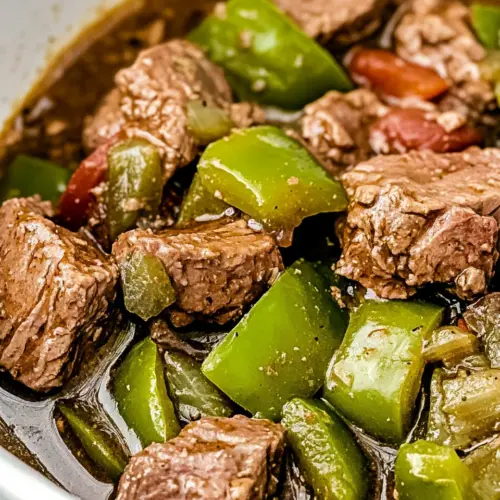
Slow Cooker Pepper Steak
Slow Cooker Pepper Steak is a savory, tender one pot favorite that combines succulent beef, sweet bell peppers, and a glossy teriyaki infused sauce. This easy weeknight dinner fills your home with warming aromas, yields melt in your mouth texture, and pairs beautifully with rice or mashed potatoes. Make it for cozy family meals or when you want a low fuss, high reward main dish.
Equipment
- 6-Quart Programmable Slow Cooker
Ingredients
- 1 1/2 pound beef tenderloin (cut in 1 inch pieces) Cut into 1 inch pieces to provide tender, evenly cooked beef; releases rich beefy flavor and juices that form the base of the sauce and supply protein and texture to the dish.
- 1 medium onion (roughly chopped) Roughly chop to add mild sweetness and savory depth; softens during slow cooking and helps build the aromatic foundation of the stew.
- 4 cloves garlic (minced) Mince finely to infuse the dish with pungent, aromatic garlic flavor; disperses throughout the sauce and enhances overall savory complexity.
- 2 bell peppers (any color, roughly chopped) Roughly chop to contribute color, crisp-tender texture, and a sweet, slightly vegetal flavor; softens but retains some structure during slow cooking, balancing the meat.
- 1 3/4 cups beef broth (low sodium) Provide a savory liquid base that deglazes and simmers with the meat, concentrating flavor while keeping the beef moist; low sodium helps control overall saltiness.
- 1/4 cup teriyaki sauce Add a savory-sweet, umami-rich glaze that enhances depth and caramelized notes; combines with the broth to create a balanced sauce for the peppers and beef.
- 1 teaspoon hot sauce (I used Sriracha sauce) Introduce heat and a touch of vinegar-like tang to brighten flavors and add a spicy kick; small amount allows adjustable heat without overwhelming the dish.
- 1/2 teaspoon pepper (or to taste) Season to taste and add a mild spicy note that complements the hot sauce; helps highlight other flavors when adjusted for preference.
- 1 tablespoon cornstarch Thicken the cooking liquid to a glossy sauce; dissolves into cold liquid before adding and provides body and improved cling to beef and vegetables.
Instructions
- Trim the meat if needed and cut into small pieces. Place the meat in the slow cooker. Then throw in the rest of the ingredients and roughly stir.: The aroma of fresh beef tenderloin is immediate, a clean, meaty scent that promises richness. Cutting into uniform, roughly one inch pieces ensures even cooking and consistent texture, preventing some bits from becoming dry while others are underdone. You should feel slight resistance when slicing then notice fat and muscle grain in the pieces, which will soften during the long cook. A common mistake is cutting pieces that are too big, which can lengthen cook time and leave tougher centers. Take a moment to pat the pieces dry; surface moisture can dilute the browning effect if you choose to sear first, and removing excess moisture helps the sauce cling better later.
- Cover and cook on low for 5 to 6 hours or on high for 3.5 hours.: As you add the chopped onion , minced garlic , chopped bell peppers , beef broth , teriyaki sauce , hot sauce , and pepper , inhale the layered scents as they mingle. The sweet soy notes from the teriyaki sauce combine with the savory broth and aromatics, creating an anticipatory bouquet. Rough stirring helps distribute ingredients evenly so every spoonful will have a balanced mix. One reason this step matters is consistency; uneven distribution can produce pockets that over concentrate salt or sweetness. Avoid over stirring which can break down vegetables too soon, but make sure there are no dry spots of meat or too much liquid accumulating in one area.
- To thicken the sauce, take a ladle of the sauce and whisk it together with the cornstarch in a small sauce pan. Cook on low until the sauce thickens, then throw it back in the slow cooker and stir so that it all combines well.: During the long, gentle simmer the kitchen fills with slow roasted meat notes and the sauce gradually thickens and deepens in color. Low heat is ideal for melting connective tissue, producing an extra tender texture, while the high setting shortens time at the cost of slightly firmer meat. Listen for the faint, steady hum of the cooker rather than anything loud; the absence of sizzling is normal since this is a moist environment. A common mistake is lifting the lid frequently to check; each peek releases heat and lengthens cooking time. If you must check, do so quickly, and avoid stirring repeatedly which can prevent the meat from settling into the sauce and developing flavor.
- Serve over rice, noodles or mashed potatoes. Garnish with some chopped onions or parsley and some sesame seeds.: When you remove a ladle of hot liquid, smell the concentrated sauce; it should be savory and noticeably thicker than broth. Mixing the hot sauce with cornstarch creates a smooth slurry that prevents lumps. Whisking over low heat allows the mixture to become translucent and slightly glossy, indicating the starch has gelatinized and will thicken properly. The reason for doing this in a separate pan is control, you can watch the change in texture and avoid clumping. A frequent error is adding cold cornstarch to hot liquid which can yield uncooked pockets of starch; always combine them into a slurry first and gently heat until clear.
- Cook on low until the sauce thickens, then throw it back in the slow cooker and stir so that it all combines well: As the slurry heats, you will notice the sauce go from watery to syrupy, with a sheen that catches light. Pouring it back into the cooker coats the beef and vegetables, helping every bite pick up the sauce. Stir gently so you distribute the thickened sauce without shredding the meat. This step affects mouthfeel directly; a properly thickened sauce clings and carries flavor, while an under thickened sauce feels thin. If the sauce becomes too thick, thin with a splash of beef broth . Avoid over stirring which can break down tender pieces of beef .
- Serve over rice, noodles or mashed potatoes: The final sensory payoff is the presentation, the glossy sauce pooling around tender chunks of beef and softened bell peppers . Choose a neutral base like steamed rice to let the flavors stand out, or opt for buttery mashed potatoes for extra comfort. Garnish suggestions mentioned in the original recipe such as chopped onions, parsley, or sesame seeds add contrasting textures and a bright pop. A common mistake is serving too early before the sauce has had a chance to settle, which can make the dish seem watery; let it rest five to ten minutes so flavors meld and the sauce thickens slightly before plating.
Notes
- Beef Swap: If you prefer a more economical cut, try flank steak or sirloin, but adjust cook time as needed because leaner or tougher cuts may require slight changes to reach tender consistency.
- Control the salt: Choose low sodium beef broth and check the teriyaki sauce label, especially if you are watching sodium intake, then taste and adjust toward the end.
- Vegetable variations: Add mushrooms, snap peas, or broccoli during the last hour of cooking to keep some texture and varied flavors without overwhelming the dish.
- Make it Gluten Free: Use a certified gluten free teriyaki sauce or a homemade blend of tamari and a touch of sweetener to keep this accessible to gluten sensitive eaters.
- Boost the heat: If you want more spice, increase the hot sauce or add a pinch of red pepper flakes, tasting as you go so the heat supports, rather than masks, the other flavors.