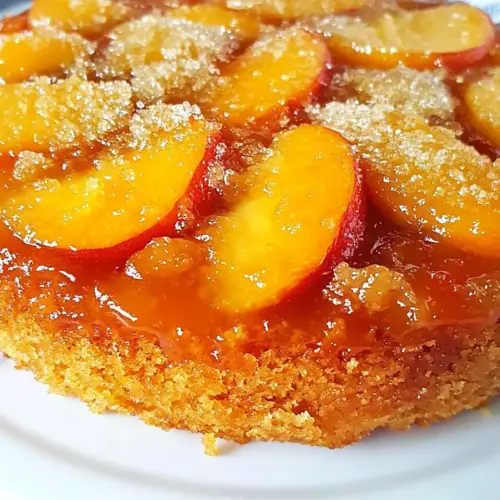
Slow Cooker Peach Upside Down Cake
Slow Cooker Peach Upside Down Cake is an easy, nostalgic dessert that yields a tender, moist crumb topped with glossy caramelized peaches. It is creamy at the edges and sticky on top, ideal for easy weeknight dessert or casual gatherings. Simple pantry staples create a crowd pleasing, comforting treat you will reach for all summer, so make it for its warm flavor and effortless charm.
Equipment
- Slow Cooker
- Mixing Bowl
- Whisk
- Spatula
- Parchment Paper
Ingredients
- 2 15 ounce cans sliced peaches, drained well - use more if the slow cooker is larger Drain thoroughly and layer at the bottom of the slow cooker to create a sweet, tender fruit base that caramelizes beneath the cake as it cooks. Pat dry with paper towels if necessary to reduce excess liquid and ensure a glossy, jammy topping.
- 6 tablespoons unsalted butter, melted Melt completely and pour over the fruit to help dissolve the brown sugar and create a rich, buttery caramel glaze during slow cooking. Use warm melted butter to encourage even distribution and a silky finish.
- 1 cup packed dark brown sugar Pack firmly into the measuring cup and sprinkle over the melted butter to form the caramel layer; its molasses content deepens flavor and encourages a chewy, sticky topping. Adjust quantity slightly for larger slow cookers to maintain the balance between fruit and caramel.
- 1 teaspoon cinnamon Sprinkle evenly over the fruit and sugar layer to add warm, aromatic spice that complements the peaches and enhances overall depth. Pair with nutmeg for a balanced fall-like spice profile without overpowering the fruit.
- 1/2 teaspoon nutmeg Grate or measure carefully and mix with the cinnamon to introduce a warm, slightly sweet nutty note that brightens peach flavor. Use sparingly to avoid dominating the delicate fruit and caramel components.
- 1 1/2 sticks butter, softened Soften at room temperature and cream with sugars to create a light, tender cake crumb that binds the batter and adds richness. Ensure even creaminess to trap air during mixing, contributing to a moist, fine-textured cake.
- 1/2 cup white sugar Measure accurately and cream with the softened butter to help leaven and tenderize the cake while adding subtle sweetness. Dissolve completely into the fat to prevent graininess and promote an even crumb.
- 1/2 cup brown sugar Add to the butter and sugar mixture to boost caramel flavor in the cake batter and contribute to moisture and chewiness. Combine well with white sugar to balance sweetness and maintain tender structure.
- 2 large eggs Beat in at room temperature to provide structure and lift; eggs emulsify fats and liquids for a cohesive, airy batter. Incorporate one at a time to ensure proper mixing and even texture throughout the cake.
- 1/2 teaspoon pure almond extract Measure precisely and stir into the batter for a delicate, nutty background note that enhances the overall flavor without overwhelming the peaches. Use pure extract for a clean, pronounced almond aroma.
- 2 cups all-purpose flour Sift or spoon into the mixing bowl to form the main structure of the cake; flour provides the starches that set during baking and create crumb. Handle gently once combined to avoid over-developing gluten and producing a tough cake.
- 2 teaspoons baking powder Measure and combine evenly with the dry ingredients to provide chemical leavening that helps the cake rise and achieve a light, tender texture in the slow cooker environment. Ensure freshness for reliable rising action.
- 1/2 teaspoon salt Weigh or level accurately and mix with the flour to balance flavors and control gluten formation, preventing the cake from becoming overly dense or salty. Salt also enhances the sweetness and depth of the final dessert.
- 1 cup whole milk Warm to room temperature if cold and whisk into the batter to provide moisture, fat, and acidity balance that contributes to a tender, cohesive crumb. Whole milk adds richness and helps dissolve dry ingredients for a smooth batter.
Instructions
- Place the peach slices between several layers of paper towels and pat dry them.: When you pat the peaches dry, you will notice the fruit release a faint syrupy aroma and the towels darken as moisture is absorbed; this step prevents excess liquid from diluting the brown sugar layer, ensuring the caramel sets correctly rather than becoming thin. If you skip drying, the topping can be soggy and fail to form that glossy surface, which is a common pitfall. Use gentle pressure so the slices keep their shape and lay them out in a single layer as you work.
- In a small bowl combine 1 cup of brown sugar with cinnamon and nutmeg, stir.: Mixing the brown sugar with the cinnamon and nutmeg releases a warm spice scent, and you will see the sugar darken slightly as the spices disperse. This combination creates the flavor base for the caramel, and stirring until uniform prevents pockets of spice. A mistake here is under mixing, which can leave concentrated spots of spice in the topping, so scrape the bowl sides and ensure even distribution.
- Fold the parchment paper in 3-4 layers, making a sling that is 3-4 inches wide. Make two if the slow cooker is oval, not round.: Folding the parchment creates a sturdy sling that will let you lift the cake intact, and you will feel the paper become more rigid and easy to maneuver. Making two slings for an oval slow cooker helps center the cake and prevents tearing when lifting. If the sling is too short, the cake will be hard to remove, so test fit it before layering the topping.
- Spray the ceramic insert of the slow cooker with cooking spray. Arrange the prepared parchment paper sling, placing it criss-cross on the bottom of a 6-quart oval or round slow cooker, make sure it's long enough to later lift the cake.: Spraying the ceramic adds a nonstick layer under the parchment, and positioning the criss cross sling ensures balanced lifting from either side. You might hear a faint sizzle when the melted butter hits the warm insert if it is slightly warm from prior use; this is normal. The common error is not allowing the sling to extend far enough over the rim, which makes turning or lifting the cake awkward later.
- Next, add melted butter to the bottom. Sprinkle the brown sugar mixture on top.: Pouring the warm, melted butter over the parchment softens the brown sugar and releases a rich, buttery aroma as the sugar begins to dissolve; the mixture should look slick and evenly coated. This is the element that will caramelize under the peaches , so avoid pouring too thick a pool in one spot or it can create uneven caramel. Spread it gently with a spoon to an even layer for consistent caramelization.
- Arrange peaches in a tight layer over brown sugar.: As you place the prepared peaches , listen for the soft sound of fruit settling and notice how each slice nestles into the sugar, creating a mosaic of color. Tight packing prevents gaps where sugar could overcook, and it ensures an attractive top when inverted. A frequent mistake is overlapping too much, which can create uneven thickness and longer cooking in denser patches.
- In a large bowl, beat softened butter with white and brown sugar until light and fluffy, about 3 minutes. Beat in eggs, 1 at a time, beating well after each addition. Beat in almond extract.: Beating the softened butter with both sugars incorporates air and produces a pale, fluffy mixture; you will see the texture lighten and a slightly whipped aroma develop. Adding the eggs one at a time ensures emulsification, which helps the batter hold together, and the almond extract brings a fragrant lift. Over beating after the eggs can introduce too much air, causing doming or collapse, so stop once the mixture is smooth.
- In a different bowl, whisk together flour, baking powder, and salt. Working in batches, stir in the flour mixture into the butter mixture alternating with milk, beginning and ending with the flour mixture. Mix batter until well combined, scraping the side and bottom of the bowl.: Whisking the dry ingredients distributes the baking powder and salt so the cake rises evenly, and alternating with milk keeps the batter smooth without overworking the gluten. The batter should become glossy and slightly thick; scraping the bowl prevents streaks of flour that would create gummy pockets. A common issue is over mixing, which tightens the gluten and results in a tougher crumb.
- Spoon over the peaches and spread evenly.: As you spoon the batter across the fruit, you will hear a soft plopping sound and see the batter settle into crevices, creating an even top that bakes uniformly. Use an offset spatula if you have one to smooth the surface gently. If you leave thick ridges, those areas will take longer to cook and can create uneven texture; aim for a consistent thickness across the surface.
- Add a clean kitchen towel on top of the slow cooker and cover with the lid, the towel will absorb any condensation during baking.: Tenting a towel over the lid captures steam that would otherwise drip onto the cake, preserving the caramelized top and preventing sogginess. The towel will become slightly warm and damp as it works, which is normal; just ensure it does not touch a hot burner. A mistake here is using a towel that is too thin, which will not absorb enough moisture, or one that is treated with scent or chemicals.
- Cook on High for 120 - 150 minutes or until a wooden skewer inserted into the center of the cake comes out clean.: During cooking you will notice a gentle, steady bubbling and a fragrant caramel scent as the sugars and butter meld. The timing allows the interior to set while the top remains glossy; use a skewer to test doneness, aiming for it to come out clean with only a few moist crumbs. Common errors are opening the lid too often, which lengthens cook time and cools the slow cooker, or under testing and removing the cake too early, leaving a raw center.
- Once done, using oven mitts, remove the ceramic liner from the slow cooker and let the cake cool for 20 minutes. Run a knife around the edges of the cake and carefully lift with the parchment paper sling, or turn out onto a serving platter.: Letting the cake rest allows the caramel to firm slightly so the peach layer stays intact when inverted; you will notice the aroma deepen and the cake shrink a little from the sides. Running a knife around the edge releases any stuck areas. Lift slowly using the sling, and if you choose to invert, do so confidently in one smooth motion to avoid tearing. A common mistake is flipping while too hot, which can cause the topping to slide or break.
- If desired top with simple powdered sugar and milk glaze.: A light drizzle or dusting brightens the plate and adds a hint of creamy sweetness, and you will see the glaze soak slightly into the warm crumb for a gentle sheen. Mix powdered sugar with just enough milk to reach a drizzle consistency so it does not run off. Overdoing the glaze can mask the caramel and fruit flavors, so apply sparingly for balance.
- Serve warm with vanilla ice cream.: Serving the cake warm enhances the contrast between the sticky caramel top and a cold scoop of ice cream, producing a pleasing temperature interplay and a creamy mouthfeel as the ice cream slowly melts into the cake. Plate a moderate slice so guests can enjoy both textures. A mistake to avoid is reheating at too high a temperature which can toughen the crumb; a short gentle warm up is best if not serving immediately.
Notes
- Swap fruit for seasonal options Instead of peaches you can use similarly textured fruits that caramelize well, keeping the assembly identical; be mindful of moisture content since juicier fruit may require slightly longer cooking.
- Adjust sweetness level Reduce the amount of brown sugar in the topping or batter to suit your palate, but remember the caramel texture depends on that sugar so cut gradually and test results.
- Make it ahead Bake the cake earlier in the day and rewarm gently before serving, which makes hosting easier while preserving the texture when reheated at low temperature for a short time.
- Presentation variations Serve slices with a dusting of powdered sugar or a small spoonful of glaze for a refined look, or plate with a scoop of ice cream for a cozy finish.
- Slow cooker size considerations Use a 6 quart oval or round insert as recommended; if your cooker is larger, increase the fruit amount to maintain visual density and avoid spreading the topping too thin.