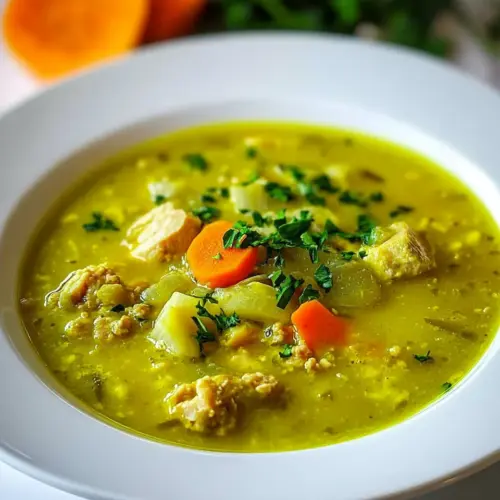
Slow Cooker Mulligatawny Soup
Slow Cooker Mulligatawny Soup is a creamy, spiced, and easy weeknight dinner that combines tender chicken, red lentils, and coconut milk for a cozy bowl. The warm spices and brown jasmine rice create a comforting texture that reheats beautifully. Make it when you want a filling, flavorful meal that is simple to assemble and perfect for sharing.
Equipment
- Slow Cooker
Ingredients
- 2 boneless and skinless chicken breasts cut into bite-sized pieces Cooked into bite-sized pieces to provide lean protein and hearty texture; absorbs the curry flavors during slow cooking and tenderizes over several hours. Adds substance and makes the soup a complete meal when combined with lentils and rice.
- 1/2 sweet onion diced Sweated until translucent to build a sweet aromatic base and deepen the overall flavor; adds subtle natural sweetness and savory balance to the spice-forward broth. Works with garlic and celery to form the classic mirepoix-like foundation for the soup.
- 3 garlic cloves minced Sautéed briefly or added raw to release pungent aromatic oils that brighten and deepen the savory profile; contributes sharpness that complements the warm spices. Provides essential flavor compounds that meld into the broth during slow cooking.
- 2 celery stalks sliced Sliced to contribute gentle vegetal body and slight crunch when not overcooked; imparts a mild, herbaceous backbone and pairs well with carrots and onion. Enhances mouthfeel and adds subtle savory notes that balance the sweeter elements.
- 2 carrots sliced Sliced to lend natural sweetness and soften into tender pieces that add texture and color; complements the apple and onion for a layered sweet-savory profile. Carrots also provide natural thickness and earthy depth to the finished soup.
- 1 cup red lentils Rinsed and cooked to thicken the soup and add plant-based protein; breaks down slightly to create a creamy, hearty consistency while absorbing curry flavors. Works with coconut milk to produce a rich, velvety body and nutritional boost.
- 1 green apple peeled, cored and diced Peeled, cored, and diced to contribute bright tartness and subtle sweetness that cuts through richness; adds a crisp fruity contrast that enhances the curry spices. Balances savory and creamy elements for a more complex flavor profile.
- 1 1/2 tablespoons garam masala Sprinkled in to deliver warm, fragrant curry notes and complex spice layers; acts as the primary spice blend defining the mulligatawny character. Binds other spices together and elevates both the meat and lentil components with aromatic depth.
- 1 teaspoon ground coriander Ground to add citrusy, slightly floral, and earthy undertones that complement the garam masala; enhances the curry profile with light, warming spice. Supports digestion and layers subtle complexity into the soup’s spice mix.
- 1 teaspoon turmeric Added to impart a warm, slightly bitter earthiness and vivid golden color; pairs with coriander and garam masala to create classic curry aroma. Offers anti-inflammatory notes and helps harmonize the other spices in the broth.
- 1/2 teaspoon cayenne pepper Measured sparingly to introduce heat and a sharp chili kick that can be adjusted for spice tolerance; complements the warm spices without overpowering the dish. Adds warmth and complexity, balancing sweetness from apple and coconut milk.
- 1 bay leaf Tucked into the pot to infuse subtle herbal and slightly floral notes during long cooking; contributes depth and a background savory aroma. Easily removable before serving while leaving distinctive bay-infused complexity in the broth.
- 5 cups chicken broth Poured as the liquid base to dissolve spices, poach the chicken, and cook the lentils; supplies savory backbone and seasoning to the soup. Determines overall saltiness and body, and melds the aromatic and protein elements together.
- 1 cup lite coconut milk Stirred in to lend creamy, tropical richness and to mellow spices with a smooth finish; adds a light coconut fragrance and velvety mouthfeel. Helps create a luscious texture when combined with cooked lentils and rice.
- 1 cup brown jasmine rice cooked Folded in after cooking to provide chewy grain texture and additional heartiness; soaks up the broth and rounds out the soup, making it more filling. Offers a nutty note and balances the silky lentils and coconut milk.
Instructions
- Place everything in the slow cooker except the rice. Cook on low for 5 to 6 hours, or low for 2 to 3 hours.: When everything goes into the cooker, the first sensory cue you should notice is an immediate mingling of aromas as the spices meet the liquids and vegetables. The broth will take on a faint yellow gold from the turmeric and a warm perfume from the garam masala . The chicken and lentils begin to release their proteins and starches, which will gently thicken the liquid over time. Why this matters is simple, the slow steady heat extracts flavor without reducing the moisture too quickly, preserving a silky mouthfeel. A common mistake is overfilling the pot which can prevent even cooking, so leave a little headspace. Also, if your vegetables are much larger than in the ingredient list they may not soften evenly, so aim for uniform pieces. Halfway through cooking you might want to gently stir once to ensure nothing clings to the sides, though this is optional for most slow cookers.
- Remove bay leaf, add jasmine rice and serve!: Over the long cooking time the kitchen will be filled with a comforting, evolving perfume as the heat coaxes out sugars from the carrots and onion , and the spices bloom fully. You will notice gentle bubbling or a quiet steam at the lid, and the broth will deepen in color and body. The slow pace allows collagen and proteins in the chicken to relax, yielding tender, pull apart pieces, while the red lentils soften and thicken the broth. This technique matters because rapid, high heat can make the chicken tough or the lentils break down too aggressively into mush. A typical mistake is confusing low and high settings, so double check your cooker; if using a different appliance the timing will vary, and you may need to check for doneness earlier. If the soup seems thin at the end of cooking, let it sit with the lid off for a short while to concentrate flavors slightly, but avoid extended uncovered simmering which can dry out the ingredients.
- Remove bay leaf, add jasmine rice and serve: After the slow cooking, pull out the single bay leaf so no tough leaf fragments remain in the bowl, that little removal preserves texture and comfort while keeping the aromatic layer intact. When you add the cooked brown jasmine rice , the rice will absorb some broth, lending chew and body to the soup and making each spoonful more substantial. Sensory cues here include a fragrant steamed rice scent blending with the spiced broth, and the soup will often steam gently when ladled. The reason to add cooked rice at the end is to keep the grains separate and prevent them from dissolving into the liquid during prolonged heat, which would create an overly thick porridge. A common error is adding uncooked rice directly into the slow cooker, which can absorb too much liquid and cook unevenly. After stirring the rice in, taste for seasoning balance, adjust if needed, and serve warm so the textures remain distinct and enjoyable.
Notes
- Boost the creaminess: Stir in a little extra full fat coconut milk at the end for a richer mouthfeel, fold gently and warm through without boiling.
- Make it heartier: Add extra cooked brown jasmine rice or a small handful more red lentils to thicken the body, but watch liquid balance to avoid over thickening.
- Turn down the heat: Reduce the cayenne pepper by half if you prefer a milder profile and let diners add heat later if desired.
- Brighten the finish: Add a squeeze of lemon or a light drizzle of extra coconut milk just before serving to lift flavors and add a final glossy sheen.
- Adjust spice intensity: Toast the garam masala briefly in a dry pan before adding for a deeper, nuttier aroma, being careful not to burn it.
- Make it a make ahead: Refrigerate leftovers and reheat gently on the stove, adding a splash of water or broth to loosen the texture if needed.