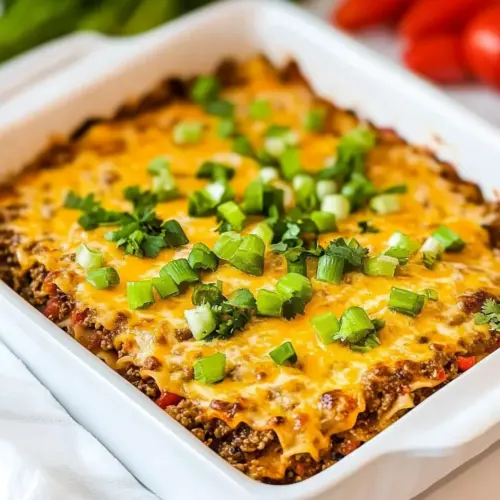
Slow Cooker Mexican Lasagna Casserole
Slow Cooker Mexican Lasagna Casserole is a creamy, cheesy, and easy weeknight dinner that layers seasoned ground beef, tangy tomato elements, and a custardy cottage cheese layer for a satisfying, crowd pleasing bake. It melts into tender, sliceable portions with a bubbling, golden top, making it perfect for family meals and casual entertaining. Make it for the comfort and make it again for how effortless it is.
Equipment
- Large heavy frying pan
- Slow Cooker
- Kitchen shears
- Turner
Ingredients
- 1 T olive oil Heat olive oil in a skillet to sauté aromatics and brown meat evenly; it prevents sticking and adds a subtle fruity flavor. Use a tablespoon to lightly coat the pan so other ingredients cook without burning. Olive oil also helps carry spices through the dish and contributes to a tender mouthfeel.
- 2 lb s. lean ground beef Brown lean ground beef to develop deep savory flavor and create a hearty protein base for the casserole. Cook until no longer pink, breaking up clumps so it integrates evenly with seasonings. Lean beef keeps the casserole a bit lighter while still providing satisfying texture and richness.
- 1 onion, chopped small Sauté chopped onion small to build the savory foundation and release natural sweetness that balances spices. Add to the hot oil early so it softens and caramelizes slightly for depth of flavor. Small dice ensures even distribution throughout each casserole layer.
- 1 T Kalyn’s Taco Seasoning (or use your favorite purchased taco seasoning) Season with Kalyn’s Taco Seasoning (or a favorite purchased taco seasoning) to infuse the meat with bold, warm Mexican-inspired spices. Sprinkle in and cook briefly with the beef to bloom the flavors and create a cohesive profile. Pre-mixed seasoning saves time and guarantees balanced chile, cumin, and garlic notes.
- 1 cup Pace Picante Sauce (see notes) Stir in Pace Picante Sauce to add tangy tomato flavor and mild heat that complements the seasoned beef. Pour a cup into the meat mixture to thin and bind components while contributing bright acidity. Picante sauce also brings a familiar, saucy texture that helps moisten the casserole layers.
- 2 cans (10 oz. can) Ro-Tel Tomatoes and Green Chiles (see notes) Add Ro-Tel Tomatoes and Green Chiles canned mixture to introduce diced tomatoes and mild chiles for additional texture and zesty flavor. Drain or include juices depending on desired moisture; it provides bursts of tomato and subtle heat throughout the dish. Using two 10-ounce cans ensures consistent tomato-to-chile balance across the casserole.
- 6 low-carb tortillas, cut in half (see notes) Layer low-carb tortillas, cut in half, to create the structural sheets that separate and support filling layers within the slow cooker. Arrange halves to cover the surface and recreate a lasagna-like effect while keeping the dish lower in carbs. Cutting in half helps the tortillas conform to the casserole shape and warm evenly.
- 2 cup s cottage cheese Combine cottage cheese to contribute creamy, tangy moisture and a lighter ricotta-like texture for the cheese layer. Mix with eggs and chiles to stabilize and add richness that firms when baked in the slow cooker. Cottage cheese also adds protein and a pleasant contrast to melted shredded cheese.
- 1 can (4 oz.) diced green chiles, drained Stir in drained diced green chiles to bring mild, smoky heat and small pieces of chile throughout the cheese mixture. Drain to control casserole moisture while preserving concentrated chile flavor and tender texture. These chiles enhance the Mexican profile without overpowering other ingredients.
- 2 eggs Beat eggs to bind the cottage cheese and other filling components so layers set properly during slow cooking. Whisk thoroughly and incorporate into the cheese mixture to create a cohesive, sliceable interior. Eggs also add custardy richness and help the casserole hold its shape when served.
- 3 cup s grated Mexican Cheese Blend (see notes) Sprinkle grated Mexican Cheese Blend to provide a melty, flavorful topping and binding cheese between layers for gooey texture. Use three cups distributed evenly so each portion gets a cheesy finish with a mix of cheddar, Monterey Jack, or similar cheeses. Melted cheese adds savory depth, creaminess, and an appealing golden surface.
Instructions
- Heat the oil in a large heavy frying pan, add the ground beef, breaking it apart with your fingers, and cook over medium-high heat until the beef is browned and cooked through. Break beef apart with a turner or old fashioned potato masher as it cooks so it’s in small pieces.: You will smell a rich, toasty beef aroma as the meat browns, and you should see small browned bits forming on the pan surface which signal flavor development. The sizzle will be lively at first and then subside, indicating moisture loss. This browning creates savory complexity, and if you skip it you lose depth, so avoid dumping everything raw into the slow cooker. A common mistake is moving the meat too often which prevents those brown bits from forming, so let it sit several moments between stirs.
- When the beef is done, push it over to the side, add a little more oil if needed, and cook the diced onion for a few minutes; then mix the onion with the beef.: The moment you add the onion you will notice a sweeter, aromatic scent as its sugars begin to caramelize; cook until the onion is translucent with a touch of golden color, which adds savory sweetness to the filling. Mixing it with the browned ground beef lets the flavors marry. Be careful not to overbrown the onion to the point of bitterness, and avoid leaving raw crunch in the mixture.
- Add Kalyn’s Taco Seasoning, salsa, and Ro-Tel tomatoes and simmer over low heat until most of the liquid has evaporated and when you draw a turner across the bottom of the pan you don’t see any liquid.: As the sauce simmers you will detect spiced tomato notes lift and concentrate, while steam carries away excess liquid, leaving behind a thick, clingy mixture that layers neatly. This reduction is essential so the casserole does not become watery after slow cooking. A misstep is rushing this step; if too much moisture remains the final casserole will be loose and sloppy.
- While beef mixture cooks, mix together the cottage cheese, drained green chiles, eggs, and 1 cup of the cheese.: The dairy mixture should feel creamy and slightly loose, studded with bits of diced green chiles that add gentle heat. Whisking the eggs into the cottage cheese helps the layer bind when heated, producing a custardy texture. If you under-beat the eggs the set may be uneven, so blend until homogeneous but do not overwork.
- Cut the tortillas in half with kitchen shears and spray the slow cooker insert with non-stick spray.: Cutting and arranging the tortillas creates a clean edge and helps them fit snugly against the crock sides. The non stick spray prevents sticking and makes serving neater. Press the tortillas gently into place so they form a solid base, and do not soak them before layering because they will cook in the moist environment and can turn gummy.
- In the crockery casserole dish insert, make a layer of tortillas, using the cut side of the tortillas to go along the straight sides. Use the least amount of tortillas you can to cover the bottom.: Place pieces to cover the bottom with the least amount needed for a single layer, creating a firm foundation. Visually, the tortillas should touch but not massively overlap, leaving room for even distribution of the filling. Overlapping excessively leads to thick starchy sections that do not cook uniformly, so keep the layer thin and even.
- Make a layer of half the spicy meat mixture, half the cottage cheese mixture, and one cup of the grated cheese (or more). Then make a second layer each of the tortillas, meat mixture, cottage cheese mixture, and grated cheese.: As you add the filling you will notice steam rising and a fragrant meld of spices and dairy. Spread each component evenly so every bite has balance, pressing lightly to compact the layers which helps slicing later. One common mistake is dumping fillings in one spot which creates uneven pockets, so take a moment to level each layer.
- Cover the slow cooker and cook on HIGH for about 150 minutes or until the casserole is bubbling and the cheese is nicely melted. (I carefully lift the lid on the Crock-Pot Casserole Crock Slow Cooker at least once during the cooking time and pour off any accumulated liquid.): Repeating layers builds height and texture variation, and when the casserole cooks the layers fuse together into a cohesive whole. You want the topmost cheese to be visible for a golden finish. Avoid packing too tightly which can hinder heat circulation and result in cold pockets.
- If you’re using the Casserole Crock, you can brown the finished dish in a 400 F/200 C oven for about 15 minutes if desired, but that step is completely optional. (Crock-Pot doesn’t recommend putting the casserole crock under the broiler.): You will see gentle bubbling at the edges and the aroma will deepen as flavors concentrate, with the top cheese turning glossy and melted. This long, steady heat allows the eggs and dairy to set without curdling. A common troubleshooting note is to check for excess liquid accumulation; if you see it, carefully pour off a little to prevent sogginess, but do this sparingly to avoid losing flavor.
- If you’re using the Casserole Crock, you can brown the finished dish in a 400 F/200 C oven for about 15 minutes if desired, but that step is completely optional: Finishing briefly in a hot oven gives the top a golden, slightly crisp texture and a deeper roasted aroma, which many guests appreciate. If you choose this optional step, transfer carefully to avoid spills and watch closely so the cheese does not overbrown. Avoid using the broiler as the manufacturer cautions against it, and do not leave it unattended because broiling can quickly go from golden to burnt.
Notes
- Adjust the heat by choosing a milder or hotter salsa or Ro-Tel variation. A hotter version ramps up the spice while milder keeps it family friendly, and because the slow cooker concentrates flavors you might want to start conservatively and add heat later.
- Cheese balance plays a big role, so swap part of the Mexican blend for a sharper cheese if you want more bite. Stronger cheeses add punch, but be mindful of salt levels.
- Make it lighter by using reduced fat cottage cheese and a leaner ground beef, which preserves structure while reducing richness. The eggs still help bind the filling so the texture remains satisfying.
- Tortilla swap lets you experiment with corn or whole wheat tortillas for different textures, but note that corn can be more fragile and may need gentle handling when layering.
- Advance assembly helps with timing, assemble the casserole the night before and refrigerate, then pop it into the slow cooker the next day which can deepen the flavors.