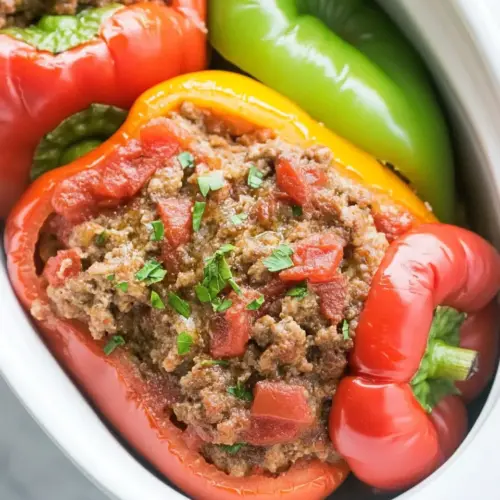
Slow Cooker Meatloaf Stuffed Peppers
Slow Cooker Meatloaf Stuffed Peppers deliver a creamy, savory, easy weeknight dinner with juicy ground beef stuffed into tender bell peppers and a bed of mashed russet potatoes that soak up rich flavors. This set and forget meal yields comforting textures and nostalgic tastes, perfect for busy evenings or cozy fall dinners. Give it a try for a fuss free family favorite that feels special.
Equipment
- Slow Cooker
- Mixing Bowl
- Tongs
- Masher
- Baking Dish
Ingredients
- 4 bell peppers Provide vibrant color and sturdy vessels for stuffing; hollowed and roasted until tender they cradle the meatloaf filling while adding a mild, sweet flavor that balances savory components.
- 1 lb ground beef Supply rich umami and binding fat; ground and seasoned to form the core of the meatloaf filling, offering protein, moisture, and a savory backbone for the stuffed peppers.
- 1/2 cup onion Add aromatic sweetness and texture when finely chopped; sautéed or mixed raw into the meat mixture to lend moisture and depth to the overall flavor profile.
- 1/2 cup breadcrumbs Contribute bulk and absorbency to the meat mixture; combined with liquids and eggs they help bind the filling and maintain a tender, cohesive texture during slow cooking.
- 1/3 cup ketchup Introduce tangy sweetness and moisture to the filling or glaze; stirred into the meat mixture or brushed on top, it enhances flavor and helps create a glossy finish.
- 1 egg Provide structure and additional binding; beaten and mixed into the filling, the egg helps hold ingredients together and ensures a firm, sliceable interior after cooking.
- 1 tbsp Worcestershire sauce Add deep savory and slightly tangy complexity; incorporated into the meat mixture to heighten flavor with a hint of fermented, savory notes that complement beef.
- 1 tsp garlic powder, dried parsley, salt Season with concentrated savory and herbal notes; a mix of garlic powder, dried parsley, and salt elevates overall taste by adding warmth, mild herbaceousness, and essential seasoning.
- 1/2 tsp black pepper Season with sharp, warm pungency; freshly ground or measured black pepper brightens and balances richness in the filling with subtle heat and complexity.
- 2 1/2 pounds russet potatoes, peeled and diced into 1 inch cubes Provide a hearty, starchy side component when prepared as mashed potatoes; peeled and cubed then simmered until tender to become creamy when mashed and served alongside the peppers.
- 1/2 cup water Add moisture for simmering or mashing; used to gently cook the potatoes and prevent sticking while contributing minimal dilution so textures stay smooth and consistent.
- 1/2 tsp garlic powder Enhance savory depth when added to potatoes or fillings; garlic powder imparts concentrated garlic flavor without moisture, offering convenience and long shelf life.
- 1/2 tsp onion powder Boost savory onion flavor without fresh onion; onion powder provides concentrated, mellow sweetness that integrates smoothly into mashed potatoes or seasoning blends.
- 1/4 cup sour cream Add creaminess and tang to mashed potatoes; stirred in to enrich texture and flavor, sour cream yields a silky mouthfeel and subtle acidity that brightens the dish.
- 2 to 3 tbsp butter Contribute richness and a smooth mouthfeel to mashed potatoes; stirred in to add buttery flavor and help achieve a creamy, luxurious consistency when mixed with potatoes.
Instructions
- Cut off the tops of the bell peppers and remove any seeds inside, discard tops and seeds.: The first tactile moment is satisfying, the crisp snap of the bell peppers giving way as you slice. The aroma of the fresh pepper is bright and slightly green, and removing the seeds ensures a clean cavity for the filling. Work on a cutting board and use a small paring knife to scrape out stubborn seeds; a common mistake is leaving too much pith which can make peppers bitter. If peppers wobble, trim a thin slice from the bottom so they sit upright, and wipe out moisture with a paper towel so filling adheres better.
- In a medium bowl combine the ground beef, diced onion, breadcrumbs, ketchup, egg, Worcestershire sauce, garlic powder, dried parsley, salt and black pepper. Mix until combined then divide mixture between bell peppers. Set aside.: When your hands plunge into the bowl, the cool texture of the ground beef and the grain of the breadcrumbs should feel cohesive as you fold ingredients together. The scent of ketchup and Worcestershire sauce will lift the mixture with sweet and umami notes, while the onion breathes a faint sharpness. Mix gently until the components are evenly distributed, because overmixing compacts the meat and yields a denser filling. Divide the mixture with a scoop so each pepper gets an even portion, pressing lightly so the meat fills the cavity but is not packed rock solid, which can make the center tough when cooked.
- Line the bottom of your slow cooker with the cubed potatoes (make sure it’s an even layer), then add the 1/2 cup water and sprinkle with the 1/2 tsp garlic powder and onion powder. Place the stuffed peppers on top of the potatoes and cover with the lid. Cook on HIGH for 3 to 4 hours or LOW for 6 to 7 hours.: Laying the cubed russet potatoes in an even bed is like setting a flavor sponge. As they heat, they begin to steam and absorb juices from the stuffed peppers, so they end up savory and deeply flavored. The small pool of water creates steam, which is essential for tenderizing peppers and ensuring the potatoes become fork tender. Sprinkle the powdered seasonings evenly so each bite has a consistent lift. Close the lid and resist lifting it repeatedly, because every peek releases heat and lengthens the cook time. If you hear a gentle bubbling and smell roasted meat perfume after a couple hours, you are on track. A common mistake is adding too much liquid; keep it minimal so flavors concentrate.
- The potatoes will be done when they are fork tender. Use tongs to remove the peppers and carefully tip over to allow any fat to drain out and discard. If desired, place the stuffed peppers in a small baking dish and top with ketchup and pop under your broiler for about 2 to 3 minutes.: Test the russet potatoes by piercing a cube with a fork; it should slide in with little resistance and smell faintly sweet and savory. Removing the stuffed peppers with tongs keeps your hands safe from steam, and tipping them slightly allows accumulated fat to escape so the peppers feel lighter on the plate. If you like a caramelized top, transfer peppers to a baking dish, brush or dollop with extra ketchup , and broil briefly. Watch carefully while broiling because sugars char quickly; a common error is leaving them under the broiler too long and scorching the topping instead of crisping it.
- Meanwhile mash the potatoes (no need to drain the cooking liquid). Add the sour cream and butter and continue to mash until smooth and creamy. Season with salt and pepper to taste. Enjoy!: The final sensory reward is the mashed russet potatoes which should steam gently as you mash, releasing a warm, comforting aroma. Because the potatoes cooked in meat juices, they will already be seasoned; the texture should be velvety with small pockets of melted butter and the tang of sour cream . Mashing right in the cooker keeps all the concentrated flavor, so start by folding in the dairy and tasting for salt and pepper balance. Overworking mashed potatoes can make them gluey, so stop when they are smooth but still light. A frequent mistake is draining the cooking liquid; leave it in for the best texture and flavor integration.
Notes
- Use leaner beef if preferred, choosing 85 percent or 90 percent lean ground beef will reduce fat pooling at the end, but expect slightly less juice in the mashed potatoes since they absorb meat drippings.
- Adjust ketchup level to taste, if you prefer tangier notes reduce to 1/4 cup or add a small spoon of mustard for a bright lift without changing the texture.
- Swap breadcrumbs cautiously, if you need a gluten free option, use gluten free breadcrumbs in equal measure, but check moisture because different crumbs absorb liquid differently.
- Perfect the pepper fit, choose bell peppers that are uniform in size so they cook evenly; trim bottoms slightly to stabilize them if they wobble.
- Make ahead and reheat, you can assemble the stuffed peppers and refrigerate them for a few hours before slow cooking; add an extra 30 minutes to cooking time if starting cold from the refrigerator.
- Customize herb notes, if you have fresh parsley, stir a small amount into the mashed potatoes off heat to brighten the dish without changing the core flavors.