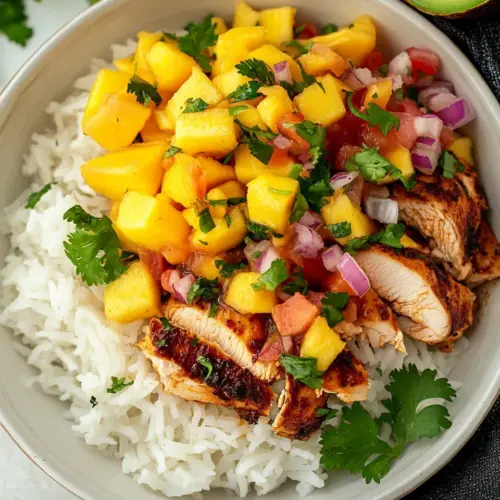
Slow Cooker Mango Salsa Chicken
Slow Cooker Mango Salsa Chicken is a bright, easy weeknight dinner that blends sweet mango salsa with warm spices and tender shredded chicken. Served over creamy coconut rice, it’s fragrant, family friendly, and delightfully simple to assemble. Make it for busy evenings when you want bold flavor with minimal fuss.
Equipment
- Slow Cooker
- Large saucepan
- Fine mesh sieve
- Cutting Board
Ingredients
- 1 1/2 lbs boneless, skinless chicken breasts (about 3 large) Provide tender, lean protein and a neutral base that soaks up seasonings; cut or leave whole for even slow-cooker cooking and shredding after done.
- 1 tsp ground cumin Add warm, earthy aroma and a subtly citrusy edge; mix into dry rub to deepen flavor and complement the salsa's sweetness during slow cooking.
- 1/2 tsp chili powder Contribute mild heat and smoky undertones that enhance the salsa's bright flavors; include in the spice mix for balanced background spice.
- 1/2 tsp paprika Offer sweet, smoky color and gentle warmth to the rub; sprinkle with other spices to build a complex savory profile for the chicken.
- 1/2 tsp ground coriander Introduce floral, slightly lemony notes and brighten the overall spice blend; pair with cumin and chili powder for layered seasoning.
- 2 tsp minced garlic (2 cloves) Deliver pungent, savory depth and aromatic lift; mince fresh to release oils so the garlic infuses the chicken and sauce during cooking.
- Salt and freshly ground black pepper Season and balance flavors, enhancing sweetness and acidity while controlling overall taste; add gradually and adjust to preference at the end.
- 1 (16 oz) jar mango peach salsa, I recommend using Target's Archer Farm brand Provide the primary sweet, fruity, and tangy sauce element that complements the chicken; pour over meat to create a saucy, flavorful cooking liquid.
- 1 (15 oz) can black beans, drained and rinsed Add creamy texture, protein, and earthy flavor with a slightly firm bite; drain and rinse to reduce sodium and prevent clouding the sauce.
- 1 1/4 cups frozen corn, thawed Contribute sweet, crisp kernels and bright color; thawing prevents excess moisture and allows even distribution throughout the finished dish.
- 1 tbsp fresh lime juice Deliver bright acidity and citrus fragrance to lift the dish; squeeze fresh at the end to brighten flavors and balance richness.
- 1/4 cup chopped cilantro Introduce fresh, herbaceous brightness and a hint of citrusy flavor; chop and stir in near serving to preserve color and aroma.
- 1 large avocado, sliced Provide creamy richness and cooling texture when sliced on top; add just before serving to maintain shape and freshness.
- 1 mango, sliced (optional) Offer additional fresh mango sweetness and juiciness if desired; slice and serve as an optional garnish to amplify fruity flavors.
- 1 1/2 cups jasmine rice, rinsed very well and drained well Form the starchy base that absorbs liquids and supports the saucy chicken; rinse well to remove excess starch for fluffy, non-sticky rice.
- 1 1/2 cups coconut water or water Serve as the cooking liquid to infuse subtle natural sweetness and electrolytes or use water as a neutral alternative; combine with coconut milk for rich flavor.
- 1 1/4 cups full fat canned coconut milk (well shaken) Provide rich, creamy texture and tropical flavor that makes the rice luxurious; shake well to evenly distribute solids and fat before adding.
Instructions
- Place chicken breasts in an even layer in a 5 - 6 quart slow cooker.: The first thing you will notice is the cool weight of the raw chicken as you arrange it, the pale flesh sitting slightly glossy in the cooker. Laying the pieces flat and not crowded ensures even heat circulation, which matters because uneven placement invites dry edges and uneven cooking. If one breast is much thicker, consider slicing it horizontally so all pieces finish at the same time. A common mistake here is piling the chicken on top of itself, which creates steam pockets and leads to inconsistent texture later.
- Sprinkle with cumin, chili powder, paprika, coriander and garlic. Season with salt and pepper.: As you sprinkle the spice mix over the chicken , inhale the warm, aromatic notes of cumin and coriander mingling with sharp garlic. This dry rub jumpstarts flavor absorption, because the spices will seep into the surface during the long cook. Press the spices lightly so they adhere to the meat. Avoid over salting at this stage, since the salsa and beans will contribute sodium later.
- Pour salsa evenly over chicken. Cover slow cooker and cook on low heat 5 hours, or until chicken is cooked through and shreds easily with a fork.: Pouring the jarred mango salsa creates a glossy, colorful blanket that sizzles quietly when it meets the warm crock if the cooker is preheated, or simply pools around the meat if cold. Distributing the salsa evenly is key so every part of the chicken bathes in sauce and cooks with the same intensity. A pitfall is dumping the jar in one spot, which can leave some breasts under flavored and others oversauced.
- Remove chicken from slow cooker and transfer to a cutting board, leave salsa mixture in slow cooker.: During cooking you will catch aromatic steam when you open the lid to check, a mix of sweet fruit and warm spice. Low and slow softens connective tissues, turning chicken fibers into tender strands that pull apart readily. Resist the urge to open the lid too often, because heat loss prolongs cooking. If the meat still resists shredding after five hours, continue cooking in 30 minute increments rather than increasing the heat.
- Add black beans and corn to salsa, cover and cook on high heat until warmed through, about 5 minutes.: When you lift the pieces out, they should feel tender and yield slightly under your fingers. Transfer to a cutting board so the hot salsa remains undisturbed in the slow cooker, conserving flavor. Resting briefly on the board makes shredding cleaner. A common misstep is shredding in the pot, which can break up other ingredients and make the sauce too thin.
- Shred chicken and return to slow cooker along with lime juice and cilantro, gently toss mixture.: Adding the black beans and corn introduces a satisfying contrast of texture, and heating them on high brings the mixture up to serving temperature quickly. You will hear a gentle simmer as the beans warm and the corn releases a hint of sweet aroma. Avoid boiling vigorously, which can break apart the beans and make the mixture mushy.
- Serve warm over coconut rice along with avocados and mangos.: Shredding reveals tender, moist strands of chicken that glisten from the salsa, and tossing them back with fresh lime juice and chopped cilantro brightens the whole pan. The citrus counters any heaviness, while cilantro adds herbaceous lift. Toss gently so the chicken remains intact and the beans keep their shape. Overmixing can turn the texture past the pleasant shreddy stage into a mushy blend.
- To thaw corn quickly just rinse under hot water in a fine mesh sieve and drain.: As you plate, the steam from the warm mixture meets the cool slices of avocado and optional fresh mango , creating an appealing temperature contrast. The coconut rice should be fragrant and slightly glossy, cradling the saucy chicken . Serve immediately for the best texture. A frequent error is letting the dish sit too long before serving, which dulls the brightness of the lime and cilantro.
- Bring coconut water or water, coconut milk, rice and 1/2 tsp salt to a boil in a large saucepan over medium-high heat.: Running the frozen corn under hot water in a sieve warms it quickly and removes frost, while keeping kernels intact. The audible hiss of hot water and the visual of evaporating steam are reassuring cues that thawing is underway. Avoid soaking corn for long periods, which can leach sweetness and make kernels soggy.
- Cover and reduce heat to low. Simmer until liquid has been absorbed, about 20 minutes.: The mixture will shimmer as it reaches a boil, and you will smell the faintly sweet coconut note rising. This initial vigorous heat sets the starchy rice to work absorbing liquid evenly. Stir once to distribute the coconut milk. A common mistake is leaving the saucepan uncovered during this phase, which can cause uneven evaporation and an undercooked center.
- Let rest off heat for 10 minutes.: Lowering the heat lets the rice bubble gently, absorbing the coconut liquid without sticking. You should see tiny steam vents forming and hear only a low whisper from the pot. Resist peeking frequently, because lifting the lid releases steam and interrupts cooking. If the rice still seems firm after 20 minutes, let it continue for a few more minutes rather than increasing heat.
- Recipe source: Cooking Classy: Resting allows the steam trapped inside the pot to finish cooking the rice evenly, and the grains will settle into a pillowy texture. You may notice a faint settling sound and a redistribution of aroma as the pot cools slightly. Fluff with a fork after resting to separate the grains. Skipping this rest can leave rice clumpy and gummy.
- Recipe source: Cooking Classy : Acknowledge source attribution and appreciate that recipes evolve, while keeping the core technique intact. Giving credit is a small but meaningful part of recipe sharing, and it also helps you trace variations and inspirations. Avoid claiming authorship if you are sharing someone else’s core idea without significant changes.
Notes
- Choose even sized chicken breasts to ensure consistent cooking time and uniform shredding at the end.
- Test rice doneness visually by tilting the pot slightly after the simmer to see if any excess liquid remains, rather than relying solely on the timer.
- Don’t over stir the shredded chicken when returning it to the slow cooker, gentle folding preserves texture and prevents the meat from becoming mushy.
- Use fresh lime juice for a brighter finish compared to bottled versions which can taste flat in the final dish.
- Rinse frozen corn under hot water in a sieve for quick thawing that preserves kernel texture and sweetness without added water in the pot.
- Warm the jarred salsa briefly before adding to the chicken if your slow cooker is preheated, to avoid an initial cold shock that lengthens cooking time.
- Serve avocado on the side if serving a crowd, because some guests prefer to skip it and it helps maintain presentation.