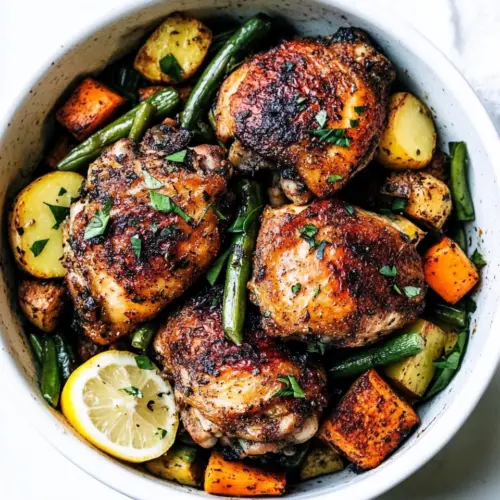
Slow Cooker Lemon Garlic Chicken Thighs and Veggies
Slow Cooker Lemon Garlic Chicken Thighs and Veggies delivers tender, juicy chicken with bright lemon and aromatic garlic, paired with creamy potatoes and sweet carrots for an easy weeknight dinner. The slow braise creates deep savory notes while remaining fuss free, perfect for feeding a crowd or meal prepping for the week. Make it when you want comfort without the hassle.
Equipment
- 6 quart slow cooker
- 10-inch Skillet
- Mason jar
Ingredients
- 2 pounds quartered red potatoes Quartered and used as a hearty, starchy base that soaks up juices and flavors while slowly cooking to a tender finish.
- 3 pounds bone-in skin on chicken thighs Bone-in and skin-on to provide rich flavor and moistness; renders collagen and fat that enrich the cooking liquid and brown the skin slightly under heat.
- 4 teaspoons tuscan-style seasoning *see notes Added sparingly to impart herbaceous, savory, and slightly spicy Mediterranean notes; balances citrus and garlic while enhancing overall seasoning complexity.
- 2 teaspoons kosher salt Measured to season the dish for balanced savory depth; helps bring out other flavors and enhances the natural taste of the chicken and vegetables.
- 2 teaspoons freshly ground black pepper Freshly ground to contribute pungent, aromatic heat; provides a bright spiciness that complements the lemon and garlic.
- 2 tablespoons extra virgin olive oil Drizzled to coat and lightly sear the chicken before slow cooking, adding fruitiness and helping carry fat-soluble flavors throughout the dish.
- 6 cloves minced garlic Minced to release intense aromatic sulfur compounds that flavor the cooking liquid; infuses the chicken and vegetables with savory depth as they simmer.
- 3 cups chicken stock Provided to create the braising liquid that cooks and flavors the ingredients; adds savory umami and helps dissolve seasonings for even distribution.
- Juice of 2 lemons Squeezed to introduce bright acidity and citrus aroma that cuts through the richness, tenderizes proteins, and balances savory flavors.
- 1 pound baby carrots Added whole as a sweet, crunchy root vegetable that holds texture during long cooking and absorbs surrounding savory juices and lemon notes.
- 1 pound trimmed green beans Trimmed and included near the end to add fresh, crisp green color and a slightly sweet, grassy crunch that complements the softer vegetables.
- 2 tablespoon cornstarch Mixed with water to thicken the cooking liquid into a glossy sauce; creates body and helps the sauce cling to the protein and vegetables.
- 2 tablespoon water Combined with cornstarch to form a slurry used to gently thicken juices; ensures a smooth, lump-free gravy when stirred into hot liquid.
- 2 tablespoons chopped fresh Italian parsley Chopped and sprinkled at the end to add a fresh, herbaceous finish and a mild peppery brightness that lifts the completed dish.
Instructions
- Place 2 pounds quartered red potatoes in the bottom of your 6 quart slow cooker. Season both sides of 3 pounds bone-in skin on chicken thighs with 4 teaspoons tuscan-style seasoning *see notes, 2 teaspoons kosher salt and 2 teaspoons freshly ground black pepper.: Warm, earthy aromas rise as the potatoes nestle into the base of the cooker, forming a cozy bed that catches juices from the chicken . You should feel the weight of the layers as they settle, and visually the potatoes will create a rustic foundation that helps distribute heat evenly. This placement matters because the potatoes will cook longer and benefit from direct contact with the heat source. A common mistake is crowding them too tightly, which can lead to uneven cooking, so give them a little space to steam and soften uniformly.
- In a 10 inch skillet over medium high heat, add 2 tablespoons extra virgin olive oil. Add the chicken and cook each side for 3 minutes or until a deep brown crust forms. Remove the chicken and place on top of the potatoes.: The seasoning should smell herby and bright when you rub it into the chicken , and the salt begins to draw moisture to the surface for better browning. Work the seasoning gently into the skin and crevices so each thigh has an even coating. This step primes the meat for color and flavor, and skipping proper seasoning will result in a blander finished dish. Avoid over salting, and taste the seasoning balance on a small piece if you are unsure.
- Add 6 cloves minced garlic to the skillet and cook for 30 seconds. Next add 3 cups chicken stock until it bubbles. Bring to a boil for 3 minutes. Add the Juice of 2 lemons and stir to combine.: The pan should hiss softly as the oil heats, and you can tell it is ready when it shimmers but does not smoke. This searing stage sets up those deep brown crusts that translate into complex flavor for the entire braise. If the oil smokes, lower the heat to prevent burnt notes; if it does not shimmer, the chicken will stick and fail to brown properly.
- Add 1 pound baby carrots to the slow cooker and pour the liquid from the skillet on top. Cook for 2-3 hours on high or 4-6 hours on low. Add 1 pound trimmed green beans the last 15 minutes of cooking.: As each piece hits the pan you should hear a steady sizzle and see the edges start to caramelize, turning from pale to golden to mahogany. That crust locks flavors and creates fond in the skillet, which becomes the backbone of your pan sauce. Resist moving the chicken too soon; impatient flipping prevents proper browning. If the pieces brown too quickly, reduce heat slightly to avoid burning the skin.
- To thicken the sauce, combine 2 tablespoon cornstarch and 2 tablespoon water in a mason jar. Seal the jar and shake to create a slurry. Pour the slurry into the slow cooker for the last 30 minutes of cooking. Sprinkle with 2 tablespoons chopped fresh Italian parsley before serving.: Transferring the seared thighs onto the bed of potatoes lets their juices drip into the vegetables as they finish cooking, infusing the whole pot. You will notice a faint gloss on the skin and a fragrant concentration of aromatics in the pan. Make sure to leave the browned bits in the skillet, as those will be deglazed to form the braising liquid. A mistake here is stacking the pieces too tightly, which can trap steam and prevent even cooking.
- Add 6 cloves minced garlic to the skillet and cook for 30 seconds: The minute the garlic hits the hot pan it releases a heady, sulfurous perfume that blooms quickly; keep the heat moderate because garlic can turn bitter if it browns too much. You should see tiny flecks becoming fragrant and glossy in the oil. This flash cooking mellows the raw edge and infuses the pan for the next step. If it begins to brown, immediately lower the heat and proceed, since burnt garlic will impart a harsh taste.
- Next add 3 cups chicken stock until it bubbles: Pouring the warm chicken stock loosens the caramelized fond from the pan, turning those browned bits into a savory, aromatic base. As it comes to a simmer, watch for gentle bubbling and an array of tiny rising bubbles that indicate the liquid is extracting flavor. This deglazing step is crucial for depth, and skipping it will leave behind flavor stuck to the pan. If the stock evaporates too fast, maintain moderate heat to preserve volume for the slow cooker.
- Bring to a boil for 3 minutes: A brief boil concentrates flavors and reduces the liquid slightly so it is more flavorful when it hits the slow cooker. You should see rolling bubbles and a thicker sheen on the surface, with steam carrying the compound aromas. This quick reduction captures intensity without over concentrating salt. Overreducing can make the liquid too salty, so watch the time closely and remove as directed.
- Add the Juice of 2 lemons and stir to combine: The fresh lemon juice will brighten the pan sauce instantly, and you will notice a lively citrus tang in the steam. Stirring integrates the acid and balances the stock's richness, helping to lift the overall profile. This acid also helps temper any heavy notes, but adding too much can make the broth overly tart, so taste if unsure and adjust slowly.
- Add 1 pound baby carrots to the slow cooker and pour the liquid from the skillet on top: Pouring the fragrant broth over the layered potatoes and seared chicken distributes the flavor evenly. The carrots will sink into the liquid and start to soften as the cooker heats, absorbing aromatic notes. Ensure the liquid reaches but does not completely drown the top layer, preserving some steam space. Overfilling the slow cooker can prolong cooking time and affect texture.
- Cook for 2 to 3 hours on high or 4 to 6 hours on low: During this slow braise you will notice the kitchen filling with a warm, herby perfume and the chicken becoming visibly tender, the juices running clearer when poked. The longer cook on low yields silkier textures, while high shortens the wait with very good results. A common error is lifting the lid too often, which releases heat and extends cooking time, so try to keep it closed for steady temperatures.
- Add 1 pound trimmed green beans the last 15 minutes of cooking: Introducing the green beans toward the end preserves their bright color and crisp tender quality, adding a refreshing snap to the plate. You should see them turn vibrant green and slightly glossy when done. Overcooking at the start makes them limp and dull, so time this addition carefully to retain texture and color.
- To thicken the sauce, combine 2 tablespoon cornstarch and 2 tablespoon water in a mason jar: Shaking the cornstarch slurry until smooth prevents lumps and creates a silky finish when added to the hot liquid. The slurry should look opaque and even, ready to disperse into the sauce for a glossy coating. If the slurry is clumpy, sieve it before adding; lumps will not fully dissolve and will leave an unappealing texture.
- Seal the jar and shake to create a slurry: You will see the mixture emulsify into a smooth blend, and this mechanical action ensures the cornstarch hydrates evenly. A properly made slurry integrates without foaming and yields a consistent thickening result. Avoid making the slurry in cold water for too long, as starch can settle; shake again just before pouring if needed.
- Pour the slurry into the slow cooker for the last 30 minutes of cooking: As the slurry hits the warm liquid it should disperse and begin to thicken within minutes, creating a clingy sauce that coats the chicken and vegetables. Stir gently if needed to distribute it, watching the sheen develop as the sauce becomes glossy. Adding slurry too early can over thicken or break down the texture, so timing is key.
- Sprinkle with 2 tablespoons chopped fresh Italian parsley before serving: The final sprinkle of fresh Italian parsley adds a herbaceous pop of color and a clean finish to every bite. Visually it brightens the platter, and texturally it offers a gentle contrast to the soft components. Avoid adding parsley too early in the cook, as its flavor will fade if exposed to long heat.
Notes
- Swap the potatoes for Yukon golds if you prefer a creamier interior, they break down slightly less and make a silkier mouthfeel while still holding shape.
- Adjust the herb mix by reducing rosemary if you find it assertive, or amplify oregano for a brighter Mediterranean note that complements the lemon.
- Make it chunkier by cutting the potatoes into larger pieces, which yields more pronounced roasted pockets and slightly firmer centers after braising.
- Boost umami by using a richer chicken stock or adding a small splash of a concentrated stock at the deglaze stage for deeper savory complexity.
- Finish with fresh herbs beyond parsley, such as chopped basil or chives, for an added herbaceous final lift that brightens each serving.