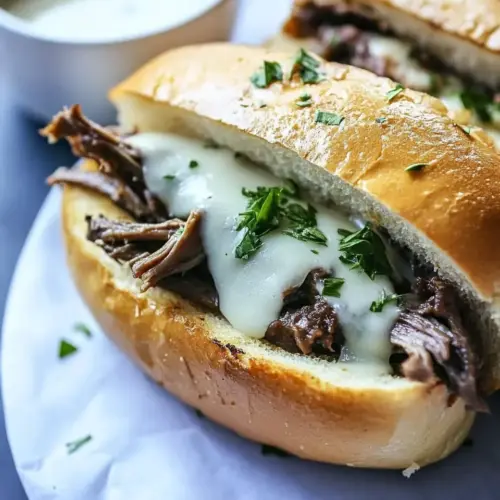
Slow Cooker French Dip Sandwiches
Slow Cooker French Dip Sandwiches deliver tender, savory shredded beef, melty Provolone, and a rich au jus for dipping. This easy weeknight dinner uses a seared chuck roast braised low and slow until it falls apart, giving you deeply flavored, juicy meat and satisfyingly toasty buns. Perfect for feeding a crowd and worth making for the leftovers alone.
Equipment
- Large cast iron skillet or any sturdy skillet or pan
- 4 to 6 Quart Slow Cooker
Ingredients
- 3 lb chuck roast Season and sear to build deep, caramelized flavor on the beef; slow cooking then breaks down connective tissue for tender, shreddable meat that forms the sandwich’s core.
- Salt and pepper Season generously to enhance overall savory balance; salt brings out beef and broth flavors while pepper adds mild heat and complexity throughout the cooking process.
- 2 tablespoon olive oil Heat to brown the roast and develop fond; oil prevents sticking, aids even browning, and adds a subtle fruity richness to the seared exterior before slow cooking.
- 2 cups beef stock or broth Provide the braising liquid that extracts beef flavor and creates the dipping jus; stock adds body, umami, and a rich mouthfeel to the final au jus.
- 1/4 cup soy sauce Add concentrated savory and salty umami to the braising liquid; soy sauce deepens color and complexity without overpowering the beef when balanced with stock.
- 2 tablespoon Worcestershire sauce Contribute savory, tangy, and slightly sweet depth to the cooking liquid; Worcestershire layers complex fermented flavors that complement beef and enhance the au jus.
- 1 teaspoon Herbs de Provence or dried thyme Impart aromatic, herbaceous, and slightly floral notes to the roast; dried Herbs de Provence or thyme season the braise and lift the savory profile with subtle earthiness.
- 1 medium onion chopped Provide a sweet, aromatic base that softens during cooking; chopped onion releases natural sugars and savory compounds that enrich the jus and meld with the beef.
- 2 cloves garlic minced Deliver pungent, garlicky aroma and depth; minced garlic infuses the braising liquid with savory, slightly spicy notes that complement the roast and jus.
- 6 hoagie buns Serve as the handheld vessel for the shredded roast and au jus; hoagie buns should be sturdy enough to hold meat and dipping without becoming soggy.
- 6 slices Provolone cheese Melt over the hot shredded beef to add creamy, mild, slightly tangy richness; Provolone helps bind the sandwich components and adds a smooth finish.
Instructions
- Liberally sprinkle the roast with salt and pepper all over.: Your nose will pick up the bright saltiness as you season, and your hands should feel a slightly gritty coating on the surface. This initial seasoning helps the crust form and seasons the meat internally as it cooks. If you under-season now, the final dish can taste flat, so be confident but not excessive, especially if your broth is salty.
- Heat the oil over medium-high heat in a large cast-iron skillet (or any large sturdy skillet). Add the roast and sear until browned all over, about 3 to 4 minutes per side. Remove from the skillet and place on a plate or cutting board.: You will hear a satisfying sizzle when the olive oil meets the roast, and watch the surface color shift from pale to deep mahogany, which indicates good caramelization. This crust adds both texture and complex, slightly sweet notes from the Maillard reaction, enriching the au jus later. A common error is rushing this step or moving the meat too often, which prevents a proper crust from forming.
- In a medium bowl, stir together the beef stock, soy sauce, Worcestershire sauce, dried herbs, and a healthy pinch of salt.: As you whisk, the mixture should look glossy and evenly combined, with the aromas of Worcestershire sauce and soy sauce coming forward. This blend creates the savory foundation for the slow cooker liquid. Taste cautiously, since salt levels will concentrate during cooking, and you can always adjust at the end.
- Place the onions in the bottom of your slow cooker. Top the onions with the seared roast. Sprinkle the minced garlic over the roast. Carefully pour the broth mixture around the roast. Cover the slow cooker and cook on LOW for 9 hours, or on HIGH for 4 1/2 hours.: The onion will soften and sweeten, releasing moisture that mingles with the braising liquid, while the garlic becomes mellow and aromatic. During cooking, you should notice a gentle simmer and a deepening aroma; that is when collagen breaks down and meat fibers relax, producing tender texture. Avoid opening the lid frequently, as that lengthens cook time and cools the environment.
- Remove the roast from the slow cooker and let rest on a cutting board for 10 minutes.: Resting allows juices to redistribute so the slices stay moist rather than bleeding onto the cutting board. The surface will steam lightly, and the meat will feel warm and pliable to the touch. Cutting too soon can cause excessive juice loss, making the meat drier on the sandwich.
- Use a large sharp knife to slice the roast (against the grain, if possible) into thin strips.: When you cut against the grain, the strands break shorter, yielding a tender bite. The meat should slice smoothly, revealing moist interior fibers. If the roast resists slicing cleanly, it may need a slightly longer rest period, or it might be cooked a touch under; avoid sawing motions that shred the meat unevenly.
- Turn your broiler on HIGH and place the baking rack 6 inches below the heating elements.: The broiler will produce intense radiant heat that toasts and melts quickly, and you will see the top surfaces bronzing within moments. Positioning the rack at the recommended distance ensures even toasting without instant charring. A common mistake is placing the rack too close, which can burn the buns or melt the cheese too fast.
- Open the buns and place them on a baking sheet. Toast the buns under the broiler until toasty and lightly browned. Keep an eye on them, don't let them burn! Remove from oven and place on a platter (or individual plates).: The scent of toasting bread is a clear cue that the crust is crisping while the interior remains soft. Watch for golden edges and slightly crisp tops; this prevents sogginess once the juicy beef is added. If you walk away, they can go from perfectly toasted to burnt in seconds, so stay attentive.
- Form the sliced roast into 6 piles approximately the length of the hoagie buns. Cut each slice of cheese in half and place on top of each pile of beef.: Arranging the meat into portions helps with even melting and assembly, and the Provolone cheese will begin to soften from the meat's residual heat. The visual should be glossy meat topped with pale, melting cheese. Avoid stacking too high, which can make the sandwich difficult to eat and lead to uneven melting.
- Use a spatula to place the meat piles on a baking sheet and then place the sheet under the broiler until the cheese has melted, only a couple of minutes.: You will see the cheese bubble and turn slightly golden, with a light nutty aroma; that signals readiness. Melting binds the components and adds a creamy mouthfeel. Do not overbroil, as cheese can separate and become greasy if exposed to excessive heat.
- Meanwhile, strain the liquid from the slow cooker through a fine-mesh sieve into a heatproof bowl. If desired, divide the sauce (au jus) into 6 small dipping bowls.: The strained au jus should be clear of solids and rich in color, with steam rising and a concentrated beef scent. Straining clarifies and concentrates the sauce, giving a clean dipping liquid. If your au jus tastes thin, simmer briefly to reduce and intensify, but watch closely to avoid over-reduction.
- Place the heated meat onto the toasted buns and serve immediately with the au jus.: The finishing moment combines the crisp bun, warm melted Provolone cheese , and juicy beef, with the au jus adding a glossy dip that ties every bite together. Serve promptly for best texture; letting sandwiches sit will soften the bread. If you need to hold them, keep the meat warm separately and assemble right before serving to maintain contrast.
Notes
- Sear thoroughly: Taking time to get a deep brown crust on the roast multiplies the flavor in the finished au jus, so don’t rush this step even though it adds a few more minutes.
- Control salt early: Since beef stock and soy sauce can be salty, taste the au jus after straining and reduce additional salt if needed to keep the dipping sauce balanced.
- Choose the right cut: A well marbled chuck roast breaks down beautifully in slow cooking, producing silky strands, so opt for that or similar cuts for the best texture.
- Toast just before serving: Toasting hoagie buns at the last minute preserves their crispness and prevents sogginess when the juicy beef is added.
- Warm the au jus: Keep the strained au jus hot in a small pot over low heat so the dipping sauce stays inviting and steamy at the table.
- Portion for assembly: Pre-arranging the sliced beef into sandwich-length piles speeds up final assembly and keeps service smooth when feeding a group.