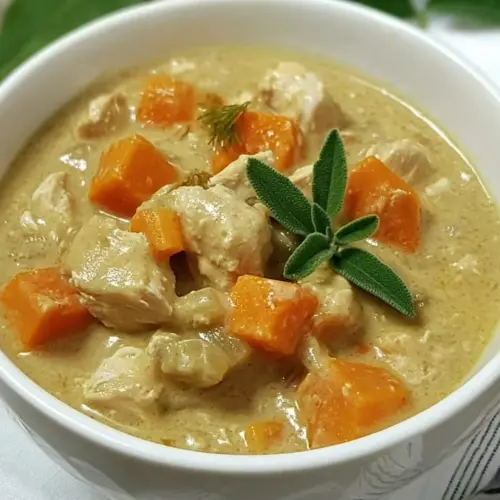
Slow Cooker Cream of Chicken Stew
Slow Cooker Cream of Chicken Stew is a creamy, comforting, and easy weeknight dinner that fills your kitchen with cozy aromas. Tender chicken, soft potatoes, and sweet carrots simmer in a silky blend of chicken broth and coconut milk, creating a satisfying bowl that reheats beautifully. Make this stew when you want a hands off, feel good meal that feeds a crowd.
Equipment
- Slow Cooker
Ingredients
- 2 potatoes medium red or russet, cut into 1-inch cubes Provide starchy body and mild sweetness, contributing a creamy texture when simmered; cut into 1-inch cubes to cook evenly in the slow cooker and help thicken the stew as some starch releases during cooking.
- 3 carrots sliced thinly Add natural sweetness and color while softening to complement the potatoes; slice thinly so carrots become tender and integrate seamlessly into the stew’s texture.
- 1 celery stalk sliced into 1/2-inch pieces Contribute aromatic savoriness and a slight crunch if not overcooked; slice into 1/2-inch pieces so celery pieces hold shape and add classic stew flavor.
- 1 white onion small, diced Deliver savory sharpness and aromatic depth when diced and cooked down; small-diced onion will melt into the broth, creating a flavor base for the stew.
- 2 garlic cloves minced Provide pungent aromatic and depth of flavor when minced; cook briefly to release oils that enhance the stew’s overall savory profile.
- 1 teaspoon paprika Hungarian recommended Impart warm, slightly smoky flavor and a subtle color boost; measure precisely to avoid overpowering and to complement the other spices in the dish.
- 1 teaspoon dill weed or 1 tablespoon fresh dill Offer bright herbaceous notes and a fresh finish; use dried dill weed or fresh dill to add a light, slightly anise-like flavor that balances the richness of coconut milk.
- 1 teaspoon kosher or sea salt divided Season overall flavor and help control seasoning levels; divide the salt so part can be added early for seasoning and the remainder adjusted at the end for balance.
- 1 teaspoon black pepper divided Add mild heat and savory complexity while supporting other seasonings; divide black pepper to build gentle peppery notes throughout cooking and at final adjustment.
- 2 tablespoons butter or Ghee, melted Provide rich mouthfeel and help bind flour to coat ingredients; melt butter or ghee to disperse fat evenly and lend a silky finish to the stew.
- 1 1/2 pounds boneless and skinless chicken breasts cut into 1 inch cubes Supply lean protein and bulk to the stew while absorbing flavors; cube chicken breasts into 1-inch pieces so they cook through evenly and remain tender in the slow cooker.
- 3 tablespoons flour Act as a thickening agent to create a velvety stew consistency; stir flour with melted butter or coat chicken to prevent lumps and ensure even thickening while simmering.
- 2 cups chicken broth fat-free Contribute savory liquid, depth, and salt balance while keeping calories lower; use fat-free chicken broth as the primary cooking liquid to infuse chicken and vegetables with flavor.
- 1 cup coconut milk canned Provide creamy richness and subtle coconut flavor while adding dairy-free creaminess; canned coconut milk enriches the broth and creates a smooth finish in the stew.
Instructions
- Add to the slow cooker potatoes, carrots, celery, onion, garlic, paprika, dill, and half of the salt and pepper. Add melted butter or Ghee and toss to combine with spices and veggies.: The aroma at this stage is herbaceous and slightly sweet as the onion and garlic mingle with paprika and dill . You will notice a faint earthy perfume from the potatoes and a fresh, green scent from the celery , which signals a good base. This layering matters because the vegetables release moisture and flavors slowly, creating a complex broth. A common mistake is overcrowding the cooker with too many large pieces, which can leave firmer vegetables underdone; cut the items to size for even cooking and stir gently to distribute spices.
- Flour, salt, and pepper chicken cubes. Place chicken on top of veggies and pour in chicken broth and coconut milk.: When you pour the warm butter or ghee over the vegetables, you should see a glossy sheen and smell a rich, toasty note. This fat helps the spices adhere to the veggies and allows aromatics to bloom, which deepens flavor during the long cook. This technique impacts texture, making the final broth silkier. Avoid skipping this step, because dry spices may not distribute evenly and the stew can taste flat; ensure the butter is warm enough to coat everything.
- Add remaining salt and pepper, cover, and cook on low 6-7 hours or high 3-4, or until chicken is done and carrots are tender.: As you toss the chicken in the flour , salt , and pepper , you should feel the pieces get lightly coated, and the flour should look like a fine dusting rather than clumps. That coating will thicken the cooking liquid and help the chicken develop a gently roux like texture as it cooks. The tactile cue is important, flour should not be wet or pasty. A frequent error is adding too much flour, which can make the sauce gummy; use the measured amount and shake off excess.
- Enjoy!: When you nestle the coated chicken on the vegetables, you create layers that promote even cooking; the broth and coconut milk will then envelop everything. Pouring the liquids slowly, you will see a pale, creamy stream from the coconut milk and a translucent amber from the chicken broth merging into the cooker. This union is the foundation of the stew's body and mouthfeel. Pour gently to avoid washing away the flour coating. A misstep here is adding boiling liquids that shock ingredients; lukewarm or room temperature liquids work best.
- Add remaining salt and pepper, cover, and cook on low 6 to 7 hours or high 3 to 4, or until chicken is done and carrots are tender: The slow cooking window is where magic happens; you will notice the kitchen slowly fill with a rich, savory scent as collagen and starches break down. Visual cues include bubbling along the edges and a gentle steam release when you briefly lift the lid. Texture cues are crucial, the chicken should be fork tender and the carrots soft but not falling apart. This timing matters to meld flavors without overcooking. A common mistake is checking too often, which wastes heat; trust the time and check near the end for doneness.
- Enjoy: When you ladle the stew into bowls, you should notice a glossy broth coating the spoon and a balanced mix of tender chicken and soft vegetables. The first spoonful should present warmth, creaminess from the coconut milk , and a steady savory backbone from the chicken broth . This final moment is about savoring the results of slow cooking, and adjusting seasoning if needed. Avoid serving too hot, which can mask flavors; let it rest briefly before serving for the best taste.
Notes
- Switching fats: You can use either melted butter or ghee depending on the flavor you prefer, ghee gives a nuttier note and butter gives a richer dairy hint.
- Potato choices: Red or russet potatoes both work, red hold shape more while russet will break down slightly to thicken the stew.
- Broth level: Use exactly 2 cups of chicken broth to maintain the intended balance between liquid and body, too much thins the stew.
- Coconut milk texture: Use canned coconut milk for creaminess; a lighter canned version will reduce fat but keep the silky mouthfeel.
- Herb swaps: Dried dill or fresh both add brightness, add fresh dill later for a fresher finish.