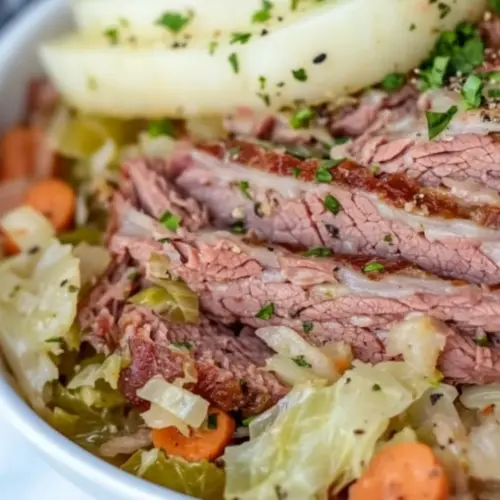
Slow Cooker Corned Beef and Cabbage
Slow Cooker Corned Beef and Cabbage delivers tender, briny corned beef and melt in your mouth potatoes and cabbage in one effortless pot. The long slow cook time yields rich, savory broth and deeply flavored vegetables, perfect for an easy weeknight dinner or a cozy winter gathering. Make it for family meals when you want hearty comfort food without the fuss.
Equipment
- Slow Cooker
- Microwave
- Knife
- Cutting Board
Ingredients
- 3 to 5 pound corned beef brisket with spice packet Provide a flavorful, tender centerpiece by slowly braising the brisket; include the enclosed spice packet to infuse the meat with traditional corned beef seasonings and help develop a rich cooking liquid over several hours.
- 1 onion cut into quarters Add aromatic depth and a subtle sweetness by quartering and simmering the onion with the brisket; the softened pieces will contribute to the braising liquid and can be served alongside the meat for added texture.
- 2 bay leaves Contribute a warm, mildly herbal bitterness to the cooking liquid; tuck bay leaves into the pot during slow cooking to gently perfume the broth and remove them before serving.
- 3 cloves garlic crushed Introduce a pungent, savory note by crushing the garlic cloves and adding them to the braise; the garlic will mellow and enrich the overall flavor as it cooks slowly with the meat.
- 2 to 3 large carrots peeled and chopped into 2 inch pieces (or use baby carrots) Provide natural sweetness and body while offering a tender bite; add peeled and chunky carrots, or substitute baby carrots, to absorb flavors from the braising liquid and complement the savory brisket.
- 1 pound creamer potatoes or larger potatoes halved or quartered Offer starchy, hearty texture that soaks up braising flavors; use halved or quartered creamer or larger potatoes so they cook through evenly and serve as a substantial side to the corned beef.
- 2 1/2 cups low-sodium chicken broth or beef broth Create the braising medium and control the dish's saltiness by using low-sodium chicken or beef broth; pour enough to partially submerge the brisket, allowing flavors to meld during slow cooking.
- 1 small green cabbage quartered or half of a larger cabbage cut into wedges Add a crisp-yet-tender vegetable component by quartering a small cabbage or cutting a large one into wedges; place cabbage toward the end of cooking to retain some texture while absorbing savory juices.
- 5 tablespoons salted butter Introduce rich creaminess and glossy finish by melting salted butter into the finished sauce or vegetables; baste or stir it in to enhance mouthfeel and add a buttery flavor contrast to the savory meat.
- 1 to 2 cloves garlic minced Provide a fresh, mild garlic punch when minced and added at the end; stir into butter or sprinkle over finished vegetables to give a brighter, more pronounced garlic flavor than the cooked cloves.
- 2 tablespoons fresh parsley chopped Add bright, herbaceous color and a fresh finish by chopping parsley finely and scattering it over the completed dish; the parsley lifts flavors and balances the richness of the brisket and butter.
Instructions
- Spray a 6 to 7 quart slow cooker with nonstick cooking spray. Carefully remove the corned beef from its packaging and set spice packet aside (we will be using that later). Pat corned beef dry with paper towels.: You will notice a faint briny, pickled scent as you unwrap the corned beef , and patting it dry helps the spice packet cling so flavors stay on the surface rather than washing away. The dryness also reduces extra moisture that can dilute the broth, so your final gravy is more concentrated. A common mistake here is skipping the pat dry step, which can lead to a weaker spice crust and a soggier top. Make sure the slow cooker is lightly greased so the meat and vegetables do not stick to the base as they soften and release juices.
- Place onion quarters or pieces in the bottom of the slow cooker. Add the corned beef (fat side up) on top of the onions and then sprinkle with the contents of the spice packet (that came with the corned beef).: The onion creates a flavor bed and a slight elevation for the corned beef , promoting even heat circulation. As the meat cooks, its fat melts and bastes the onion and vegetables below, creating a savory steam that fills the pot. You should hear a soft simmer and smell the aromatics begin to bloom as heat diffuses. Avoid overcrowding the cooker which can prevent proper circulation and uneven cooking; leave some space around the meat for the broth to move.
- Put the bay leaves and crushed garlic on top of the corned beef. Add the potatoes and carrots to the slow cooker placing them around the corned beef.: Layering the bay leaves and crushed garlic atop the meat allows their oils to infuse downward, enriching the entire pot. When you tuck in the potatoes and carrots , arrange them evenly so each piece receives good contact with the broth and steam. You may hear a gentle settling as vegetables nestle; this is normal. A typical misstep is adding unevenly sized veg which leads to some pieces being overdone while others remain undercooked, so chop consistently.
- Carefully add the chicken (or beef) broth, pouring over the top of the vegetables.: Pour slowly so you do not wash off the spice packet and to maintain the arrangement of vegetables. The broth should come partway up the sides of the meat and vegetables but not fully submerge everything; this encourages braising rather than boiling, yielding concentrated flavor and a better texture. You will notice steam beginning to rise and the smell of the broth blending with the meat. Avoid overfilling which can cause spillage and dilute the flavors; leave some headspace for bubbling.
- Cook on low for 360 minutes.: Over these hours the slow, steady heat will break down connective tissues in the corned beef , turning it fork tender, while the vegetables soften and soak up seasoning. Expect a rich, meaty aroma that becomes deeper and more rounded as collagen dissolves into gelatin, adding silkiness to the broth. Resist the urge to lift the lid often, as each peek releases heat and prolongs cooking. One common error is increasing the heat to speed things up which can toughen the meat, so stick with the low setting for even results.
- Add the cabbage wedges to the slow cooker and continue cooking on low for another 120 to 180 minutes or until the corned beef is tender.: When the cabbage goes in, the pot will gain a fresh vegetal scent that balances the deep meatiness. Cooking it for the final hours lets the wedges become tender while still holding shape, and they will soak in the seasoned cooking liquid for flavor. The sound will be a gentle simmer, and visually you should see the cabbage go from crisp and pale to a softer, translucent green. A risk here is overcooking the cabbage to mush, so check after the shorter end of the time range if you prefer some texture.
- Gently remove the corned beef from the slow cooker and let rest for 10 to 15 minutes before slicing thinly against the grain.: Resting allows juices to redistribute so slices remain moist when cut. You will notice the meat surface firm slightly as it cools, which makes thin, uniform slicing easier. Use a sharp knife and watch the grain direction closely to cut across fibers for tender bites. A mistake to avoid is slicing too soon which can cause juices to run out and dry the meat, so give it the full rest time.
- Add the butter, parsley and garlic to a small bowl. Melt in the microwave in 20 second increments on medium power, stirring in between, until the butter is fully melted. Drizzle or brush on the veggies and corned beef if desired.: The melted butter blended with minced garlic and chopped parsley lifts the finished plate with gloss and freshness. The aroma here turns bright and herbaceous, and when you brush it over hot vegetables they catch a shiny coating that tastes richer and more finished. Avoid overheating the butter which can separate; warm gently and stir until smooth for an even finish.
- Serve corned beef with cabbage, carrots and potatoes. You can also serve with sour cream, horseradish and/or whole grain mustard on the side.: As you plate, the contrasting textures and flavors come together the tender corned beef , the soft potatoes and the sweeter carrots with the braised cabbage . Presenting condiments on the side lets guests punch up heat or tang as they like. Expect satisfying steam and a savory bouquet as you bring the dish to the table. One tip is to slice the meat thinly to ensure each bite balances with the vegetables, avoiding thick slices that can feel heavy.
Notes
- Choose the right size brisket Ensure the corned beef fits comfortably in your slow cooker; tight packing leads to uneven cooking and longer times.
- Low and slow wins Stick to the low setting for tender results, increasing temperature often shortens cooking and can toughen the meat.
- Control salt with broth Use low sodium broth so you can season to taste at the end without over salting the dish.
- Timing for firmer veg If you like firmer carrots and potatoes, add them later in the cook time, about two hours in, to retain bite.
- Finish with butter and herbs A simple mixture of melted butter, minced garlic, and chopped parsley brightens and adds gloss to the vegetables just before serving.
- Slice against the grain Always cut the rested corned beef across the grain for the most tender mouthfeel and easier chewing.