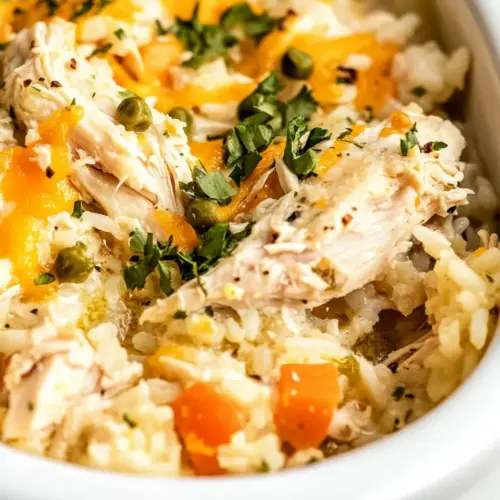
Slow Cooker Chicken and Rice
Slow Cooker Chicken and Rice is a creamy, comforting one pot meal with tender chicken, nutty brown rice, and melted cheddar cheese. Perfect for an easy weeknight dinner, it combines savory broth and veggies for a crowd pleasing bowl that is both hearty and simple to make. Try it when you want effortless comfort and reliable, homey flavor.
Equipment
- 6 quart or larger slow cooker
- Cutting board and knife
- Measuring Cups and Spoons
- Cheese grater
Ingredients
- 1 1/2 cup (285 g) brown rice rinsed and drained Rinse and drain to remove surface starch and debris, ensuring separate, fluffy grains during slow cooking; measure accurately by cup and grams for consistent texture.
- 3 cups (720 ml) chicken broth Provide rich savory liquid and salt balance to cook the rice and infuse the dish with chicken flavor; use the stated volume to ensure proper rice-to-liquid ratio in the slow cooker.
- 2 cups (260 g) frozen peas and carrots Add frozen vegetables for color, texture, and nutrients; stir them in so they heat through evenly and retain a slight bite without becoming mushy.
- 1 medium (150 g) yellow onion about 1 cup, chopped Chop finely to build aromatic depth and natural sweetness; sauté briefly or add directly to the slow cooker to soften and meld with other flavors.
- 2 cloves garlic minced Mince finely to release pungent oils and aromatic complexity; distribute evenly so garlic brightens the overall savory profile without overpowering.
- 1 1/2 pounds (680 g) chicken breasts about 5 to 6 medium pieces Trim and layer in the slow cooker to supply lean protein that shreds or slices after cooking; choose uniform pieces to ensure even doneness and moisture retention.
- 1/2 teaspoon salt Season to enhance overall flavor and control seasoning level; add measured salt early to allow it to penetrate the rice and chicken during cooking.
- 1/4 teaspoon ground black pepper Grind fresh or use preground to contribute subtle heat and earthy aroma; add cautiously and taste-adjust later to prevent overpowering the dish.
- 1 10 oz can (300 g) cream of chicken soup Stabilize creaminess and bring a comforting, savory base to the sauce; whisk into the broth to thicken and enrich the rice mixture as it cooks.
- 2 cups (200 g) shredded cheddar cheese Melt into the finished dish to provide rich, tangy creaminess and a golden cheesy topping; stir in toward the end or sprinkle over to create a gooey layer.
- Fresh chopped parsley for garnish Garnish with chopped leaves to add fresh herbal brightness and visual contrast; sprinkle just before serving to preserve color and fragrance.
Instructions
- Rinse the rice under cold water until it runs clear, then drain well.: Your first sensory cue is the water clarity, not the smell. As you rinse the brown rice , the cloudy starch will wash away and the water will become mostly clear; this takes about 30 to 60 seconds under a steady stream. The texture of the grains should feel separated and not pasty when rubbed between your fingers. This step prevents the pot from becoming gummy and helps each grain hold its own during long, moist cooking. A common mistake is rushing the rinse, which leaves excess starch and creates a stickier final texture. If your rice still looks cloudy after a couple rinses, continue until the water lightens, then drain thoroughly so no pooled water affects your liquid ratio.
- Add the rice and chicken broth to the bottom of a 6-quart or larger slow cooker and stir.: When you add the rice directly to the bottom, it has space to absorb the chicken broth evenly. Pour the measured 3 cups of broth slowly, watching how it soaks into the grains; you should see the surface level even out. Give a gentle stir so the grains are in contact with the liquid, but avoid vigorous mixing that releases more starch. The aroma at this stage is faintly savory, and the broth smells concentrated and warm, promising depth. A common oversight is using a cooker smaller than recommended, which can crowd ingredients and change cooking dynamics; ensure your slow cooker is large enough for even heat circulation.
- Sprinkle the peas and carrots, onion, and garlic evenly over the rice.: As you scatter the frozen peas and carrots , chopped onion , and minced garlic , notice the color contrast against the raw rice . These vegetables will steam gently, releasing sweetness and aromatic notes into the broth. Even distribution helps each spoonful have balanced texture and flavor. Try to keep the pieces roughly even in size so they cook uniformly. A frequent mistake is piling vegetables all on one side, which can create uneven pockets of doneness; take a moment to spread them so everything cooks together harmoniously.
- Lay the chicken breasts on top in a single layer, then season with salt and black pepper.: Nestle the whole chicken breasts on top of the vegetable layer, single file so each piece receives even heat. The surface of the chicken should be dry to the touch before seasoning; sprinkle the measured salt and ground black pepper evenly so every breast is lightly seasoned. Laying the chicken on top keeps direct contact with steam rather than submerging it, helping it cook tenderly and remain easy to shred. A common pitfall is crowding too many pieces on top, which can slow internal cooking; if your breasts are large, consider trimming or slightly overlapping with care.
- Pour the cream of chicken soup evenly over the chicken. Do not stir.: When you spoon the cream of chicken soup over the breasts, it creates a protective, creamy blanket that helps distribute moisture downward to the grains as it melts. You will hear a quiet settling sound as the soup spreads, and the aroma becomes richer and more savory. The rule of not stirring maintains the layered cooking dynamic, preventing the rice from moving and clumping. Stirring now risks compacting the grains and producing an inconsistent texture. If you find the soup difficult to spread, smooth it gently with the back of a spoon until it looks evenly distributed.
- Cover and cook on high for 3 to 4 hours. Check the chicken after 2 1/2 hours. Once it is cooked through, remove it and shred or chop. Reserve until the rice is finished cooking.: As the cooker warms, you will notice the kitchen filling with a steady, savory steam, and the edges of the pot may begin to bubble quietly. Cooking on high speeds the process while still allowing the rice to hydrate. At around 2 1/2 hours, gently lift the lid and test a chicken piece by cutting to the center; it should show no pink and the juices should run clear. The meat will be tender and yielding, and it should pull apart easily with two forks. Remove the pieces promptly to avoid overcooking, and shred or chop to your preferred texture. A key error to avoid is leaving the chicken in too long, which can dry out the meat and change the mouthfeel; if in doubt, check early and monitor texture.
- Once the rice is finished, return the chicken to the slow cooker and stir into the rice mixture.: When the rice is tender, the grains will appear plump and slightly separated, and the pot will have a cohesive, steaming aroma. Return the shredded chicken and gently fold it into the rice and vegetable mixture so the meat warms through and absorbs the savory juices. The goal is a homogenous, comforting consistency where each spoonful carries meat, rice, and vegetable. Over stirring can mash grains, so fold gently to preserve texture. A common mistake is reinserting cold chicken straight from the fridge which can drop the pot temperature and extend cooking time, so allow the chicken to be warm when returned.
- Sprinkle the cheddar cheese on top. Cover again and cook for 10 to 15 minutes, or until the cheese has melted.: As you scatter the shredded cheddar cheese across the surface, notice the bright, golden color contrasted against the creamy top. Replacing the lid traps heat and steam, which melts the cheese into a gooey, inviting layer. The visual cue is glossy, evenly melted cheese that forms small stretching strands when stirred. If the cheese does not melt evenly, let it sit an extra few minutes; avoid lifting the lid too often which lowers temperature and prolongs melting. A typical mistake is using low moisture or overly aged cheese which may not melt smoothly; choose a melting cheddar for best results.
- Serve immediately, garnished with parsley if desired.: The final serving moment reveals the full sensory package, warm and aromatic with a soft, cheesy top. Spoon into bowls while steaming, and add a sprinkle of fresh chopped parsley for a bright herbal note and color contrast. Serve promptly for the best texture, as standing too long can allow the mixture to tighten and lose some of its creaminess. If you need to hold it, keep the cooker on warm and cover lightly, but know that immediate service yields the most satisfying mouthfeel and aroma.
Notes
- Choose the right rice: Sticking with the specified brown rice gives you the intended nutty flavor and firmer grain structure after long, moist cooking, which prevents a mushy outcome.
- Broth matters: Using a flavorful chicken broth elevates the whole pot because it is the primary liquid and seasoning carrier, so opt for low sodium if you plan to adjust salt later.
- Vegetable timing: Frozen peas and carrots work well because they release moisture slowly and keep color, but if you prefer firmer veggies, fold them in during the last 30 minutes instead.
- Even chicken pieces: Trim or slice large chicken breasts so pieces are similar in size, ensuring consistent cooking rather than some pieces finishing earlier than others.
- Cheese finish: Sprinkle shredded cheddar cheese at the very end and allow 10 to 15 minutes covered for a smooth, melty top rather than a dry, separated layer.