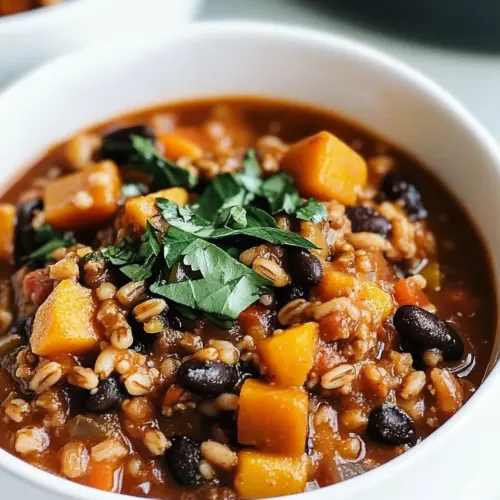
Slow Cooker Butternut Squash and Farro Chili
Slow Cooker Butternut Squash and Farro Chili is a creamy, comforting fall bowl that combines tender butternut squash, chewy farro, and creamy beans for an easy weeknight dinner. Warm spices like chili powder and cinnamon create layered autumnal flavors while pantry staples keep this accessible. Make it for cozy family meals or batch cooking because it reheats beautifully and gets even better the next day.
Equipment
- Slow Cooker
- Ladle
- Cutting Board
- Chef's Knife
Ingredients
- 2 lbs butternut squash, peeled and diced Provide a sweet, creamy base and tender texture when cooked; adds natural sugars that balance savory spices and helps thicken the chili as it breaks down in the slow cooker.
- 1 onion, chopped Add savory depth and aromatic sweetness when sautéed or softened; contributes a mellow onion backbone that complements the other vegetables and spices.
- 1 bell pepper, chopped Bring fresh, crisp flavor and mild sweetness; offer color, texture, and a vegetal note that pairs well with the squash and beans.
- 5 garlic cloves, minced Impart pungent, aromatic heat and complexity when minced; enhances overall savory flavor and helps meld the chili’s spices together.
- 2 (15 oz) cans diced tomatoes Introduce bright acidity and tomato body; provide a saucy, juicy component that helps create the chili’s base and keeps the mixture moist during slow cooking.
- 3 tablespoons tomato paste Concentrate rich tomato flavor and deepen the sauce; boost umami and help bind the chili for a thicker, more cohesive texture.
- 1 (15 oz) can black beans, drained Contribute creamy texture, protein, and earthy flavor; add substance and a satisfying bite while also providing fiber and nutrients.
- 1 (15 oz) can cannellini beans, drained Offer a tender, slightly nutty creaminess and additional protein content; help round out the chili’s texture and add visual contrast with dark beans.
- 1 1/2 cups low-sodium vegetable broth Provide a savory liquid foundation with controlled saltiness; keep ingredients hydrated and allow flavors to infuse during long, slow cooking.
- 1 cup farro, rinsed Supply chewy, nutty grain texture and hearty mouthfeel; absorb liquids and flavors while adding whole-grain fiber and a satisfying bite to the chili.
- 1 tablespoon chili powder Deliver warm, smoky heat and classic chili flavor; act as a primary seasoning that ties other spices and ingredients together.
- 1/2 teaspoon cinnamon Add subtle warmth and aromatic sweetness; complement chili spices by bringing a hint of cozy complexity without overpowering the dish.
- 1/2 teaspoon cumin Contribute earthy, slightly citrusy undertones and depth; enhance savory elements and support the overall spice profile of the chili.
- 1/2 teaspoon salt Provide gentle seasoning to bring out flavors and balance sweetness and acidity; help ensure the chili is well-rounded and palatable.
- 1/4 teaspoon black pepper Introduce mild heat and savory contrast; help fine-tune the seasoning and allow other flavors to shine without dominating the palate.
Instructions
- In a 6-quart slow cooker, add butternut squash and the rest of ingredients, cover and place on high for 3 to 4 hours or low 6 to 8 hours.: The kitchen will begin to warm with a gentle, tomato forward aroma as the butternut squash releases moisture and the canned diced tomatoes and tomato paste start to thicken, creating a stewy scent that signals the base is forming. You will notice a low bubbling and occasional soft sighs from the cooker lid, which is normal and tells you the internal steam is doing its work. Texture is the key indicator here, the butternut squash should become tender but still hold its shape, and the farro will swell and gain a chewy, nutty bite. This slow, moist heat allows flavors to marry gently, producing a rounded, layered profile that you cannot get from fast cooking. A common mistake is lifting the lid frequently to check, which lets heat escape and lengthens cook time, so try to resist peeking. If you find the broth looks too thin toward the end of cooking, leave the lid slightly ajar for the final 20 to 30 minutes to concentrate flavors and thicken the sauce. If the farro becomes overly soft, reduce future cook time or add it later in the process.
- Spoon chili into bowls and add desired toppings. Enjoy!: As you serve, the aroma should be full and rounded, with sweetness from the butternut squash and tang from the diced tomatoes shining through. Ladling the chili will reveal the chunky texture of the squash, the creaminess of the beans , and the slightly chewy farro grains suspended in a glossy, spiced broth. I recommend stirring gently before scooping to redistribute any settled broth and sense the final thickness; if it seems too loose, simmer uncovered for a short time to reduce. Be mindful when serving from a hot slow cooker, as steam can scald. One thing to avoid is overmixing vigorously, which can break down the butternut squash into mush and alter the intended texture.
- Enjoy: The first spoonful should offer warmth and complexity, a harmony of spice, sweet squash, and earthy grains. Allow the chili to cool slightly so flavors open and the textures settle on the palate. If you plan to store leftovers, cool to near room temperature and refrigerate in an airtight container within two hours to maintain quality. Reheating gently on the stovetop over low heat helps reintegrate flavors; add a splash of broth if needed. A common oversight is reheating too quickly at high heat, which can dull flavors and break down the farro .
Notes
- Prep ingredients uniformly - Cut the butternut squash, onion, and bell pepper into pieces of similar size so they cook evenly. Uneven cuts lead to some pieces overcooked while others remain underdone, which can throw off the texture balance in the finished chili.
- Rinse the farro - Rinsing removes dust and reduces foaming during cooking, giving you a cleaner mouthfeel. If you skip this, the chili can develop a slightly gritty texture and excess starch.
- Use low sodium canned goods - Because canned tomatoes and canned beans vary in salt, starting with low sodium versions gives you control over seasoning. Taste near the end and adjust with small increments.
- Layer flavors - Stir in the tomato paste so it dissolves into the liquid rather than clumping, this helps distribute concentrated umami throughout the pot. Clumps can create pockets of overly intense tomato flavor.
- Timing for farro - If you want more chew, add the farro later in the cook; if you like it very soft, add at the start. This gives you control over the desired grain texture without changing other elements.