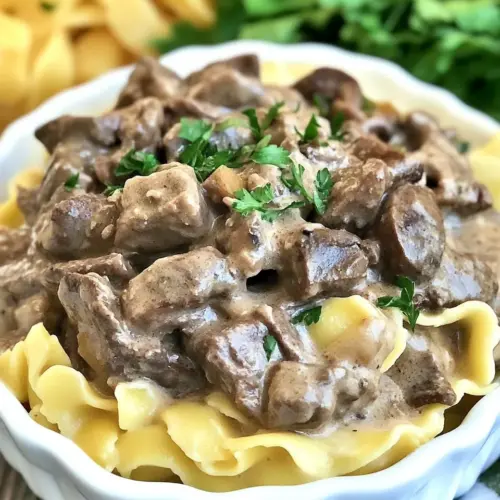
Slow Cooker Beef Stroganoff
Slow Cooker Beef Stroganoff delivers creamy, savory comfort with tender slices of beef, earthy mushrooms, and a luscious dairy enriched sauce. Perfect as an easy weeknight dinner, this recipe is forgiving, hands off, and yields richly flavored results that pair perfectly with wide egg noodles. Make it when you want a cozy, satisfying meal that feeds a crowd or a hungry family.
Equipment
- Slow Cooker
- Large Skillet
- Slotted Spoon
- Whisk
Ingredients
- 1 1/2 lbs top sirloin thinly sliced Sliced thinly to allow quick, even cooking in the slow cooker and provide tender bites; contributes rich beef flavor and protein to the stroganoff while absorbing surrounding sauces and seasonings.
- 1 tsp pepper Ground or freshly cracked to build warmth and a mild kick; enhances the savory profile and balances the richness of dairy and beef through subtle heat.
- 2 tbsp olive oil Heated to sear meat or sauté aromatics, providing a fruity, slightly peppery base fat; helps prevent sticking and adds a light, clean olive oil flavor to the dish.
- 2 tbsp butter Melted to brown mushrooms and onions or finish the sauce, supplying a creamy, nutty richness; complements the olive oil and contributes depth and a silky mouthfeel.
- 8 oz baby bella mushrooms sliced Sliced to release earthy, umami flavors and meaty texture; absorbs sauce while adding body and a savory element that complements the beef and dairy.
- 1 small onion sliced Sliced to soften and caramelize, delivering sweet, aromatic notes and texture contrast; builds a flavor foundation that balances the savory and creamy components.
- 10.5 oz beef consommé 1 can Added as a concentrated savory liquid to intensify beef flavor and introduce gelatinous depth; helps create a robust, flavorful base for the slow-cooked sauce.
- 1 cup beef broth low sodium Poured to adjust sauce volume and saltiness while carrying additional beef flavor; thins the sauce to a desirable consistency and keeps ingredients moist during long cooking.
- 1 tbsp worcestershire sauce Stirred in for a tangy, savory boost and slight sweetness; enhances umami, rounds flavors, and ties the beef and broth together with complexity.
- 1 cup sour cream Folded in at the end to create a smooth, tangy creaminess and mellow acidity; stabilizes the sauce’s texture and balances richness from butter and cream cheese.
- 4 oz cream cheese Softened into the sauce to provide dense, creamy body and mild tang; contributes a velvety thickness and helps the sauce cling to noodles and beef.
- 16 oz wide egg noodles Boiled until tender to serve as the starch base, offering chewy, comforting bites; soaks up the stroganoff sauce and makes the meal hearty and filling.
- 1 tbsp butter Melted at the finish to enrich sauce with a glossy, buttery sheen and subtle sweetness; enhances mouthfeel and rounds the overall flavor.
- parsley chopped (optional) Chopped finely and sprinkled as an optional fresh herb garnish to add color and a bright, slightly peppery finish that lifts the rich sauce.
Instructions
- Lightly spray 3-4 qt slow cooker with cooking spray.: The slow cooker should smell neutral and warm before ingredients go in, and the light spray prevents sticking while keeping cleanup easy. I use a thin coating so the sauce still clings to the pot walls, which helps reduce steam and concentrate flavors. A frequent mistake is over greasing, which can make the exterior of the sauce too slick and interfere with browning signals during cooking.
- Lay out strips of sirloin and season with pepper.: At this step you will notice the raw, iron rich scent of the top sirloin and the sharp fragrance of freshly cracked pepper . Season each strip evenly so flavor penetrates as it cooks. I slice against the grain to shorten muscle fibers, which improves tenderness after slow cooking. Avoid over seasoning here because the cooking liquid will intensify, and too much pepper can dominate the final dish.
- Brown sirloin in olive oil over medium-high heat in a large skillet. Do this in 2-3 batches so that the meat sears nicely.: When searing, listen for an energetic sizzle and watch for deep brown crust forming, that toasty aroma is the Maillard reaction building complexity. Use the olive oil hot enough that the meat browns on contact but not so hot that it smokes. By working in batches you maintain high heat and prevent steaming, preserving the caramelized bits that will flavor the sauce. A common error is crowding the pan which leads to gray, steamed meat and a thinner sauce.
- Remove beef from skillet and transfer to slow cooker.: The moment you lift the seared strips you should see caramelized edges and juiciness inside. Transferring the meat immediately into the prepared slow cooker captures those fond flavors. Make sure not to push into the cooker while the skillet fat is still very hot, or the liquid interface can become greasy. If you see excess burned bits in the pan, deglaze with a spoon of broth rather than scraping aggressively.
- Add butter to skillet and saute onion and mushrooms for several minutes.: The butter should foam gently and carry the sweet, savory aroma of cooking onion and mushrooms . Sauté until the onion softens and the mushrooms give off moisture and begin to brown, releasing an earthy fragrance. This step builds the aromatic base of the sauce and adds texture. Too high heat will brown too fast and risk bitterness, while too low heat produces soggy, pale aromatics.
- Pour in can of beef consommé and stir, making sure to loosen anything stuck to the pan.: When the consommé hits the hot skillet you will hear a hiss and see the fond lift into the liquid, creating a glossy, concentrated stock. Scrape the pan gently to incorporate those browned bits, they are flavor gold for the final sauce. If the consommé seems overly salty, dilute slightly with a bit more low sodium beef broth , but do that sparingly to preserve depth.
- Transfer entire contents of skillet to slow cooker.: As you pour, watch the rich broth mingle with the browned meat in the slow cooker and note the immediate aroma shift toward deep, meaty comfort. Make sure you get all the juices and loosened fond from the pan, a quick whisk helps incorporate small solids. Avoid leaving concentrated browned bits in the pan since that will waste flavor that should become part of the sauce.
- Stir in one cup of beef broth.: The added beef broth balances the consommé and provides extra braising liquid to gently cook the meat. Stirring distributes the liquid so the meat and vegetables remain submerged, promoting even, slow cooking. If the level looks too low, add a bit more broth, but keep in mind the sauce will thicken when reduced and enriched with dairy later, so avoid adding excessive liquid.
- Cover and cook on low for 6-8 hours or until meat is tender.: During this long, low heat phase the kitchen will fill with a comforting, slowly building aroma and the connective tissues in the top sirloin will melt into silky tenderness. Resist the temptation to open the lid frequently because each peek releases heat and extends cooking time. A common misstep is cooking at too high a temperature which toughens meat rather than tenderizing it slowly.
- Remove one cup of liquid.: Carefully ladle out one cup of the cooking liquid, noticing its concentrated, savory smell and slightly glossy texture. This reserved liquid is what you will use to adjust the creaminess and consistency of the finished sauce, so set it aside in a warm bowl. Avoid removing more than the recipe requires, because you might need that depth back when adjusting thickness.
- Transfer mushrooms, onions, and meat into a separate bowl with a slotted spoon.: Using a slotted spoon you will feel the yielding tenderness of the meat and the soft texture of the mushrooms and onion . Separating them allows you to mix the dairy smoothly off heat, preserving emulsion. If you try to whisk dairy directly in the hot cooker you risk breaking the sauce, so this separation is an important control step.
- Whisk in sour cream and cream cheese until nice and smooth.: Off heat, combine the reserved cup of liquid with the sour cream and softened cream cheese and whisk until velvety. You should see a glossy, unified sauce with a cool, tangy aroma. This technique prevents curdling and keeps the texture silky. If lumps form, whisk in a tablespoon of warm liquid slowly to temper and smooth the mix rather than adding it straight to high heat.
- Add liquid back in until desired consistency is achieved.: Gradually return the dairy enriched liquid to the slow cooker, stirring gently, and stop when the sauce has the consistency you want, coating the back of a spoon. Pay attention to viscosity because it will loosen the meat slightly and cling to the noodles later. Adding too much liquid will make the sauce thin, while adding too little will leave it pasty, so adjust in small increments.
- Place mushrooms, onions, and meat back into slow cooker, stirring gently to distribute.: As you fold everything back together you will feel the comforting warmth and see the cream clinging to the ribbons of onion , slices of mushroom , and beef . Stir gently to preserve the tender textures and avoid shredding the meat. Over stirring can break the pieces down and make the final dish mushy instead of pleasantly chunky.
- Prepare egg noodles according to package directions. Stir in butter.: Cook the egg noodles until al dente so they have a slight bite and still hold their shape when mixed with the sauce. Toss in the finishing tablespoon of butter to add sheen and bind the noodles into a cohesive bed for the stroganoff. Overcooked noodles will disintegrate and turn the dish gluey, so drain promptly when they are ready.
- Serve beef stroganoff over buttered egg noodles, sprinkling with parsley if desired.: When plated, you'll notice the warm steam carrying aromas of tangy cream and mushroom earthiness. A sprinkle of chopped parsley adds a fresh note and color contrast. Serve immediately while hot, because prolonged standing will thicken the sauce as the egg noodles absorb liquid. If leftovers are stored, reheat gently with a splash of broth to restore creaminess.
Notes
- Searing depth Sear the top sirloin until a deep brown crust forms, doing this in batches to keep the skillet hot and preserve fond for richer sauce.
- Pay attention to onion and mushroom color Sauté until the onion is translucent and the mushrooms begin to brown, that caramelization adds needed sweetness and depth.
- Temper dairy off heat Combine the reserved cooking liquid with the sour cream and cream cheese off heat to avoid breaking the sauce and ensure a glossy finish.
- Adjust consistency gradually Add reserved liquid back a little at a time while stirring, stopping when you reach a sauce that coats the back of a spoon.
- Finish noodles correctly Cook egg noodles al dente and toss with butter immediately so they remain separate and absorb the sauce without becoming gluey.